Mini Split Installation in Canton, OH
A new system here will heat from October through May and cool from June through August every year. Tell us about the house, and a licensed contractor who covers Stark County will get in touch.
Tell us about the job
It takes about a minute.
What a mini-split in Canton has to handle
Winter nights here average 22°F, and homes need heat from October through May, eight months a year. Add June through August for cooling and a mini-split is running 11 months a year, with only a short break in between.
A new mini-split installed today has to meet the federal minimum for a split-system heat pump, 14.3 SEER2 for cooling and 7.5 HSPF2 for heating. Summer afternoons averaging 81°F don't push the cooling side hard, but eight months of heat down to winter lows near 22°F is the bigger job here.
- 8 months
- October through May, your system heats
- 3 months
- June through August, it cools
- 22°F
- the average winter night it heats against
- 81°F
- the average summer afternoon it cools against
NOAA nClimDiv, 1991–2020 normals
In Ohio, HVAC licensing for homes is left to the counties.
Stark County sets its own rule on who can do this work, so whether a contractor needs a local license depends on the county's own requirements, not anything the state sets. Ohio's definition of a home contractor calls for at least $250,000 in liability insurance, but that is a definition written into state law, not a license anyone issues or checks.
For a mini-split install, the permit and inspection from the local building office are what stand behind the work here. Most cities and counties require a permit for this kind of installation and an inspection once it is done, and that inspection checks the work regardless of what Stark County requires of the contractor doing it.
Source: Ohio Legislative Service Commission
- Is a mini split worth it?
- For most homes it comes down to what you're heating or cooling and how the space is set up. A mini split puts heat right where you need it, in a room an old duct run never reached well, or a whole additions with no ductwork at all. Down here in Canton you're looking at eight months of heating and three of cooling, so the unit is working most of the year, not sitting idle. If your ducts are the problem, a mini split skips that problem entirely.
- How many rooms can a mini split cover?
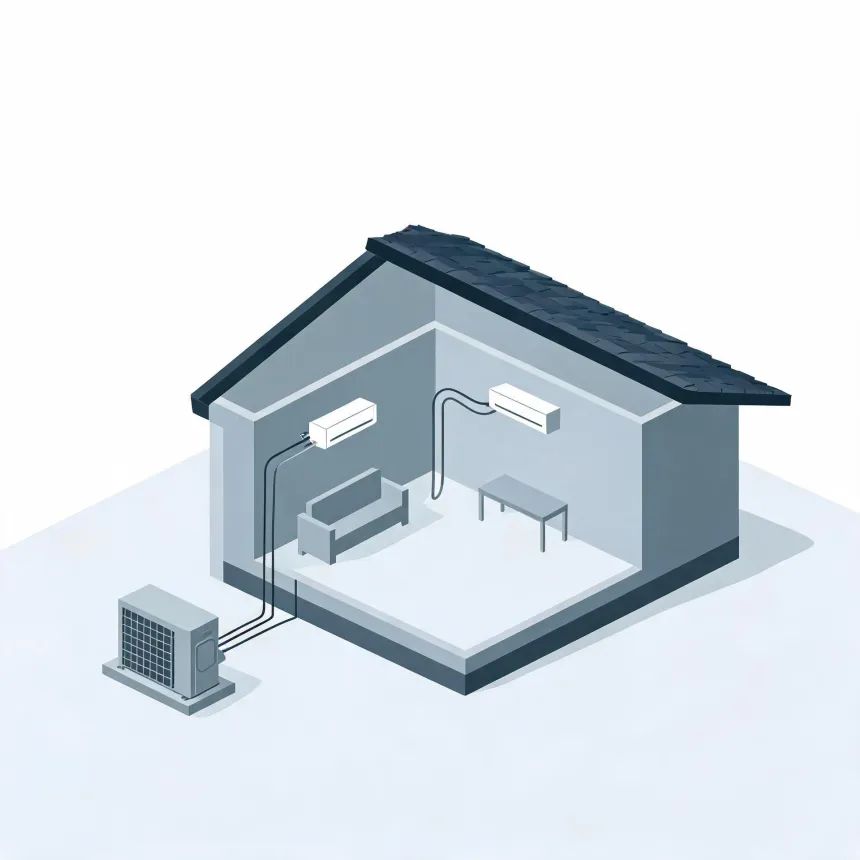
- A single outdoor unit can run one indoor head or up to eight, depending on the system. One head handles one room or an open area well. For more rooms, a contractor sizes the outdoor unit and picks how many indoor heads it needs to run, based on the square footage and layout of each space. More heads on one outdoor unit means less capacity to divide between them, so a contractor has to weigh how many rooms against how much heat or cooling each one needs.
- Can a mini split heat a whole house?
- It can, if it's sized and placed for that. A mini split with enough indoor heads, one for each room or zone, can heat an entire home the same way a furnace does, just without ducts. The thing to check is cold performance, since Canton winter nights average 22°F and a heat pump loses some of its heating capacity as the temperature drops. A contractor can tell you whether a given system holds up at that low a temperature or whether it needs backup heat for the coldest nights.