Mini Split Installation in Youngstown, OH
A new system here will heat from October through May and cool from June through August every year. Tell us about the house, and a licensed contractor who covers Mahoning County will get in touch.
Tell us about the job
It takes about a minute.
What a mini-split here has to handle
Youngstown asks a mini-split to run most of the year. Winter nights average 21°F, and homes here need heat from October through May, eight months straight. Summer adds three more months of cooling on top of that, so the system works eleven months out of the year.
A new mini-split installed today has to meet the federal minimum for split-system heat pumps, 14.3 SEER2 for cooling and 7.5 HSPF2 for heating. That applies whether it is replacing an old unit or going into a room that never had one. With winters this long and this cold, the heating side of that rating matters as much as the cooling side.
- 8 months
- October through May, your system heats
- 3 months
- June through August, it cools
- 21°F
- the average winter night it heats against
- 81°F
- the average summer afternoon it cools against
NOAA nClimDiv, 1991–2020 normals
In Ohio, HVAC licensing for homes is left to the counties.
In Mahoning County, whether your installer needs a license is a county question, not a state one. Ohio does not test or license HVAC contractors itself. What Ohio does say is that a home contractor has to carry at least $250,000 in liability insurance to meet the state's definition of one. That is not a license and nobody is testing for it. It tells you insurance is supposed to be in the picture, nothing more.
For a mini-split installation, the protection here comes from the local building office rather than a state license. In most cities and counties, putting in a mini-split needs a permit and an inspection once the work is done, and that inspection is what checks the electrical and refrigerant connections were done right. Whether Mahoning County itself licenses contractors on top of that depends on where the house sits.
Source: Ohio Legislative Service Commission
- Is a mini split worth it?
- For most homes, yes, especially if you're adding heat or cooling to a room that doesn't have good duct access. Youngstown winters average 21°F at night, so whatever mini split goes in needs to be rated for real cold, not just mild shoulder-season use. Homes here need heat or cooling 11 months of the year, so a mini split earns its place by working almost year round instead of sitting idle.
- How many rooms can a mini split cover?
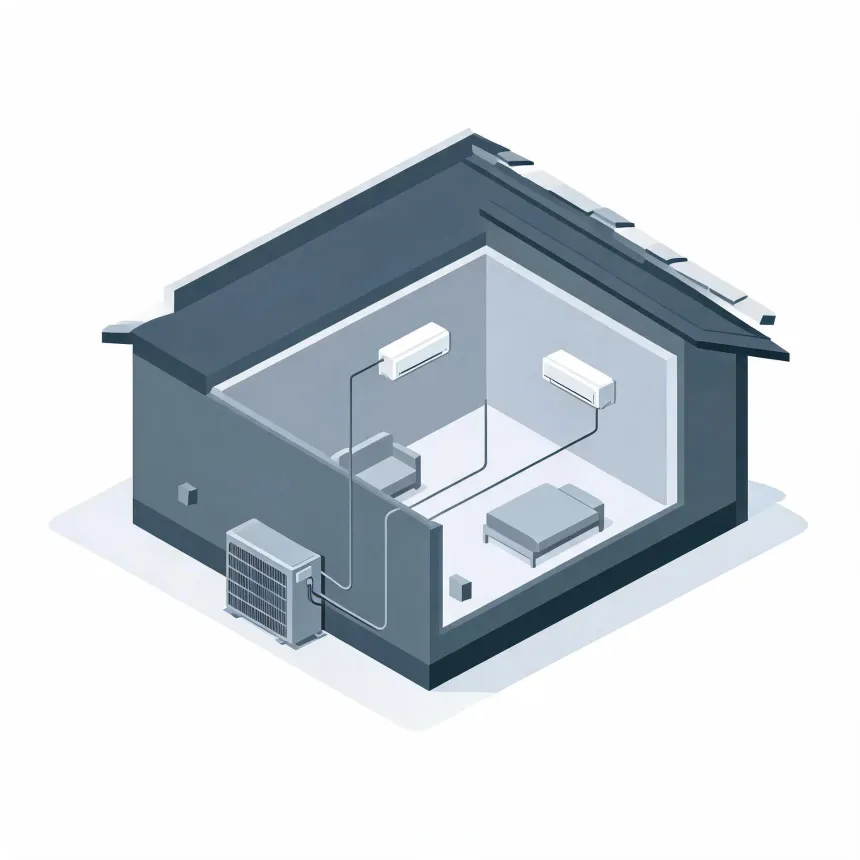
- A single outdoor unit can run one indoor head or several, up to eight on some multi-zone systems. Each indoor head is sized to the room it serves, so a contractor will look at the square footage and layout of each room before deciding how many zones you need. Trying to stretch one head across two rooms with a doorway between them usually leaves one room too warm and the other too cold.
- Can a mini split heat a whole house?
- It can, if enough indoor heads are placed to reach every room, but that takes planning around your home's actual layout. In Youngstown, where heat is needed from October through May, the outdoor unit and every indoor head need a cold-climate rating that holds up at 21°F, not just a standard heat pump rating. A contractor will need to walk the house and size each zone before saying whether whole-house coverage makes sense for your floor plan.