
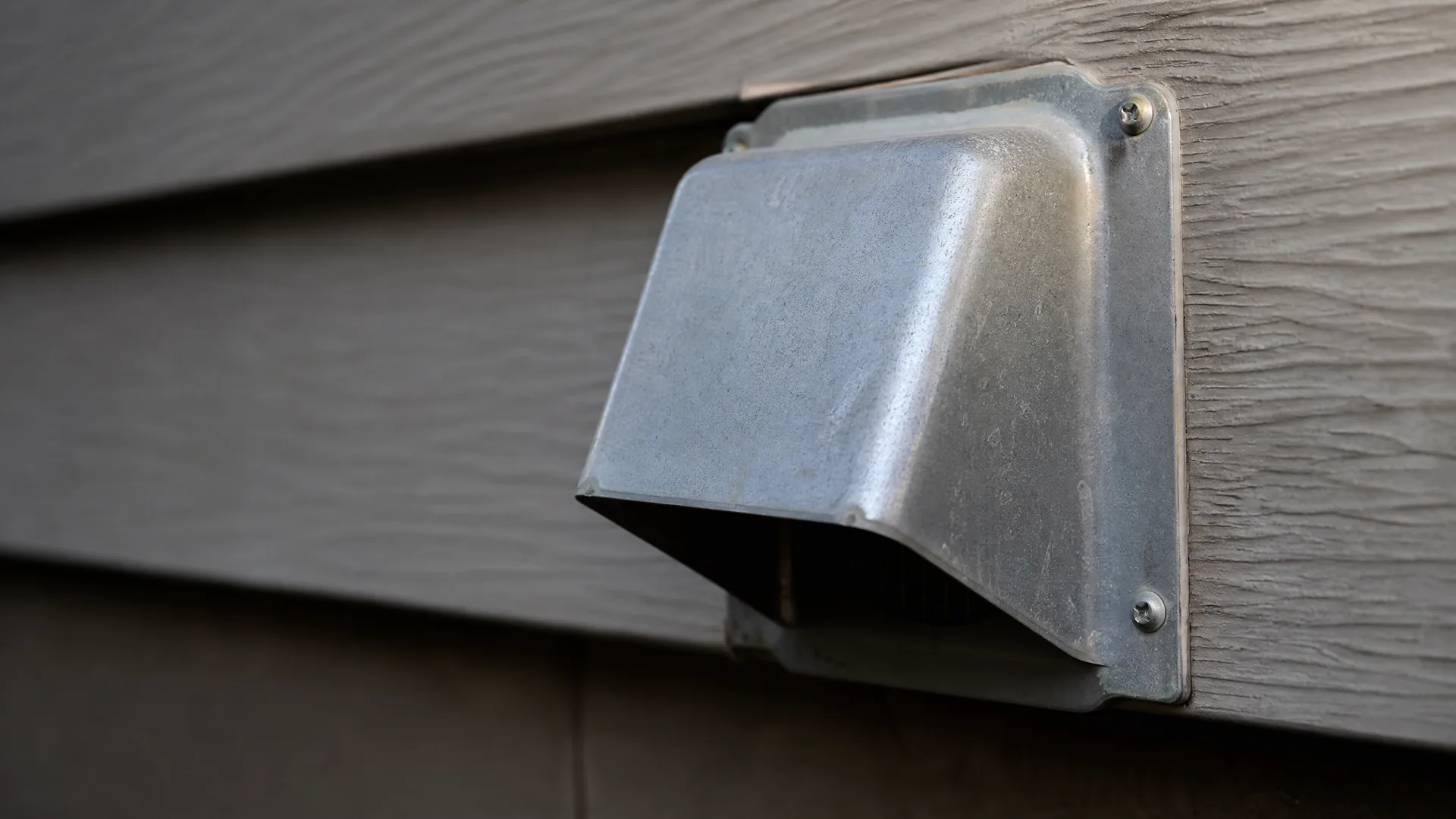
The vent cap, clear
Air pushes the louvers open every time the dryer runs, then they fall shut. No lint ring on the hood, no buildup around the edge. Walk outside while a load is drying and you should feel warm air moving against your hand.
A dryer that runs twice to dry one load, or feels hot to the touch, or leaves clothes smelling like they sat too long, is telling you something about that vent. Most people notice one of these signs and start searching, then stop when they see what it takes to act on it. You end up calling a few companies around Cuyahoga County, explaining the same thing three times, and trying to tell from a phone quote who actually knows dryer vents and who just added it to a list of services. That part is what this page shortens. You tell it once, and it goes to one local contractor who clears vents like this all season, in homes like yours, and knows what a clogged line usually looks like by the time someone calls. No stack of quotes to sort through, no second company calling an hour later. Just the one that fits.
A clogged dryer vent shows up in the dryer before it shows up anywhere else. Clothes come out hot but still damp, so you run the cycle again. The top of the dryer feels warm, sometimes hot, to the touch. The laundry room gets warmer than the rest of the house, or picks up a faint burnt smell. Lint turns up around the outside vent hood, or the hood's flap stays shut even when the dryer is running, because the air trying to push it open has nowhere to go. All of this comes down to airflow. Lint builds up inside the vent run, the exhaust slows down, and the dryer has to work longer and hotter to push moist air out through a passage that is narrower than it was built to be. Left alone, that trapped heat is a fire risk, which is why vent cleaning matters more than most people think.
2.2 people per household on average
Most homes here were built in 1957 or earlier, and a vent run that old has had decades to pick up bends, sags, or a crushed section that traps lint.
Half the homes here were built by 1957
With 2.2 people in the average household here, laundry runs often enough that a partly blocked vent gets worse week over week instead of sitting unused.
Power here costs 16.27 cents per kilowatt-hour
Power here runs 16.27 cents per kilowatt-hour, so a dryer working harder to push air through a clogged vent shows up on that bill.
ACS 2020-2024 · EIA-861 2025
A dryer vent doesn't clog all at once. Lint rides the airflow out of the drum, past the trap, and down the duct until it reaches a spot where the air slows down enough to drop it. That's almost always a bend, a seam, or the hood at the end of the run. Straight, short ducts stay clear longer because the air never slows down. Add a few 90 degree turns or extra feet of duct and the airflow loses speed at each one, leaving lint behind a little at a time until the buildup starts choking the line.
The outside hood is where you can check this yourself. Open the flapper by hand when the dryer isn't running, then watch it while a cycle runs. It should swing open wide and stay open the whole time. If it barely lifts, or opens partway and falls back, there's likely buildup sitting behind it in the duct.
The duct material matters too. Rigid metal duct has a smooth interior, so lint slides through it. The white vinyl accordion duct some older installs still have is ridged inside, and those ridges catch fibers as they pass, which is part of why it's not allowed in new installs anymore.
A burning smell while the dryer runs is different from a slow vent. That smell usually means lint has settled directly on the heating element, not somewhere down the duct, and it calls for shutting the dryer off rather than running another cycle.
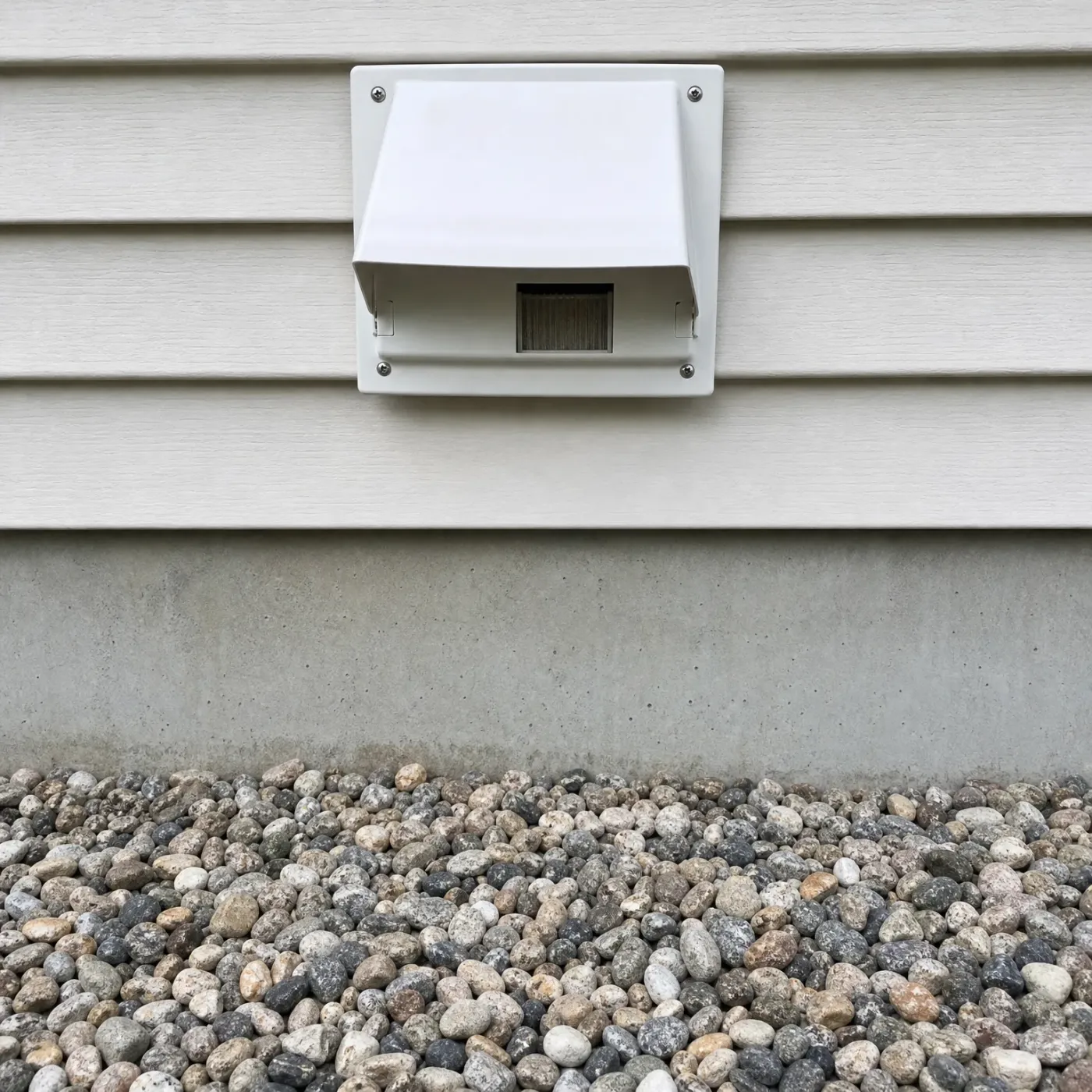




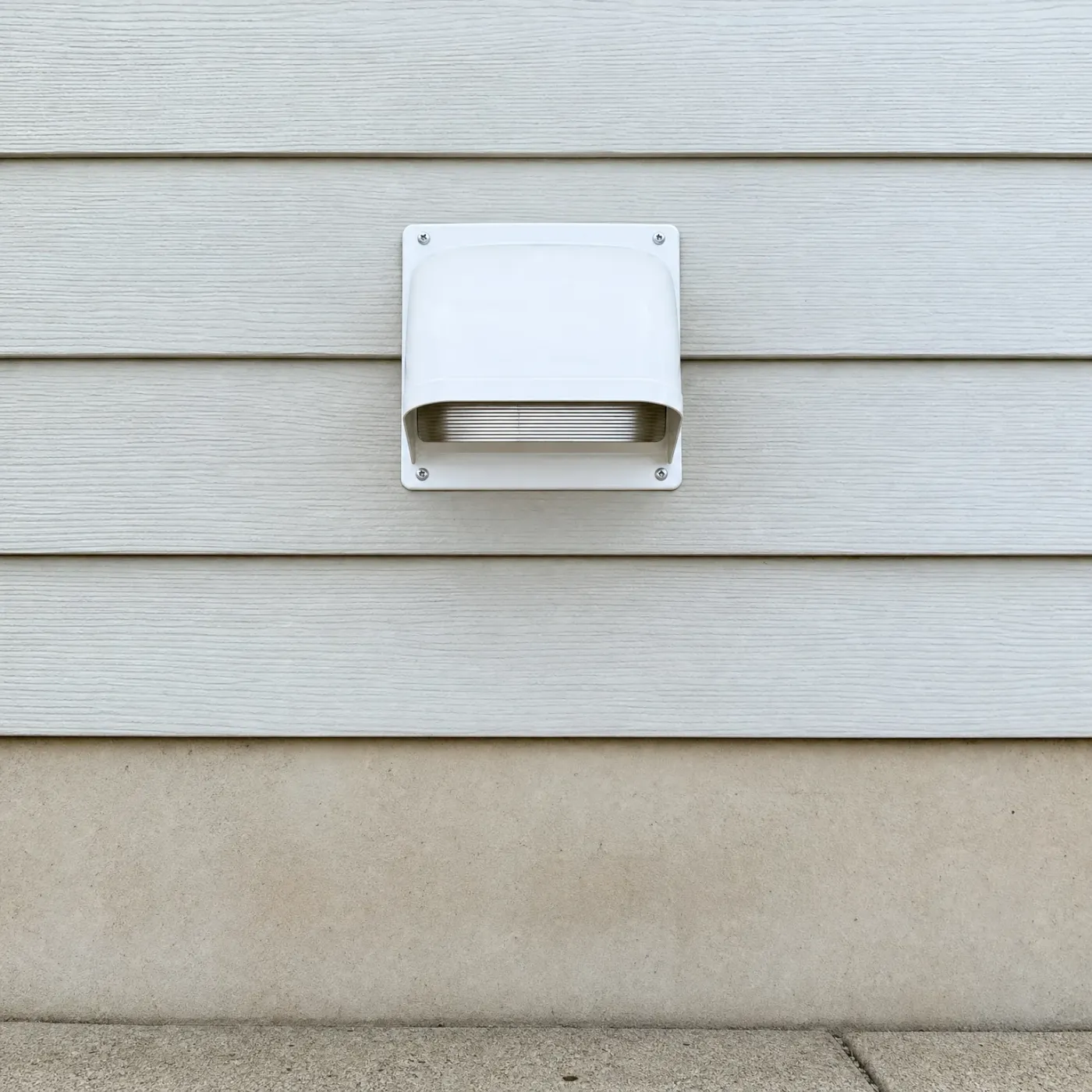
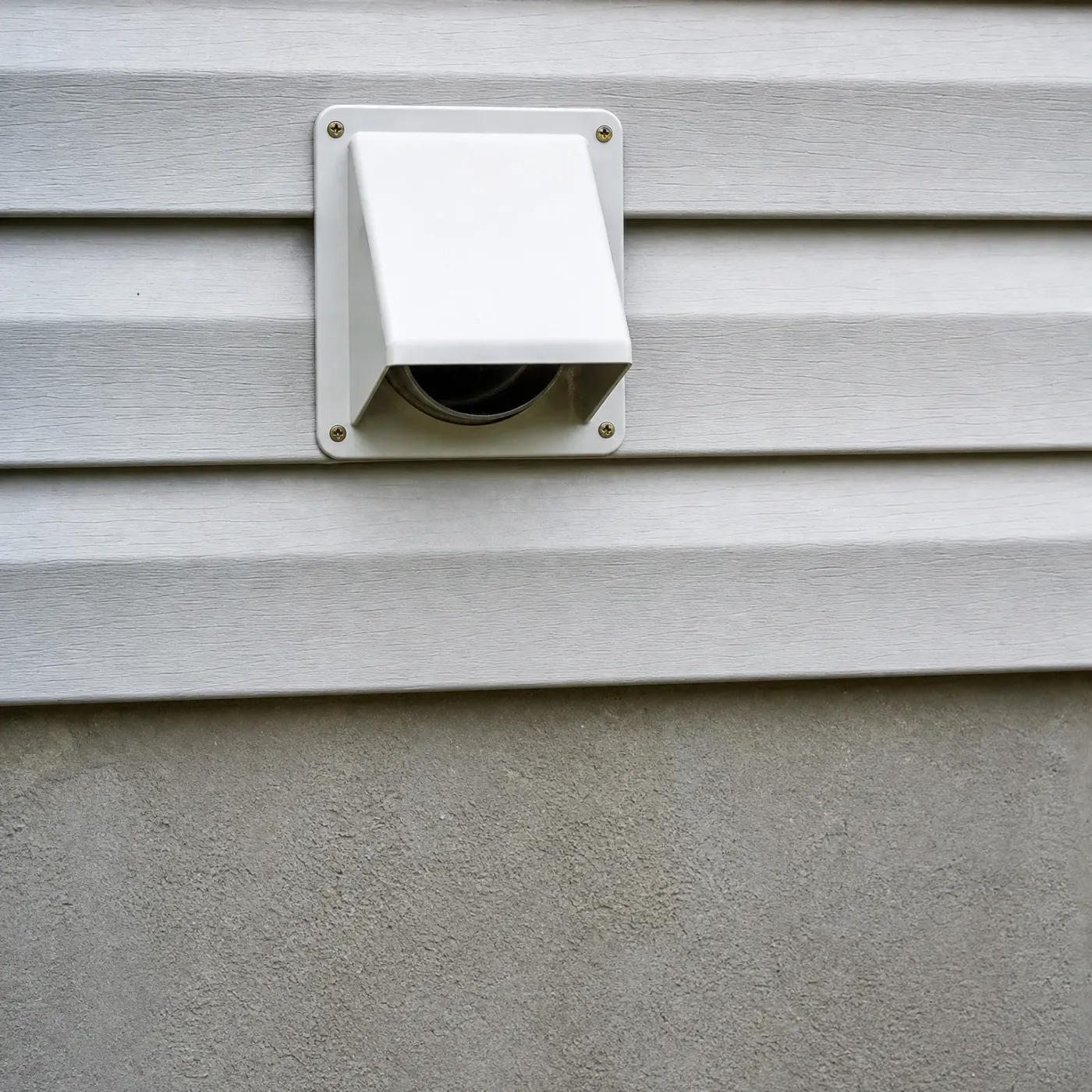
Air pushes the louvers open every time the dryer runs, then they fall shut. No lint ring on the hood, no buildup around the edge. Walk outside while a load is drying and you should feel warm air moving against your hand.
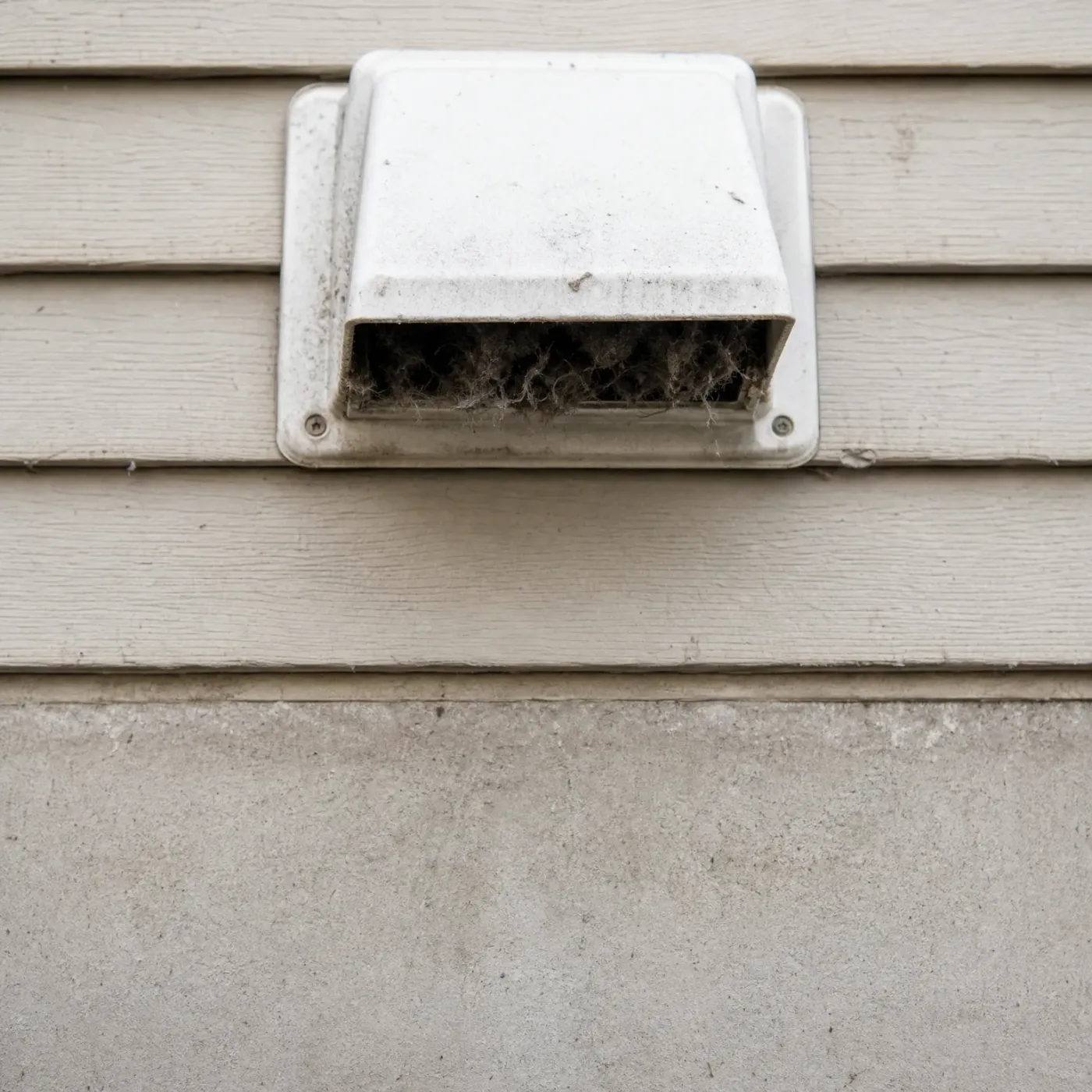
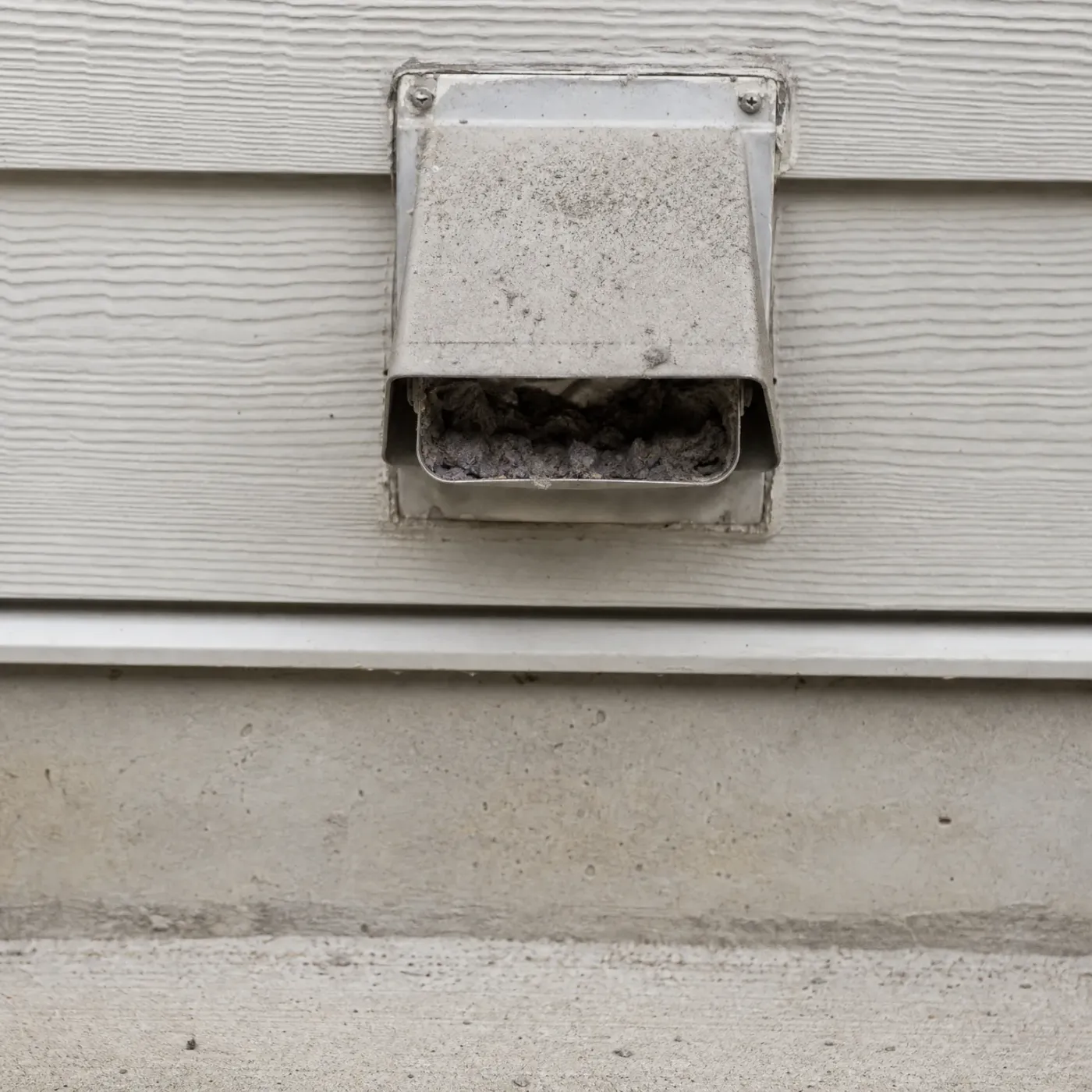
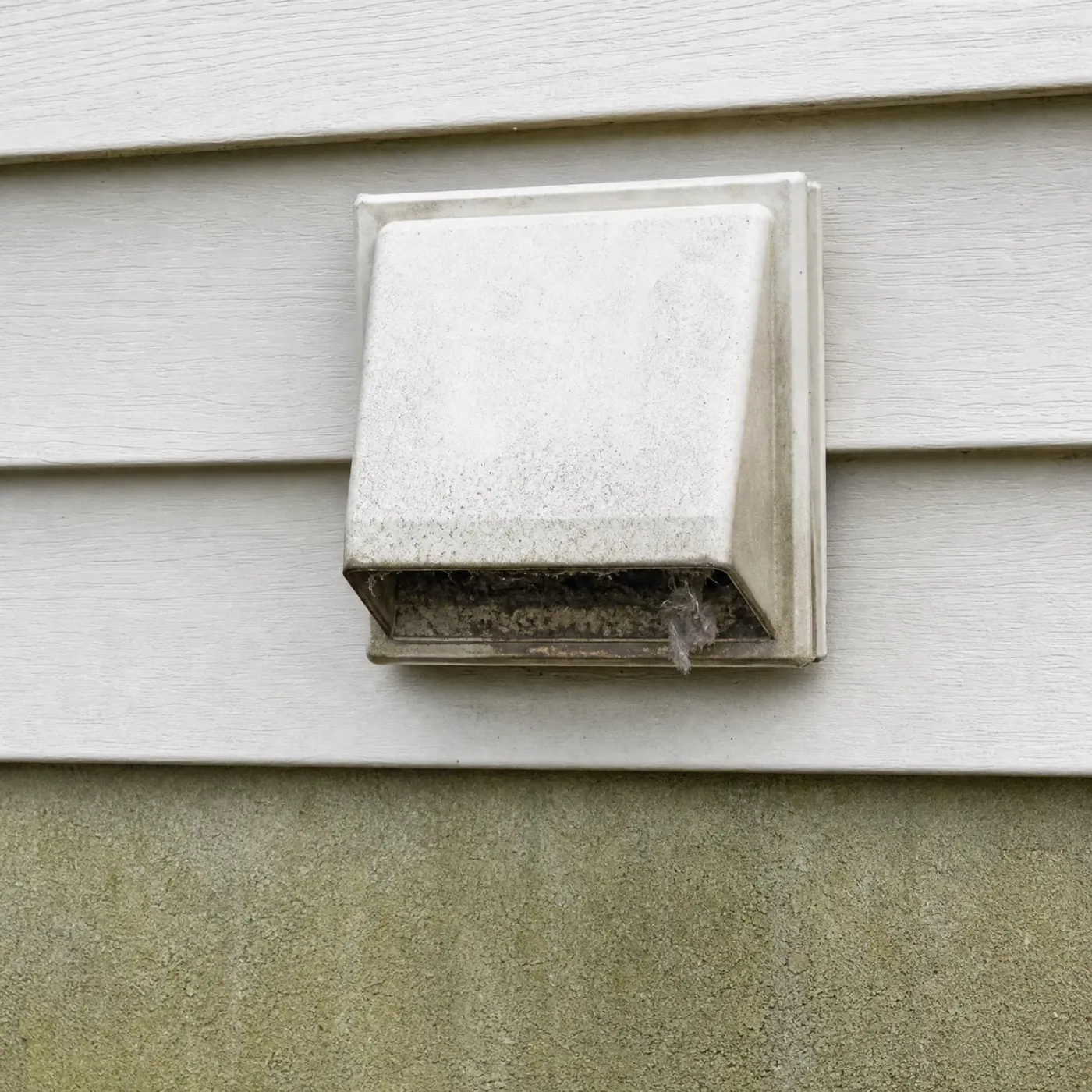
Lint has built up across the opening until the louvers cannot swing. Air that should be carrying moisture outside is backing up into the duct instead, and from there into the laundry room. A hood like this needs clearing before it blocks the airflow completely.
The pro who gets in touch is licensed in Ohio and works in Cuyahoga County.
No fee to send it, and nothing to sign.

A dryer vent works by pushing hot air through a metal duct and out through a hood on the outside wall. The shorter and straighter that run is, the less lint has a chance to catch along the way. Every bend in the duct gives fibers a place to settle, and a run with several turns traps far more than a straight shot from the dryer to the wall. Houses with the dryer vented through an attic or a long interior wall tend to build up lint faster for this reason.

The dryer's blower has to work against whatever is blocking the duct. When lint narrows that path, the motor pulls more air resistance on every cycle, and the internal thermostat cycles the heating element on and off more often trying to reach the set temperature. Over time that extra cycling wears on the parts that regulate heat. A dryer fighting a clogged vent is working harder than its design calls for, cycle after cycle, to do the same job it used to do in one pass.
You run a load every couple of days, maybe more with a houseful of towels and sheets, and you're wondering if there's a number you should be watching instead of just waiting for the dryer to act up. It's a fair question. Lint doesn't build up on a schedule, but how often the dryer runs and how the vent is laid out both speed it up or slow it down.
A vent with a short, straight run to the outside wall can go a year or more before lint builds up enough to matter. A vent with several bends, or a long run through the attic or a crawlspace, catches lint at every turn and can clog in a matter of months. A household running the dryer daily pushes more lint through the line than one running it twice a week, so the same vent clogs faster in a busy household than in a quiet one. That's why the dryer itself, running hot, running twice, feeling warm on top, is a better signal than any calendar.
Lint leaves the trap and rides the airflow into the duct
Fibers catch at the first bend or sag in the line
Buildup narrows the duct and slows the airflow down
The dryer runs longer and hotter to push air through


That second or third run adds up on a power bill that's already high in Cuyahoga County, and it means more heat and lint sitting in a vent that isn't clearing itself.
Lint is fuel, and a blocked vent traps it against a heat source. The longer it sits, the less margin you have, especially with loads running back to back.
With just over two people in the average Cuyahoga County household, your dryer is likely running loads several times a week, not once. Each one pushes more lint through a vent that's already struggling, so a clog here builds faster than it would in a bigger house doing less laundry.
ACS 2020-2024
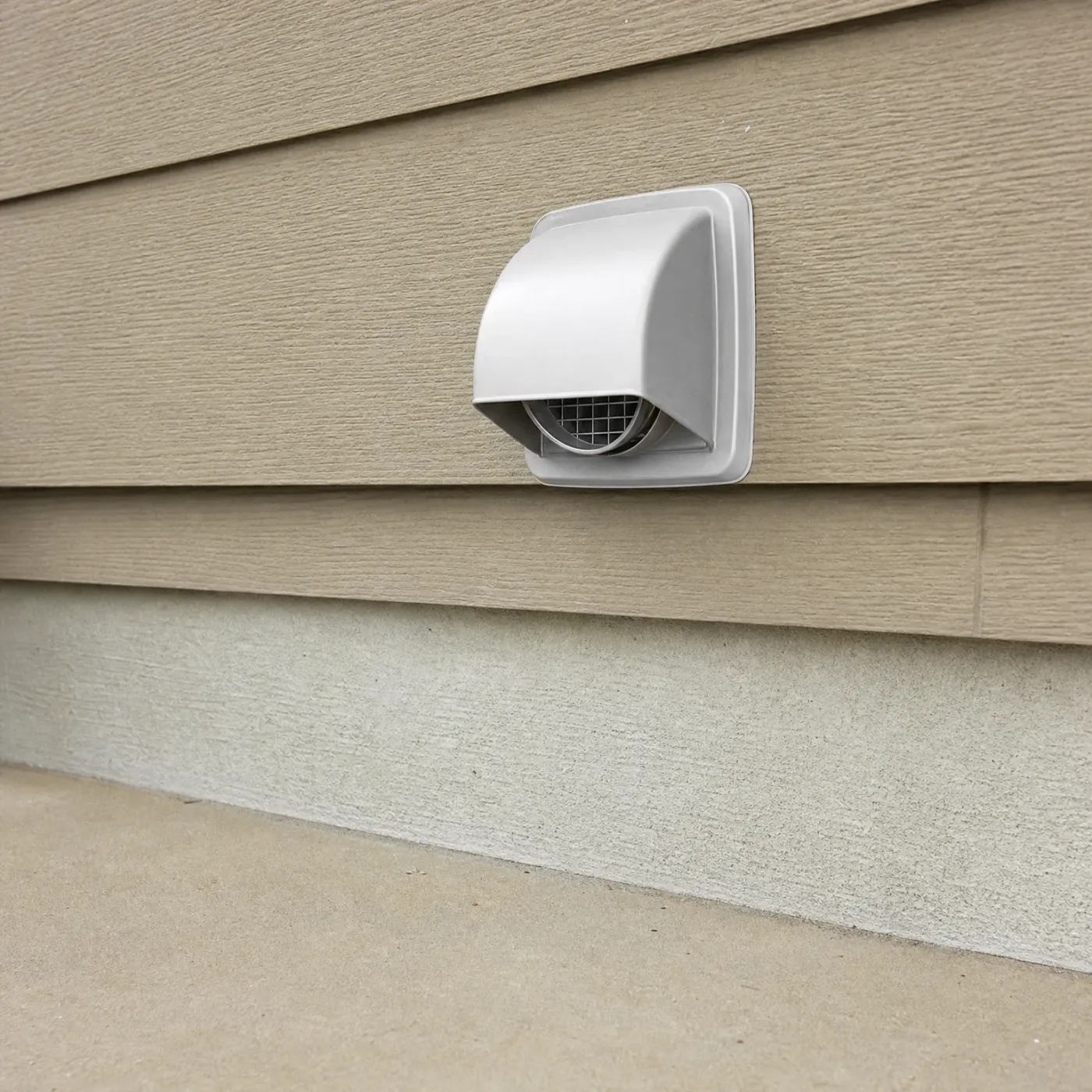
The flap hangs loose and swings open as soon as the dryer kicks on. The screen behind it is there to keep birds and mice out, not to catch lint, so it should stay clean on its own. Air moves out in a steady, visible push.
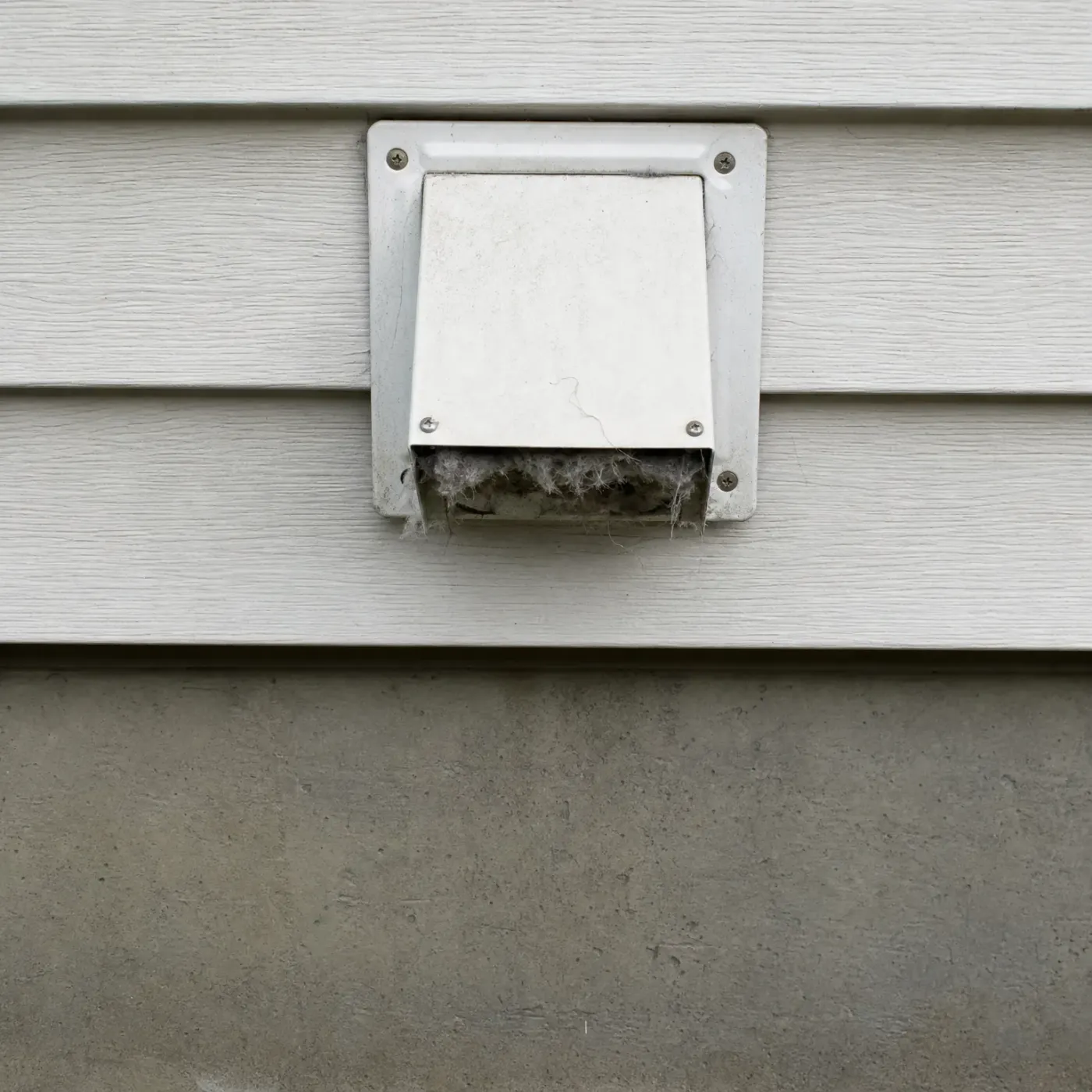
Lint has built up enough to prop the flap open instead of letting it swing shut between loads. That buildup sits right at the exit, where it traps more lint from every cycle after it. Air is still getting out, but not the way it did when the duct was clear.

A dryer that takes two or three runs to finish a load, feels hot on top, or leaves the laundry room warmer than the rest of the house is working against a vent that can't clear itself. The lint keeps building until the airflow is cleared out, not before.
Finding someone to do that work usually means the same slog every time: searching around, calling a few places, explaining the same thing to each one, then sitting with quotes that are hard to compare because nobody looked at the same vent. Here you deal with one licensed local contractor who works on vents like yours all year and knows which bend or sag tends to catch the lint first. One call, one visit, one answer about what your vent actually needs.

Skip the search