

Ducts that are doing their job
Air moves through clean metal trunks and flex runs without pushing dust back into the rooms. You dust a shelf and it stays that way more than a day or two. Nobody in the house is waking up stuffy for no reason.
One request and the search for a pro is handled.
Let a pro reach outYou're noticing dust settling back on surfaces days after you've cleaned, or someone in the house has been sneezing more than usual indoors. Maybe you've never had the ducts touched since you moved in and you're wondering if that's starting to catch up with you. You're not looking to do this on a schedule just because it's "time." You want to know if there's an actual reason to call someone now.
If dust resettles within a day or two of cleaning, or you see it blowing out of the vents themselves, that's buildup moving through the system. A musty smell when the furnace or AC kicks on usually means moisture got into the ductwork at some point, often where ducts run through a damp basement or crawlspace, both common in older Cleveland homes. Weak airflow in one or two rooms while the rest of the house is fine can mean a blockage in that branch of the duct run rather than a problem with the furnace itself. Visible dust or debris around the supply registers, especially after the furnace has been running hard through a Cleveland winter, is also worth a look before it gets pulled into the air you're breathing.

Air moves through clean metal trunks and flex runs without pushing dust back into the rooms. You dust a shelf and it stays that way more than a day or two. Nobody in the house is waking up stuffy for no reason.

The same runs are coating everything nearby in a fine gray film, and you can see it collecting at the seams and the joist bays. Register covers go dark within weeks of wiping them down. That buildup is what's landing on your furniture and in your lungs.
Half the homes here were built by 1957
Half the homes in Cuyahoga County were built in 1957 or earlier. An older duct system has had decades to collect dust, and if it's never been cleaned, nothing has ever pulled that buildup back out.
Heat runs October through May
Heat runs here about eight months a year, October through May. That's most of the year pushing air through the same ducts, carrying whatever is sitting inside into every room.
Cooling runs June through August
Cooling runs June through August. Those three months matter too: dust that settled all winter gets stirred up again the moment the AC kicks on.
ACS 2020-2024 · NOAA nClimDiv 1991-2020






The system runs on negative pressure. A vacuum unit connects to the trunk line and holds suction through the whole job, so what gets knocked loose has somewhere to go instead of drifting to the next bend. The agitation does the real work. A brush or an air whip travels through each branch, breaking up what's been sitting on the walls of the duct, and the vacuum pulls it out as it goes. Return runs get the same treatment as supply runs, since that's often where more dust has collected, not less. The boots at each register and the plenum by the furnace get their own pass, because that's where heavier material tends to drop and sit. Most jobs start with a camera run through the system first. That tells the tech which branches are actually packed and which ones don't need the time. If the blower compartment is dusty, which it often is once a return line has been feeding it for years, that gets handled in the same visit.


Your request goes to one pro, not a list of companies.
It costs nothing to send, and you don't have to hire anyone.
Dust in a duct run doesn't just sit on the bottom. It builds along the sides and top of the metal too, and every time the blower kicks on, some of it lifts into the air moving past it. Pet hair and lint catch on the seams and screws where sections join, and that's usually where the thickest buildup sits. None of this shows up when you look at a vent cover, because the vent is the one part of the system you can actually see. What's built up thirty feet back in the trunk line is a different story, and it only comes out with equipment made to pull it out.
Most furnaces in Cuyahoga County run on gas, and a gas furnace moves a lot of air across a long winter. Every pass through the system carries a little more dust into the ducts, and by spring the return side especially has collected months of it. Humid summers add moisture to the mix, which gives dust something to cling to inside the metal rather than blow straight through. A system that runs hard in both directions, heating from October to April and cooling through the muggy stretch after, has more chances every year to load the ducts than one that only runs part of the year.



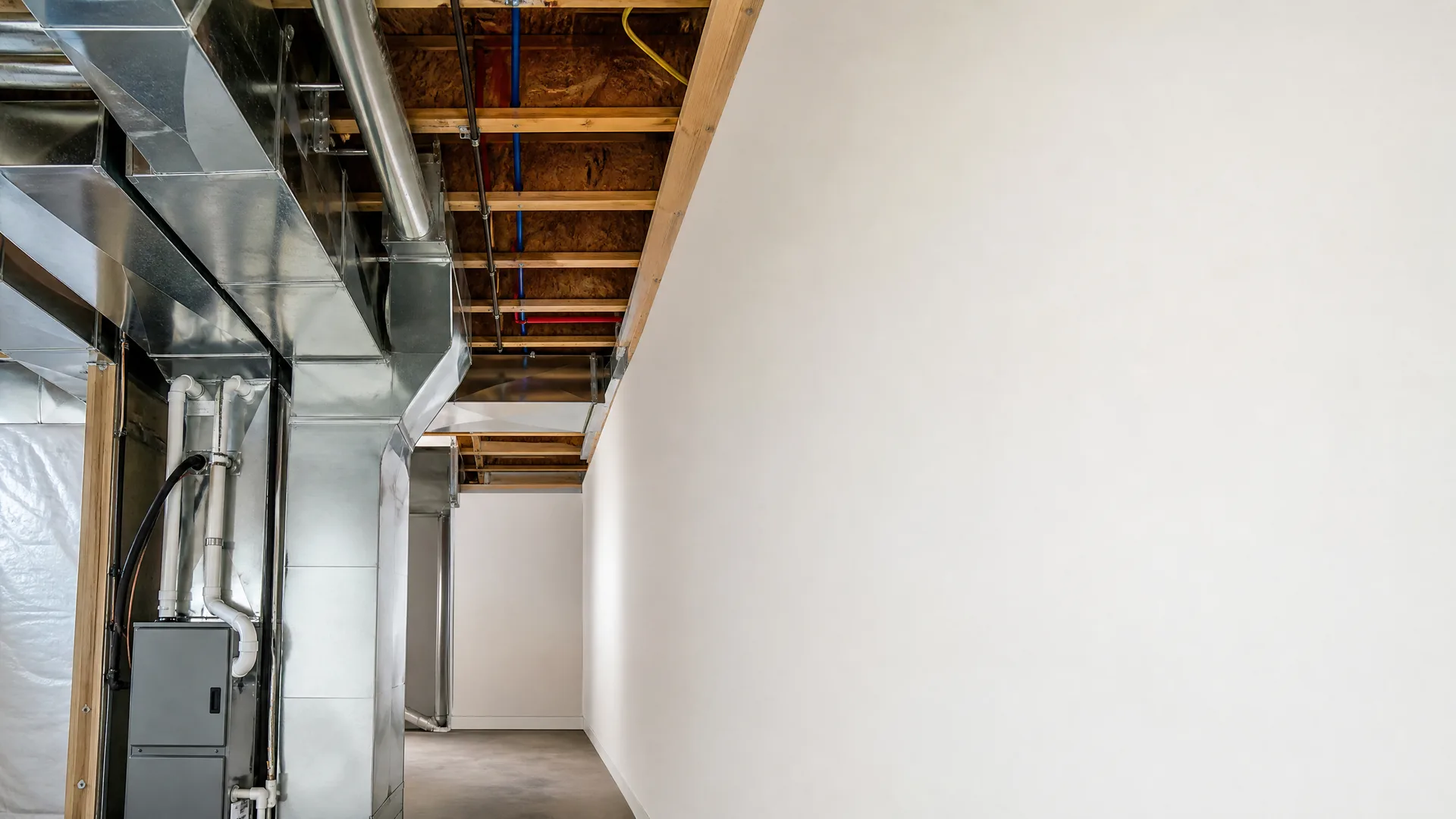
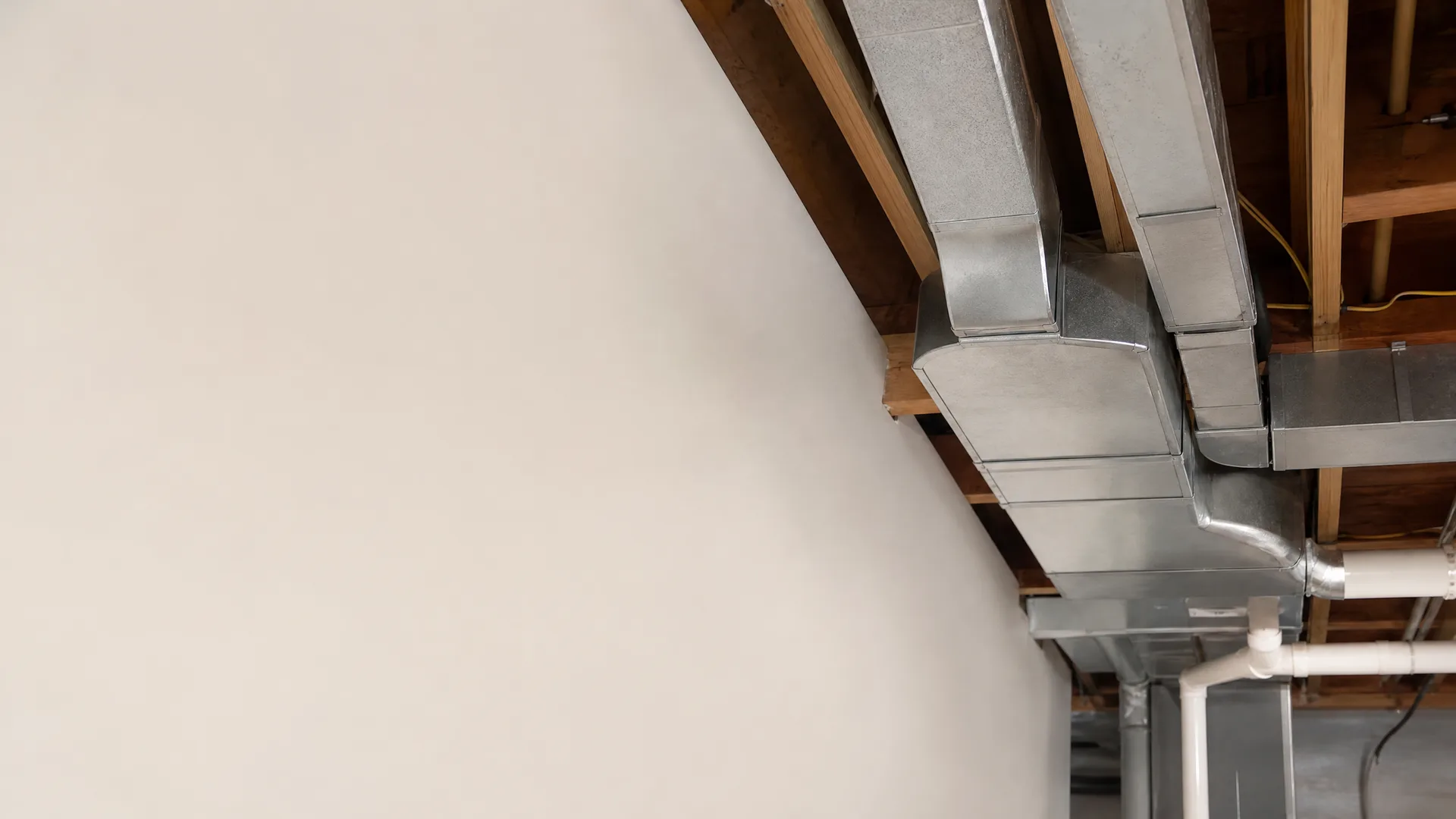
Supply and return lines sit tight against the joists with no gap at the seams. Air moves through the metal trunk without catching on anything, so the dust stays wherever it lands in the room instead of riding the airflow back in.

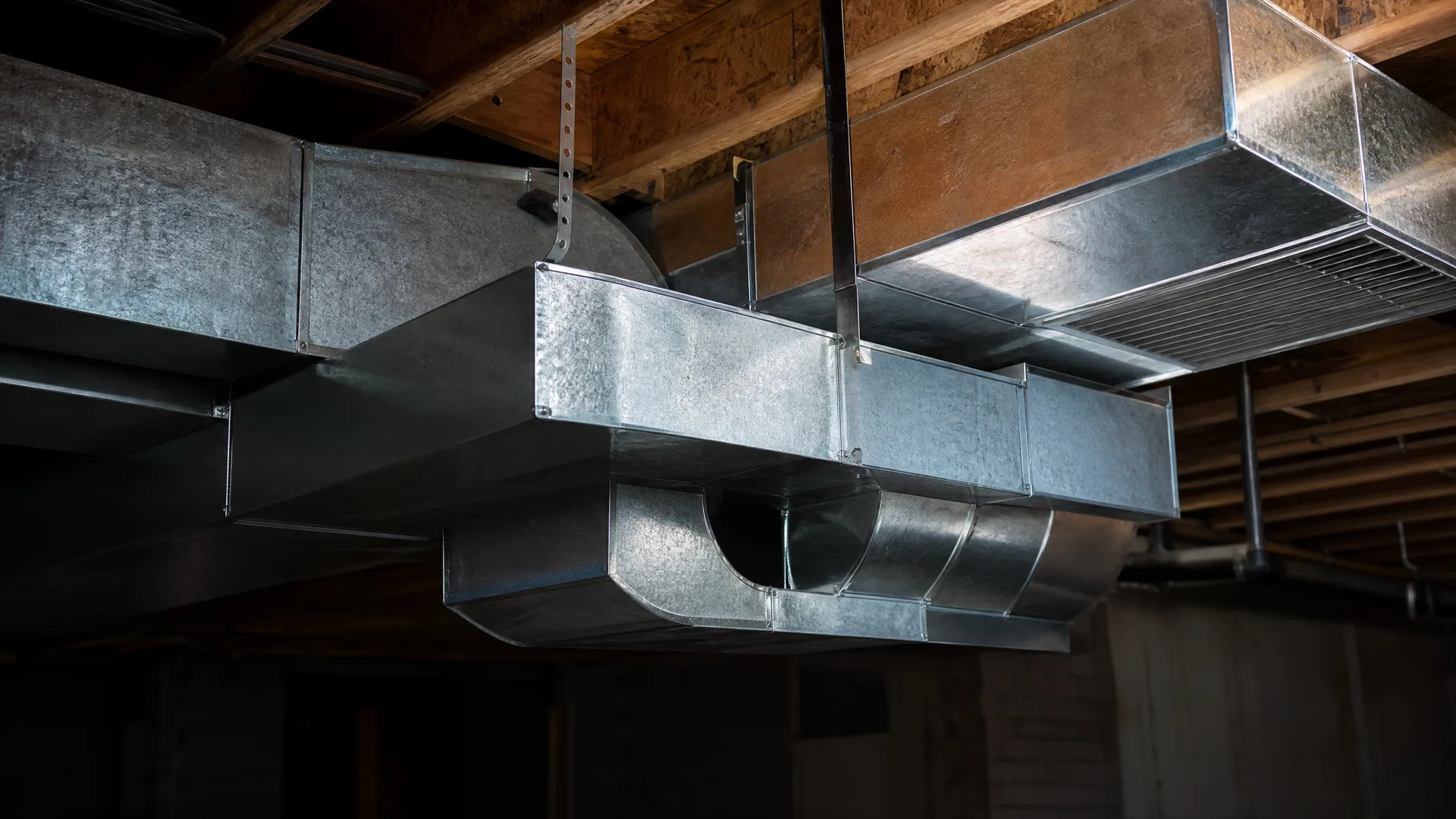
Runs like this collect along the bottom of the trunk where the airflow barely reaches. Once a layer sits there, the blower stirs part of it loose every time it cycles, and it keeps settling back on the same shelves you just wiped down.
At 16.27 cents per kilowatt-hour, running the blower longer than it needs to costs you more here than in most places. Dust-clogged ducts make the furnace and AC work harder to push air through, so clean ducts keep that extra draw off your electric bill.
EIA-861 2025
If the furnace is running longer each cycle to hit the same temperature, dust lining the ducts is part of why. It narrows the path air has to move through, so the blower pushes harder and burns more gas doing it. You'd notice it first as a bill that climbs even though you haven't changed the thermostat, since gas heats most homes in this area. A duct cleaning won't fix a furnace that's failing on its own, but it clears one thing making it work harder than it should.
Ragweed and mold spores get into the house every fall whether your ducts are clean or not, but dust-clogged ducts give those particles somewhere to collect and a way to keep circulating once they're inside. If someone in your house already deals with allergies or asthma, that extra circulation can be the difference between a bad week and a manageable one. You can check this yourself: if symptoms ease up when you're away from the house and come back within a day of returning, the air moving through your vents is worth a look.
The signs come down to what you can see and feel: dust that comes back fast, air that seems weaker at the vents, someone in the house sneezing more than they used to. If any of that sounds like your house, the ducts are telling you something. Finding a contractor who knows Cuyahoga County duct systems is the next part, and that's simpler than it sounds. A local technician who works on homes like yours all year has seen what decades of buildup does to a system that's never been cleaned, and knows where it tends to collect. You'll hear from one contractor, not a handful of companies competing for the job, so there's no pile of calls to sort through afterward. You already know what you're seeing in your own house. The next step is getting someone there who knows exactly what to do about it.
Let someone else find the pro