










Is duct cleaning worth it in Ohio

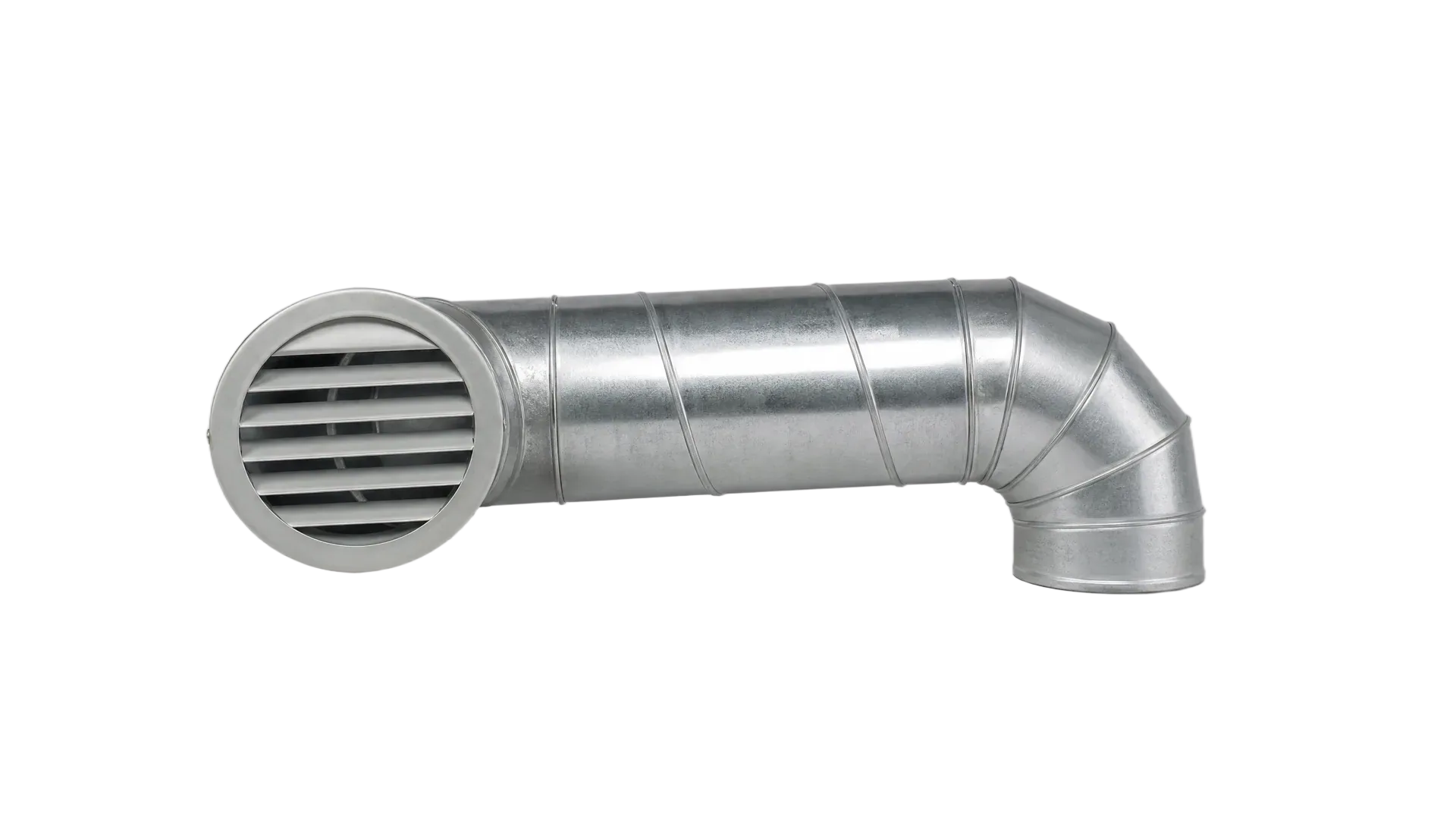
A galvanized steel round duct section with a 90-degree elbow at one end and a louvered vent grille at the other, photographed against a plain gray background.
Connect with a pro

For most homes in Ohio, duct cleaning is not something you need on a schedule. It matters when there is a reason for it: you can see dust coming out of the vents, someone in the house has allergies that flare up indoors, or the ducts were exposed to construction dust or rodents at some point. Gas furnaces push a lot of air through those ducts every winter, and that air carries whatever is sitting in the ductwork into every room. If the system has run for years without anyone looking inside the ducts, buildup is possible, but buildup alone does not mean it is hurting your air or your furnace. A clean system runs the way it was built to run. The honest answer is that cleaning helps in specific cases and does little in others, and the way to know which one you are in is to have someone look at your ducts rather than guess.

Unfinished basement with concrete floor and walls, exposed wood joists, steel support posts, and large galvanized sheet-metal ductwork running to a furnace or air handler against the far wall.
Ducts like these move air with no sign of dust or debris at the vents, and most Ohio systems run fine without ever needing a cleaning.
Galvanized sheet-metal ductwork and round pipes run along a wooden floor joist ceiling above a bare concrete wall and floor.
When insulation, wiring, and ductwork share the same joist bays, a gap or a pest entry point can push dust and debris straight into the airflow.

Before anything gets touched, a technician runs a camera through the supply and return runs. That's how they decide what the job needs, since a system with light dust gets handled differently than one with real buildup. The cleaning itself works the duct walls loose with a brush or an air whip, then pulls what comes free out through a port cut into the trunk line. The furnace blower wheel and the coil get the same treatment, because dust sitting on either one doesn't stay put. It moves with the air every time the blower kicks on. Registers and grilles come off the wall or floor and get cleaned on their own, not just dusted where you can see them. On a gas furnace, the blower compartment pulls combustion air from inside the house, so what collects there is part of the air the furnace is drawing on. Once everything is clean, the ports cut into the ductwork get sealed again so air isn't leaking out along the seams on its way to a room.

How a duct cleaning actually works

  • A technician checks the supply and return runs with a camera before any cleaning starts, since not every duct needs the same treatment.
  • Cleaning uses a brush or air whip to loosen dust from the duct walls, then a vacuum pulls it out through a port cut into the trunk line.
  • The furnace blower and coil get cleaned too, since dust that settles there feeds right back into the air you breathe.
  • Every supply register and return grille in the house gets pulled off and cleaned separately, not just wiped from the outside.
  • A gas furnace draws combustion air from the same house, so a dirty blower compartment can affect how clean that air stays.
  • The job is only finished once the access ports cut into the ductwork are sealed back up so no air leaks out along the way.
A woman wrapped in a cream textured blanket sits in an armchair beside a lit lamp and a dark window, with an open book in the foreground.
A bearded man in a plaid flannel shirt stands indoors looking out a frost-covered window, with a steaming dark blue mug on the wooden sill and snow-covered trees outside.
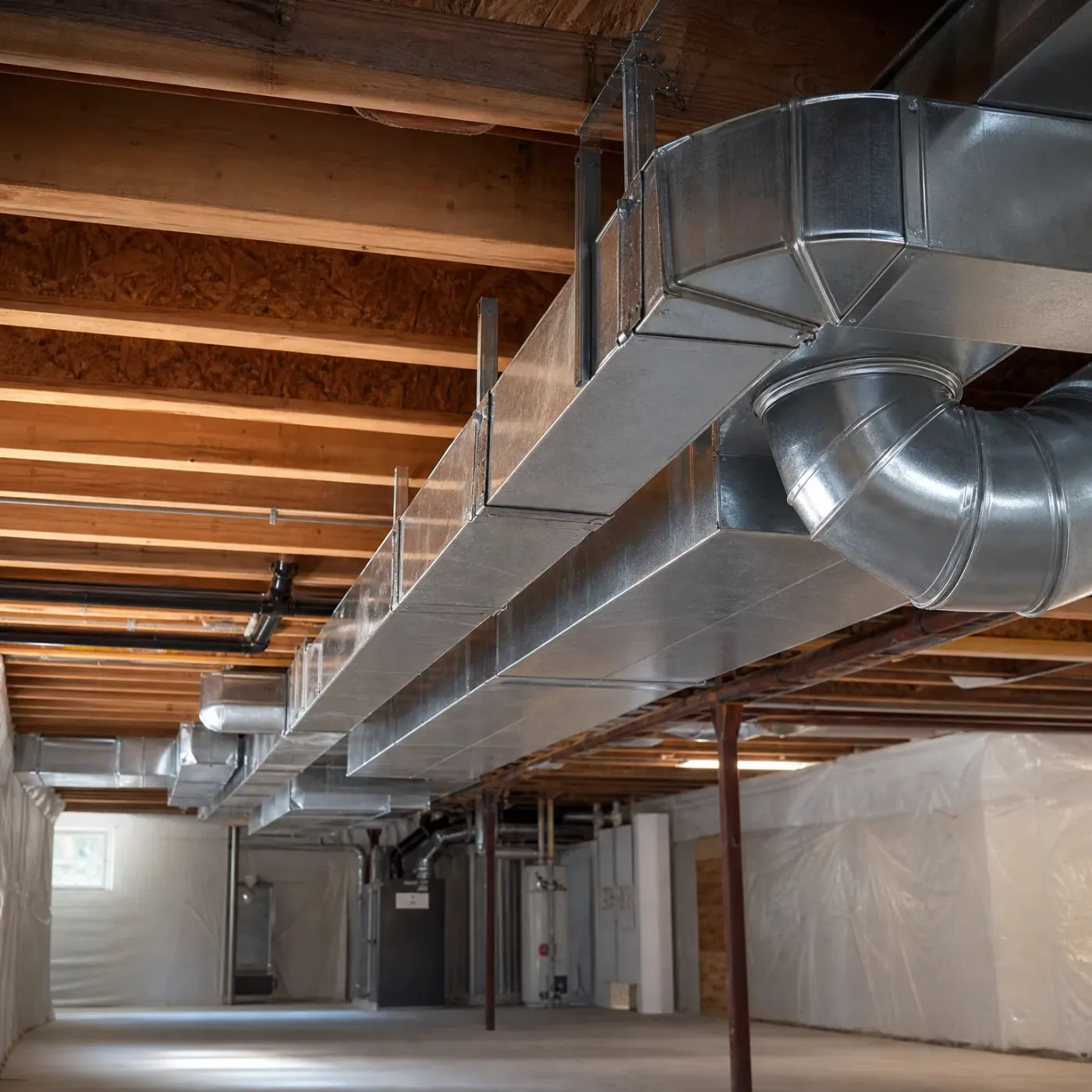
Unfinished basement with galvanized sheet-metal trunk ductwork and round branch ducts suspended beneath wood floor joists, with support posts, plastic sheeting on the walls, and a furnace and water heater along the far wall.

A pro who works on ducts

Your duct cleaning request goes to one local pro.

A local pro who cleans ducts gets in touch with you.

Find a pro near me

Sending the form costs nothing.

Empty basement with bare concrete walls and floor beneath an exposed wood-joist ceiling carrying galvanized sheet-metal ductwork, round ducts and pipes.
Before you get your ductwork cleaning
Unfinished basement with bare concrete floor and walls, exposed wood joists, metal ductwork, a furnace unit, steel support posts, and a small window.
After you get your ductwork cleaning

What a camera inspection shows

Before any cleaning starts, a technician runs a camera through the supply and return runs to see what is actually in there. Light dust coating the walls of a duct is normal and does not call for cleaning on its own. What changes the answer is debris you can see and name: insulation fragments, drywall dust from work done in the attic or crawlspace, or signs that something got in through a gap near the joist bays. If the camera finds that, cleaning has a specific job to do. If it just finds dust, you have your answer without paying for a cleaning you did not need.

Why the furnace matters here

Most homes in Ohio heat with gas, and the furnace pulls return air through the same ducts the air conditioner uses all summer. A duct system choked with construction debris or pest material can restrict that return airflow, which makes the furnace work harder to pull in the air it needs. Over a winter of regular use, that is a real load on equipment that is already running for months at a time. If the camera inspection shows ducts are clear, that is one less thing straining a system during the months it runs the most. If it shows debris, clearing it protects both the furnace and the AC that shares the same ductwork.

A gray-haired, bearded man in a dark coat dusted with snow stands smiling in a dimly lit room with a lamp, mirror, framed art, and a sofa in the background.
An older man with white hair and a beard, wearing a dark snow-dusted coat and scarf, stands in a warmly lit interior hallway with a framed landscape picture, a table lamp and a potted plant behind him, and a snowy view through a window at left.
An older man in a dark snow-flecked overcoat and scarf stands smiling in a warmly lit home entryway, with a glass-paned door showing darkness outside and a lamp-lit room visible through a doorway behind him.
An older man with gray hair and a beard, wearing a dark snow-dusted jacket and scarf, stands smiling in a warmly lit interior hallway with a lit table lamp, a vase of dried branches, and a framed picture in the background.

Power costs 16.90 cents per kilowatt-hour statewide

At 16.90 cents per kilowatt-hour, every bit of airflow your furnace blower or AC has to push through clogged ducts shows up on the bill. Clean, clear ducts let that equipment move air without straining, which is what keeps the cost of running it in check.

EIA-861 2025 statewide residential average

Unfinished basement with bare concrete walls and floor, exposed wood joists, and galvanized sheet-metal HVAC ductwork and pipes running across the ceiling.

Normal ductwork

This is what most basements look like: metal ducts running clean between the joists, no gaps, no debris caught at the seams. Air moves through without picking up dust along the way. If yours looks like this, a cleaning won't change anything you can feel or measure.


Basement ceiling with galvanized sheet-metal ductwork, wooden joists and subfloor, black and white pipes, above a concrete wall and floor.

Ductwork worth checking

At a junction like this, dust and debris have more places to collect, especially where ducts share joist bays with other lines running through. A gap at a seam or a joint near the junction can pull in insulation fibers or pest debris. That's a reason to have it inspected, not necessarily cleaned.

A man in a dark blue shirt stands in an open front doorway of a stucco and wood-clad house, facing a blond woman seen from behind in the foreground on a stone walkway.

So is duct cleaning worth it in Ohio

If your ducts show a real sign, dust at the vents, allergies acting up indoors, or work done nearby that pushed debris into the runs, cleaning is worth doing. If none of that is happening, your system is doing what it's supposed to do and cleaning won't change how it runs or what you pay to run it.

Either way, a camera run through the supply and return lines is what tells you which case you're in, not a guess. A local contractor who works on ductwork through Ohio winters and summers can look at yours and tell you plainly whether there's something to clean out or nothing to do. You'd be matched with one contractor for your situation, not a handful calling at once, and they'll reach out once they have what they need to look at your system.

Interior corner of a dining room with a round wooden table, a ceramic vase holding olive branches, a dark spindle-back chair near a curtained window, and a sideboard with a lamp against beige walls.
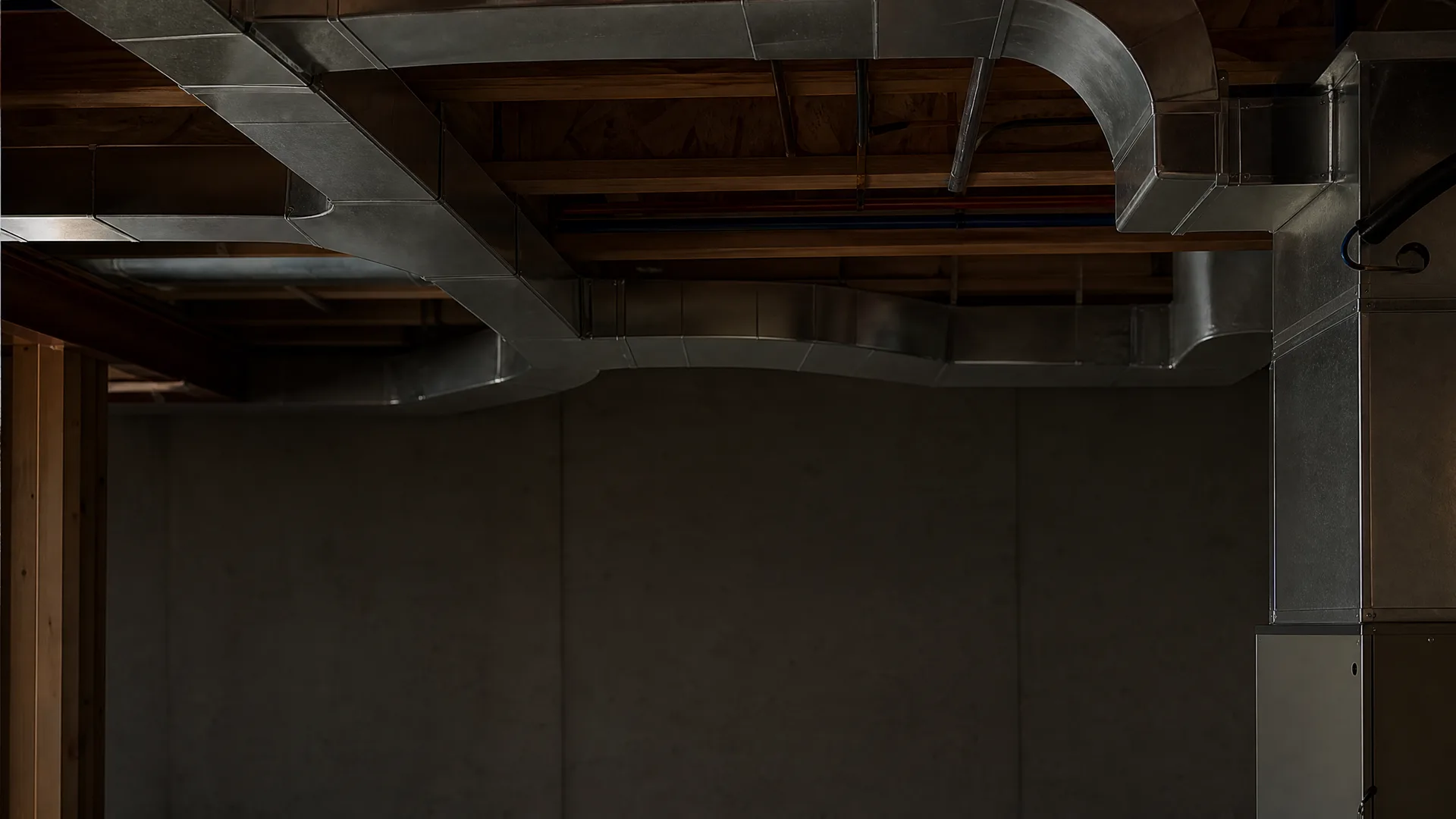
Dimly lit interior showing galvanized sheet-metal HVAC ductwork running below a wooden joist ceiling above a dark gray wall.

Get your ductwork to the right pro

Your request stays with one local pro.

Duct and vent cleaningDucts or ventsOhio
Step 1 of 2

What ZIP code is the job in?