

Ohio HVAC Pros
Side profile of a bearded man wearing a dark faded baseball cap and a dark gray t-shirt against a plain light background.

Is duct cleaning worth it in Toledo, OH

Duct and vent cleaningDucts or ventsLucas County, OH
Step 1 of 2

What ZIP code is the job in?

For most homes in and around Toledo, duct cleaning is not something you need on a schedule. It matters when there's a real reason for it: a renovation that left drywall dust in the system, a rodent problem, visible mold, or vents that blow out dust you can see settling on furniture within days of dusting. Lucas County homes run their furnace hard from November through March and the AC hard enough in July and August that the system is moving air through those ducts most months of the year, so whatever is sitting in them gets circulated into every room. If nobody in the house has allergies or asthma symptoms that get worse indoors, and the vents aren't visibly dirty, cleaning is a lower priority than keeping up with filter changes. If someone in the house is reacting to something in the air, or you can see the problem, it's worth having a contractor look at the ductwork directly rather than guessing.

Galvanized sheet metal HVAC ductwork with a vent grille running along a wooden joist ceiling above a bare concrete wall.
Before you get your ductwork cleaning
A basement with a gray furnace on a concrete pad connected to large sheet-metal ducts running along an exposed wood joist ceiling, with PVC pipes and plastic sheeting on the walls.
After you get your ductwork cleaning

When it actually helps

If drywall dust from a remodel got into the supply runs, or a rodent got into the ductwork and left droppings behind, cleaning takes that out instead of letting your furnace blow it through the house every time it runs. Visible mold on the inside of a duct or the coil is another case where cleaning does something real. These are specific problems with a specific source, and cleaning addresses the source. That's different from cleaning on a calendar, where there's no particular mess to remove and nothing builds up fast enough to justify it most years.


What the filter already does

Your filter is what cleans the air moving through the system, not the ducts themselves. Dust that collects on duct walls mostly stays there instead of circulating, which is why a dusty-looking duct doesn't necessarily mean dirty air in the house. Swapping the filter on schedule does more for air quality than cleaning the ducts does. If vents are blowing out visible dust or debris, that's worth looking into, but it points to a specific problem in the system rather than a general case for cleaning.

Power here costs 16.51 cents per kilowatt-hour

At that rate, every cubic foot of air your furnace blower and AC fan push through dirty ducts costs you something. A clogged system makes the blower work harder to move the same air, and in Lucas County that extra runtime shows up on the bill.

EIA-861 2025

What you'd actually notice at home

If dust is the problem, it shows up fast after a cleaning you can see it on a dark shelf a week later, or you can't. If dirty ducts are pushing your furnace harder, that shows up as runtime, not as a sound or a smell. You won't feel a clogged duct the way you'd feel a dead blower motor. That's why this isn't something to decide by instinct. Look at what's actually going on: dust at the vents, a musty smell when the furnace kicks on, or a reason you know of, like a remodel or pests. If none of those apply, cleaning won't change anything you'd notice.

What's actually at risk here

Skipping a cleaning you don't need costs nothing. But ignoring a real reason, visible mold in the ducts, droppings from a rodent, dust from a renovation, does carry risk, because your furnace and AC are moving that air through your house every time they run. Mold spores and contaminants get circulated, not filtered out; your filter catches particles, not what's embedded in the duct walls themselves. The risk isn't theoretical in these cases, and it isn't something that fixes itself over time. It's also not a reason to clean ducts that don't have one of these problems.

Does your duct system even need to be looked at?

  • Half the homes here were built by 1963

    Half the homes in Lucas County were built in 1963 or earlier. If yours is one of them, the ductwork has had decades to collect dust nobody's seen.

  • Heat runs October through May

    Heat runs here from October through May, about eight months of the year. That's eight months of your furnace pushing air through whatever is sitting in those ducts.

  • Cooling runs June through August

    Cooling runs June through August. Three months where the same ductwork carries the load again, right after the long heating stretch ends.

ACS 2020-2024 · NOAA nClimDiv 1991-2020

A gray-haired man in a dark coat with snow on the shoulders and collar stands smiling in a dimly lit entryway with a paneled front door, lamps, and a framed picture in an adjoining room.
A gray-haired, bearded man in a dark winter coat with snow on the shoulders stands in a doorway of a home interior with a lit lamp, framed pictures, a potted plant and a staircase behind him, and an evergreen wreath at the left edge.
An older man with gray hair and a beard, wearing a snow-dusted dark coat and knit scarf, stands smiling in a dimly lit house entry with a lit lamp, mirror, and a living room with snow visible through the window behind him.
A smiling gray-haired man in a dark wool coat with snow flecks stands in a dimly lit home entryway, with a lit table lamp, potted plant, framed pictures and a living room visible behind him.
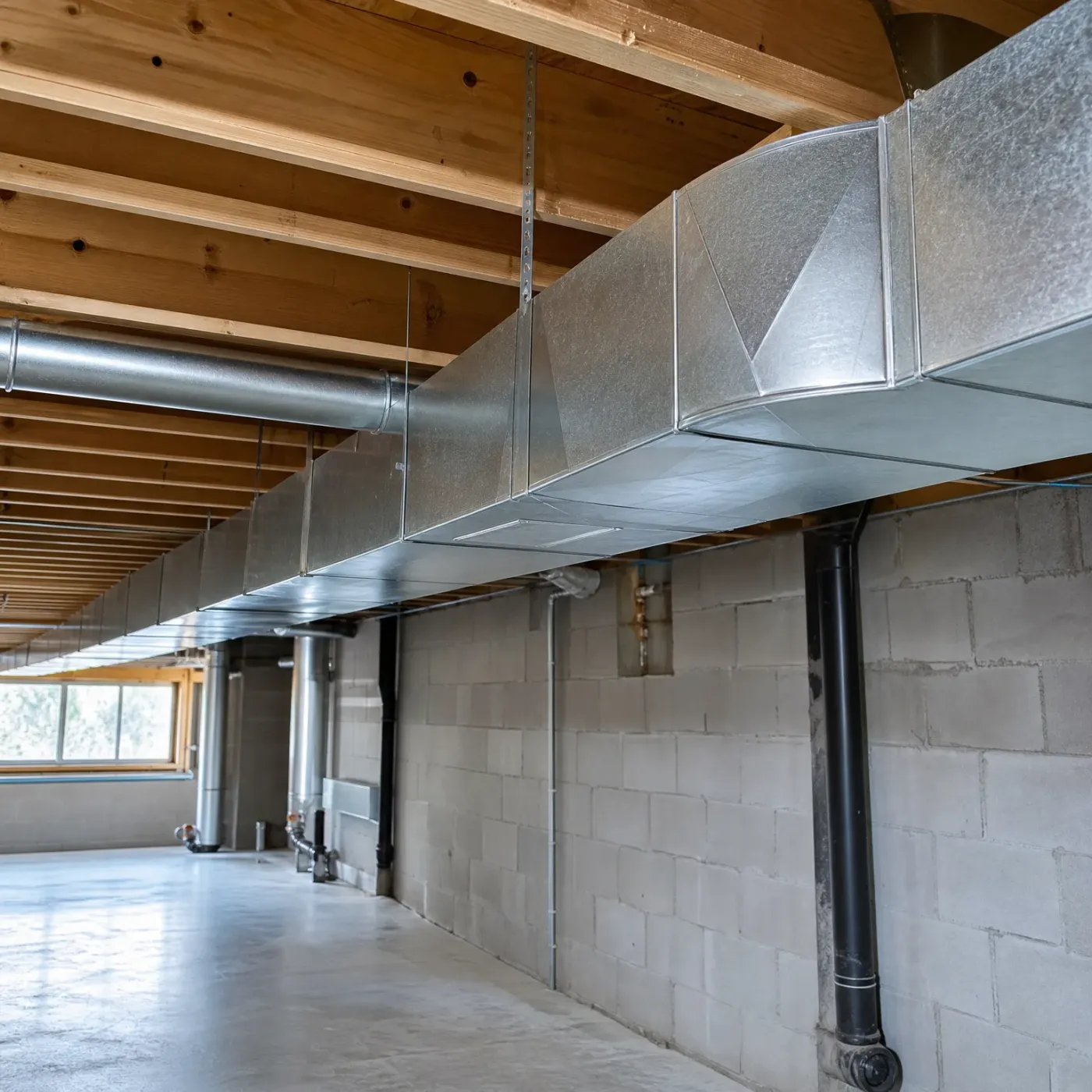
Unfinished basement with galvanized sheet-metal rectangular ductwork and a round duct running beneath wooden floor joists, alongside a concrete block wall with black pipes and a window at the far end.

The right pro for this job

Explain the job once and skip repeating it on every call.

Get matched with a pro who works on ducts in Lucas County.

Get matched

Sending the form costs nothing.

Do You Actually Need It

Worth doing

  • Drywall dust from a remodel or droppings from a rodent problem get pulled out instead of recirculating through the house.
  • Visible mold on a coil or inside a return duct is a health issue that cleaning actually addresses.
  • A system clogged enough to choke airflow makes the blower work harder, and clearing it can bring runtime back down.
  • If vents are blowing out dust you can see landing on furniture, cleaning solves a problem you already noticed.
  • Once the specific cause is gone, there's nothing left in the ducts to blow back out next winter.

Not worth doing

  • A house with no renovation, no pest problem, and no visible mold has no real reason to clean ducts on a schedule.
  • Normal household dust settles in ductwork the same way it settles everywhere else in the house, and it isn't a health risk at that level.
  • Cleaning a system that isn't actually dirty won't lower your gas or electric bill, since the blower wasn't working harder to begin with.
  • If nobody in the house has new or worsening allergy symptoms, there's no symptom for the cleaning to fix.
  • Paying for a cleaning without one of those specific triggers is paying to solve a problem that isn't there.
Unfinished basement with galvanized sheet-metal rectangular and round ductwork running along a wood-joist ceiling, two steel support columns, a small window, and a furnace unit against the far right wall.

Ducts running clean

This is what a normal system looks like, metal trunk lines and flex duct running between the joists to the furnace. Air moves through here every time the blower kicks on. Nothing visible, nothing building up, no reason to open it up and look.

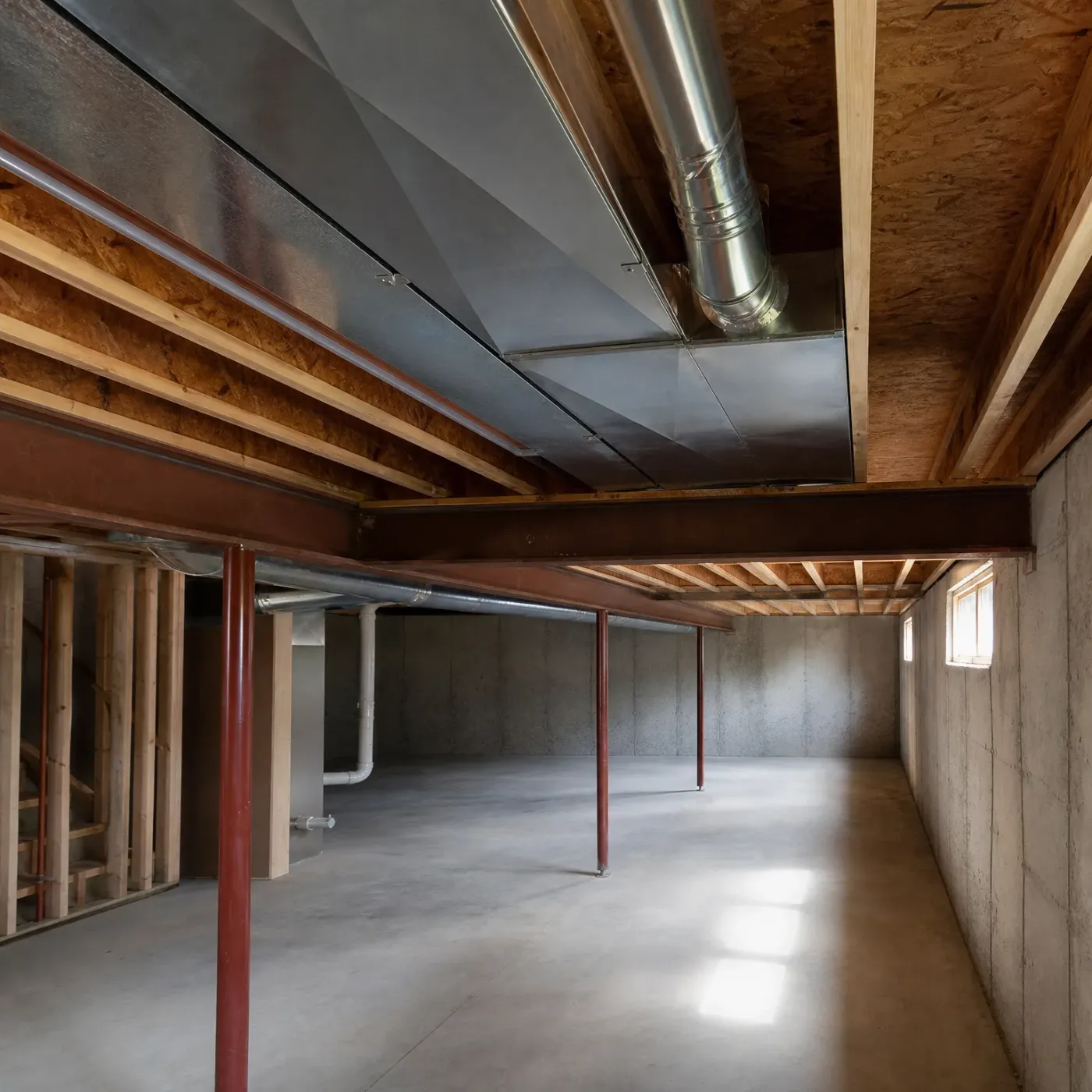
An unfinished basement with bare concrete walls and floor, showing exposed wooden floor joists, pipes, wiring, and metal HVAC ducts with a vent grille overhead.

Ducts with a problem

Same kind of basement, same joists and metal runs, but this is where something got in that doesn't belong: drywall dust from a remodel, droppings from a rodent, mold on a plenum box. That's what cleaning is for, not the ductwork itself getting old.

A woman wrapped in a thick cream knit blanket sits in a chair with an open book on her lap, beside a lit table lamp and a frost-covered window at night.
An older woman with grey-blonde hair in an updo and a beige turtleneck sweater smiles while looking to the side in a warmly lit kitchen, with a round loaf of bread on the counter in front of her and a dark window showing snow outside.

Where this leaves you

  • Duct cleaning in Lucas County earns its keep when there's drywall dust, rodent droppings, or visible mold in the system, not on a fixed schedule.
  • A clogged system makes your furnace and AC work harder to move the same air, and that extra runtime shows up on the bill.
  • If your ductwork hasn't been looked at since the house was built in 1963 or earlier, nobody knows what's collected in there over the decades.
  • Finding out whether your ducts need cleaning means getting someone out to look at them, not guessing from a vent register.
  • Skip the calls to five different companies, the repeated explanations, and the side by side quote comparisons to find out where you stand.
  • Once you know what's actually in your ducts, you can decide if cleaning is worth doing or if the system's fine as is.

There's no blanket answer here. Some homes around Toledo have a real reason to get their ducts cleaned: drywall dust from a remodel, a rodent that got in, mold you can see on a coil or inside a return. Other homes have none of that, and cleaning wouldn't change anything about how the system runs or what you breathe. The only way to know which one is true for your house is to have someone look, especially if the ductwork dates back to 1963 or earlier and nobody's opened it up since.

That's the part that takes the time, not the cleaning itself. Finding a contractor who'll actually come out and inspect before recommending anything, calling around to two or three companies, explaining the same thing about your furnace and your vents each time, then sitting with quotes that don't line up because nobody looked at the same thing. That's the work that sits between you and an answer, more than the question itself.

Once someone's actually in your ductwork with a camera or a brush, you'll know. Dust that's been sitting since the house was built, droppings, mold, or just a clean system that's never needed the work. From there the decision is straightforward. Getting to that point is the part worth skipping past.

Unfinished basement with bare concrete walls and floor, exposed wood floor joists and steel beams, red support columns, and galvanized metal ductwork and pipes overhead, with a small window on the right.

Matched to your ductwork job

Find a duct system pro

Skip searching for a duct system pro and answer a few questions instead.

You're not committing to anything by asking.