Mini Split Installation in Beavercreek, OH
A new system here will heat from October through May and cool from June through August every year. Tell us about the house, and a licensed contractor who covers Greene County will get in touch.
Tell us about the job
It takes about a minute.
Beavercreek asks a mini-split to run most of the year
Your mini-split works eight months of heat and three months of cooling here. That is eleven months a year it has to keep up with the weather outside. On winter nights averaging 24°F, it has to pull warmth from air that is genuinely cold. On summer afternoons near 83°F, it has to keep pace on the other end.
A new mini-split has to meet the federal minimum for a split-system heat pump. That is 14.3 SEER2 for cooling and 7.5 HSPF2 for heating. The standard does not set a separate, lower bar for ductless systems. Given how many months it runs here, sizing it right matters as much as the rating on the box.
- 8 months
- October through May, your system heats
- 3 months
- June through August, it cools
- 24°F
- the average winter night it heats against
- 83°F
- the average summer afternoon it cools against
NOAA nClimDiv, 1991–2020 normals
In Ohio, HVAC licensing for homes is left to the counties.
Ohio leaves the licensing question to the counties, so whether a contractor here is tested or on file depends on the rules where the house sits in Greene County. There is no state HVAC license behind the work. Ohio does define a home contractor as someone carrying at least $250,000 in liability insurance, but that is a definition of the business, not a credential anyone earned by passing a test.
For a mini-split installation, the protection comes less from a license and more from the local building office. In most cities and counties, this kind of installation needs a permit, and the finished work gets an inspection. That inspection is what checks the job was done right, since no state license is standing behind it here.
Source: Ohio Legislative Service Commission
- Is a mini split worth it?
- For a lot of homes here, yes. A mini split heats and cools one room or a few rooms without ductwork, and it does both jobs with one system. Winter nights here average 24°F, so a cold-climate model is worth asking about specifically since not every heat pump holds its output that low. It works best as a fix for a room that never gets comfortable, an addition with no ducts, or a garage or bonus room, more than as a way to heat or cool an entire house from scratch.
- How many rooms can a mini split cover?
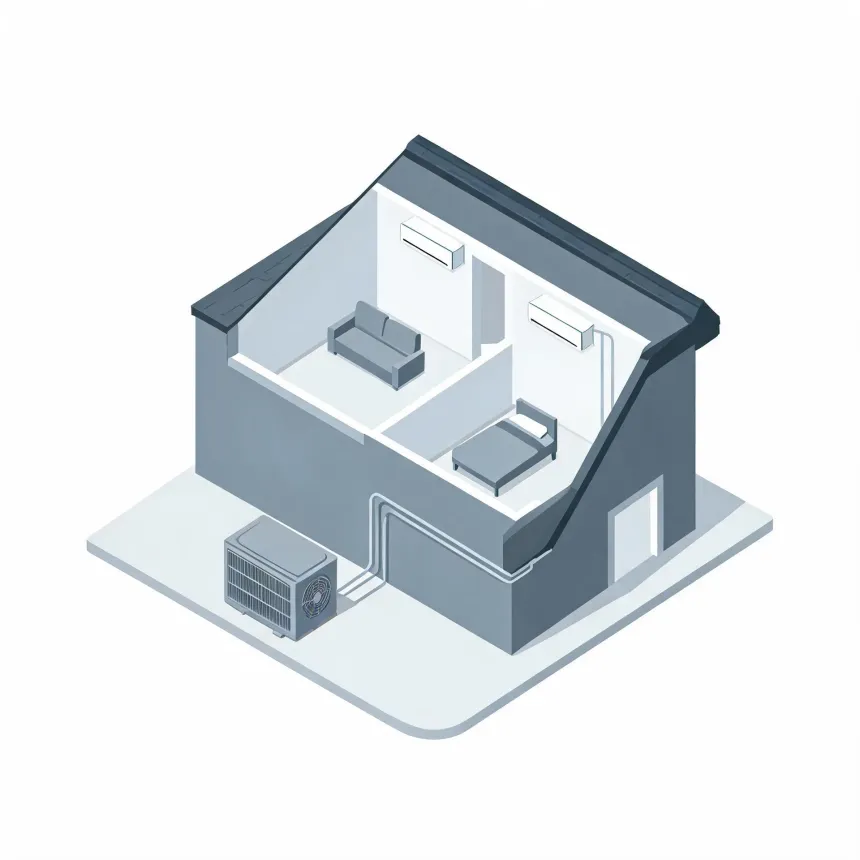
- One outdoor unit can run anywhere from one indoor head to about eight, depending on the system. A single-zone system heats and cools one room. A multi-zone system splits its capacity across several indoor heads in different rooms, each with its own thermostat, but the more zones you add, the less capacity each one gets. A contractor sizes the system to the rooms you actually want covered rather than adding zones just because the system allows it.
- Can a mini split heat a whole house?
- It can, but it takes enough indoor units placed to reach every room, not just one or two heads. A single mini split head heats the room it's in and maybe the space right around it, not the rest of the house. Homes here need heat from October through May, eight months a year, so whole-house coverage means enough capacity in every room to keep it warm through a 24°F night. A contractor can look at the floor plan and say what that takes for your house specifically.