Mini Split Installation in Cincinnati, OH
A new system here will heat from October through April and cool from June through September every year. Tell us about the house, and a licensed contractor who covers Hamilton County will get in touch.
Tell us about the job
It takes about a minute.
What a mini-split has to handle here
Hamilton County asks a mini-split to run most of the year. Heat from October through April, cooling June through September, 11 months out of the year with barely a break between them. On winter nights that average 25°F, the heat pump has to pull warmth out of cold air, not just move it. On summer afternoons averaging 85°F, it runs the other direction for months at a stretch.
Any new mini-split has to clear the federal minimum for a split-system heat pump, 14.3 SEER2 for cooling and 7.5 HSPF2 for heating. That's the floor, not a selling point, so it's worth knowing before you compare quotes.
- 7 months
- October through April, your system heats
- 4 months
- June through September, it cools
- 25°F
- the average winter night it heats against
- 85°F
- the average summer afternoon it cools against
NOAA nClimDiv, 1991–2020 normals
In Ohio, HVAC licensing for homes is left to the counties.
Whether a contractor needs a local license here depends on Hamilton County's own rules, since Ohio leaves that decision to the counties instead of setting one statewide answer. Ohio does define what a home contractor is expected to carry, including at least $250,000 in liability insurance, but that is a definition written into state law, not a license anyone tests for or issues.
For a mini-split installation, the protection here comes from the permit process rather than from a state license. Most cities and counties require a permit from the local building office before this kind of installation, and an inspection once the work is done, checking that the electrical and refrigerant connections were done right.
Source: Ohio Legislative Service Commission
- Is a mini split worth it?
- For the right room or space, yes. A mini split heats and cools without ductwork, so it works well for an addition, a garage, or a finished basement that your furnace and central air don't reach well. Cincinnati winters average 25°F, and a mini split with a heat pump is built to handle that kind of cold. If you're heating and cooling a whole house that already has ducts, it's worth comparing against fixing what you have, since a central system may still make more sense there.
- How many rooms can a mini split cover?
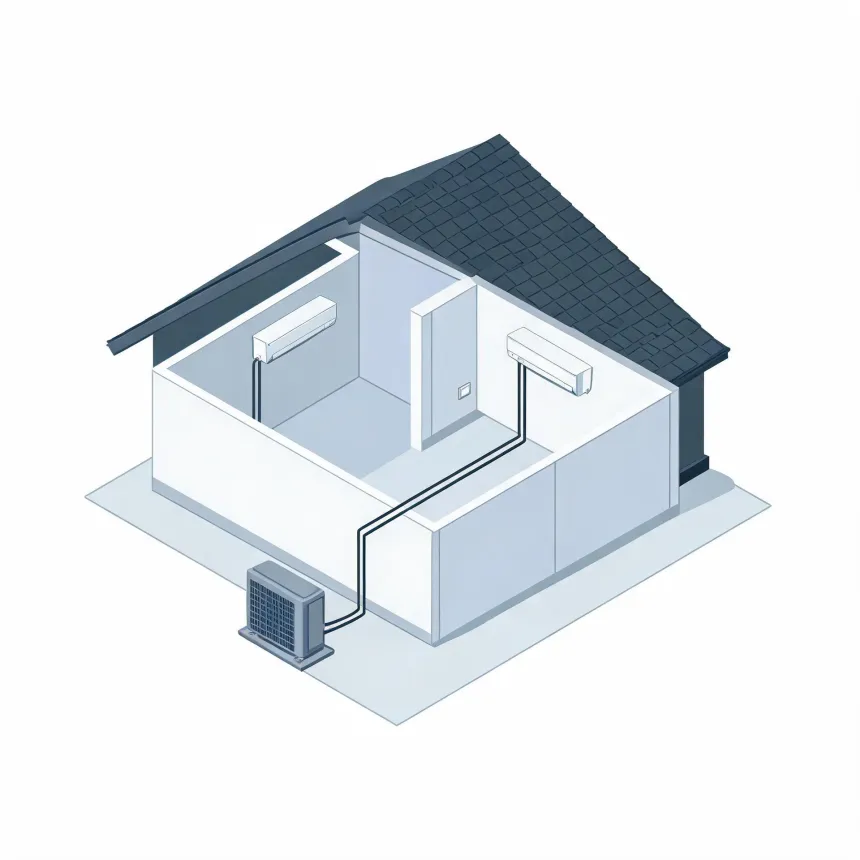
- That depends on the system. A single-zone unit runs one indoor head and covers one room or open area. A multi-zone system runs several indoor heads off one outdoor condenser, so it can cover a few rooms or separate parts of the house at once. The right number of zones comes down to the square footage and layout of each room, which a contractor sizes out for the house.
- Can a mini split heat a whole house?
- It can, if it's sized and placed for that. A mini split uses a heat pump, and homes here need heat from October through April, seven months a year, so the equipment has to be rated to keep up on nights near 25°F. Whether one outdoor unit with multiple zones covers the whole house depends on the home's layout and how many rooms need their own head. A contractor can work out whether whole-house coverage fits the house or whether it pairs better with existing heat as backup.