Mini Split Installation in Newark, OH
A new system here will heat from October through May and cool from June through August every year. Tell us about the house, and a licensed contractor who covers Licking County will get in touch.
Tell us about the job
It takes about a minute.
Newark asks a mini-split to work almost all year
Your mini-split will run from October through May for heat, then June through August for cooling. That is 11 months with barely a break between seasons. On winter nights that average 22°F, a heat pump has to pull warmth out of cold outside air, and on summer afternoons averaging 82°F it has to push heat back out. Both ends of the year ask something real of the system.
Any new mini-split has to clear the federal minimum for a split-system heat pump, 14.3 SEER2 for cooling and 7.5 HSPF2 for heating. That floor is set for a machine running through winters like this one and summers like this one, not a mild in-between climate.
- 8 months
- October through May, your system heats
- 3 months
- June through August, it cools
- 22°F
- the average winter night it heats against
- 82°F
- the average summer afternoon it cools against
NOAA nClimDiv, 1991–2020 normals
In Ohio, HVAC licensing for homes is left to the counties.
Ohio leaves HVAC licensing to the counties, so whether a contractor is licensed depends on where the house sits, and that includes homes here in Licking County. Ohio's definition of a home contractor calls for at least $250,000 in liability insurance, but that is a definition of the term, not a license or a test the state gives.
For a mini-split installation, the protection here comes from the permit process rather than a state license. Most cities and counties require a permit before the work starts and an inspection once it's done, and that inspection is what checks that the installation was done right.
Source: Ohio Legislative Service Commission
- Is a mini split worth it?
- For most homes, yes, especially in a room that never had ductwork reach it. A mini split heats and cools that space directly, and at 22°F on a winter night it still pulls heat from the outside air the way any heat pump does. With 8 months of heating and 3 months of cooling here, a room running one of these most of the year gets real use out of it. Whether it makes sense for your whole house or just one addition depends on how the rest of your home is heated now, and a contractor can walk through that with you.
- How many rooms can a mini split cover?
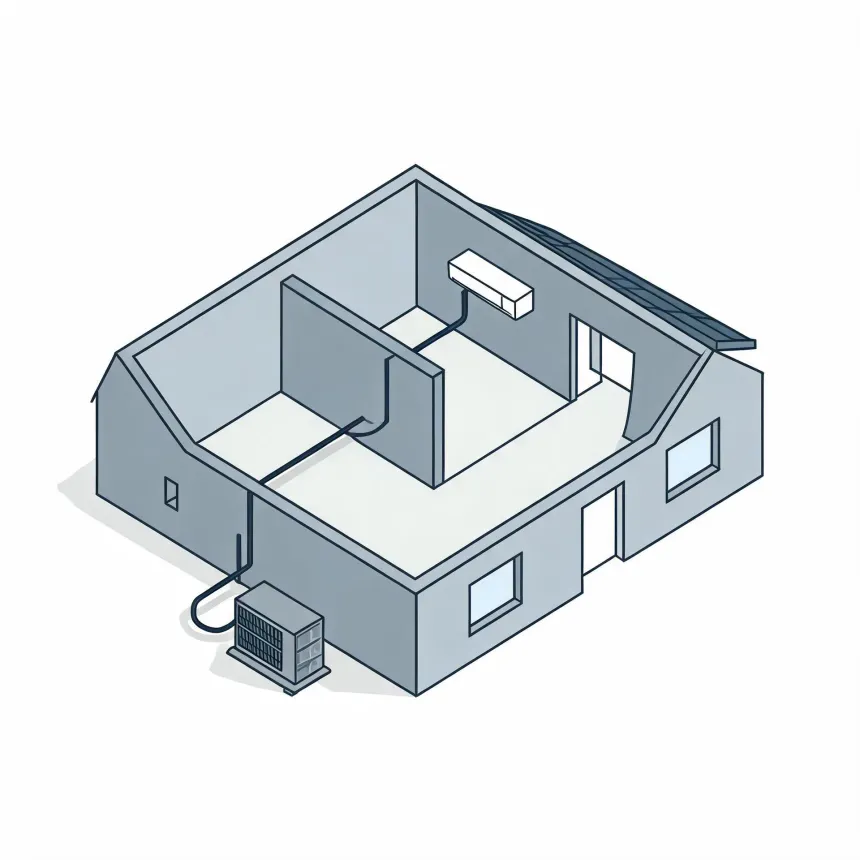
- A single-zone system covers one room. A multi-zone system runs several indoor units off one outdoor unit, so it can cover that many rooms or open areas at once. Each indoor unit still heats and cools only the space it sits in, so the right number for your house depends on the layout and how those rooms connect, which is something a contractor sizes room by room.
- Can a mini split heat a whole house?
- It can, if there are enough indoor units placed to reach every room and each one is sized for that room. Winter nights here average 22°F, and a mini split heat pump is built to keep pulling heat from outside air even at that temperature. What decides whether it heats your whole house is layout and how many zones you install, not the season, so a contractor would need to look at the floor plan to size it correctly.