Mini Split Installation in Lancaster, OH
A new system here will heat from October through May and cool from June through August every year. Tell us about the house, and a licensed contractor who covers Fairfield County will get in touch.
Tell us about the job
It takes about a minute.
What Lancaster winters and summers ask of a mini-split
Your mini-split has to work almost the whole year here. Homes in Lancaster need heat from October through May and cooling from June through August, eleven months with barely a break between. On winter nights averaging 24°F, the heat pump has to keep pulling warmth out of cold outside air for months on end. On summer afternoons near 83°F, it's back to cooling the same rooms not long after.
A new unit installed here has to meet the federal minimum for split-system heat pumps, 14.3 SEER2 for cooling and 7.5 HSPF2 for heating. That's the floor, not a target, and it applies whether you're replacing one mini-split or adding a new one. Fairfield County has also logged 13 winter storms and 81 damaging wind events over the past ten years, and with 18% of Ohio households losing power for at least a day in 2024, it's worth asking your contractor how the system handles a cold snap if the power drops.
- 8 months
- October through May, your system heats
- 3 months
- June through August, it cools
- 24°F
- the average winter night it heats against
- 83°F
- the average summer afternoon it cools against
NOAA nClimDiv, 1991–2020 normals
In Ohio, HVAC licensing for homes is left to the counties.
Whether a contractor here has to hold a license depends on Fairfield County's own rule, not on anything the state checks. Ohio's definition of a home contractor calls for at least $250,000 in liability insurance, which is a definition of the term, not a license anyone has to earn.
For a mini-split, the protection that does exist comes from the local building office rather than a license. Most cities and counties in Ohio require a permit to install a mini-split, along with an inspection once the work is done. That inspection is what checks the installation itself, including the outdoor unit and the lines run to it.
Source: Ohio Legislative Service Commission
- Is a mini split worth it?
- For the right room or addition, yes. A mini split heats and cools one space directly without ductwork, so a converted garage, a bonus room, or an addition that your furnace and ducts don't reach gets its own comfort control. Down to about 24°F on a winter night here, a modern cold-climate heat pump still puts out heat, so it works through the season rather than just in mild weather. Where it makes less sense is trying to cover a whole house room by room when your existing system already reaches every space.
- How many rooms can a mini split cover?
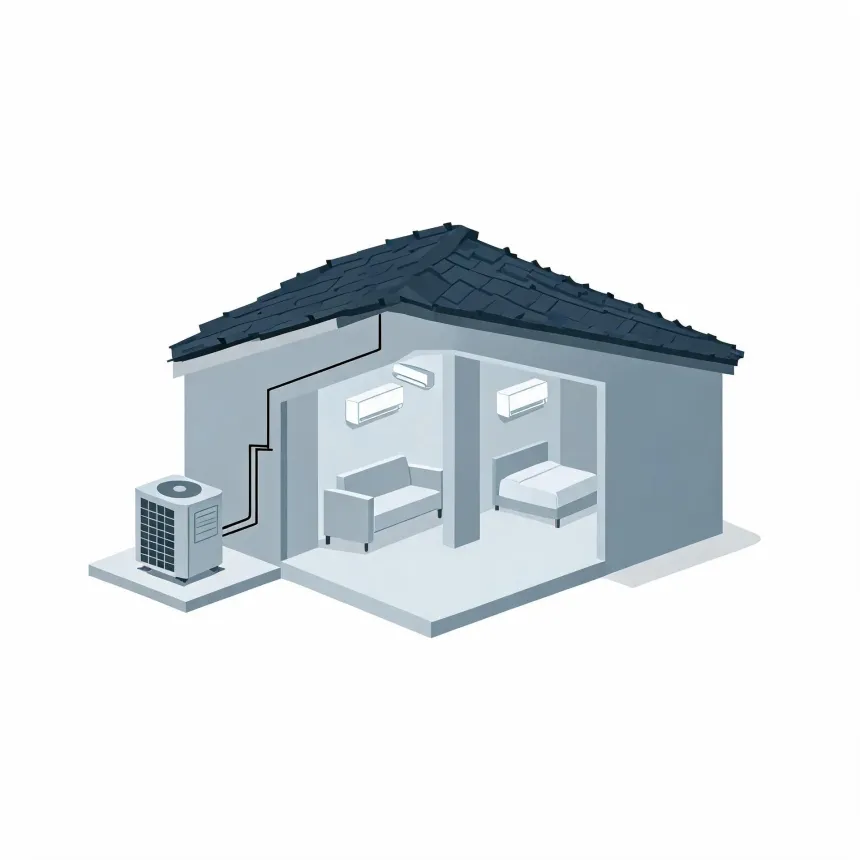
- A single outdoor unit can run one indoor head or several, depending on the system. A single-zone system covers one room. A multi-zone system can run up to eight indoor heads off one outdoor condenser, each with its own thermostat, so you can heat or cool a few rooms independently without ducts. More zones on one outdoor unit means less capacity to spread across them, so a contractor sizes the system to the rooms you actually want covered, not just the number of heads.
- Can a mini split heat a whole house?
- It can, but it takes a matching number of indoor heads and enough outdoor capacity to cover every room, not just one or two. Homes here need heat from October through May, eight months a year, with winter nights averaging 24°F, so whatever system covers the house has to hold up on the coldest nights, not just the mild ones. A contractor can size a whole-house mini split setup or tell you where a smaller, targeted install makes more sense against your existing heat.