Skip searching for someone who cleans dryer vents in Hamilton County.
A dryer that takes two or three cycles to get clothes dry is telling you something. So is a laundry room that feels warmer than the rest of the house, or a dryer that runs hot to the touch while it's working. The lint trap catching less than it used to, or lint showing up around the back of the machine, points the same direction: the vent is blocked and the air has nowhere to go.
In Hamilton County this isn't just an inconvenience. A blocked vent makes the dryer's heating element work harder and run longer to do the same job, and with power priced the way it is here, that shows up on the bill. It's also a fire risk, since lint is the fuel and a clogged vent is where it collects.
Checking it yourself means getting behind the dryer, finding the vent run, and seeing how far the clog goes, which is often further than the first few feet you can reach by hand. Clearing it properly takes the right brushes and a shop vac, and for a long or hidden run, that's a job for someone who does this regularly.
Finding that person is usually the slow part. You'd be calling around Cincinnati, describing the same symptoms to three or four companies, waiting on quotes, and trying to tell which one actually knows dryer vents from the ones that just clean ducts on the side. This page skips that. Tell it what you're seeing and it connects you with one licensed local contractor who works on vents like this all season, someone who can tell from what you describe whether it's a simple clear-out or something more, like a crushed section of duct or a vent hood flap that's stuck shut.
From there, the next step is the button below.
A clogged vent shows up first in how long drying takes. A load that used to finish in forty minutes stretches to sixty or ninety, and you find yourself running it twice. That's airflow, not heat. The dryer pushes hot, damp air out through the vent, and when lint has narrowed that path, the moisture has nowhere to go but back into the drum. You'll notice the clothes come out hotter than normal to the touch, and the room itself warms up more than it should during a cycle. Check the outside vent hood while a load is running. Air should push the flap open with some force. If it barely moves, or you feel only a weak puff of air standing right at it, the vent is restricted somewhere between the wall and the outside. In Cincinnati's cold months, that warm moist air has even less reason to want to travel the length of the duct, so the clog shows up faster and the symptoms are harder to miss.
2.29 people per household on average
A household of two or three people still runs a load most days, which means the vent is working almost constantly. With that kind of daily use, lint builds up steadily, and a clog that would take years to form in a slower household can show up much sooner here.
ACS 2020-2024
A vent that clears itself out
Some homes vent straight out the back wall, a short, straight run to the outside. Air moves through fast, lint doesn't have much chance to settle, and the dryer can go a long stretch between cleanings without you noticing any trouble. If your vent runs this way, a clog still isn't out of the question, but it takes longer to build up enough to matter. You'd likely notice the drying time creep up slowly, over months, rather than all at once. A short, straight vent is the easiest kind to clean too, when it's time, and the easiest for a contractor to check end to end in one visit.
A vent that works against you
Plenty of houses in Hamilton County have the dryer tucked in a basement or interior laundry room, which means a longer run with a turn or two before the air gets outside. Every turn is a place lint can catch and start narrowing the path. A vent like this clogs faster, and the signs show up sooner and harder: drying times that jump in weeks, not months, a burning smell, a vent hood flap outside that barely moves when the dryer runs. If this sounds like your setup, it's worth having someone check the full run, not just the end near the wall.
Why does my dryer vent clog faster here than it should?
2.29 people per household on average
A household this size does laundry often, so lint moves through the vent almost every day, and a vent used that much needs checking sooner than the manual suggests.
Half the homes here were built by 1963
A vent run built in 1963 or earlier was likely sized and routed for the dryers of that era, often longer or less direct than what's installed today.
Power here costs 16.82 cents per kilowatt-hour
Running a dryer twice to finish one load costs more here than in places with cheaper power, since every extra cycle draws electricity at 16.82 cents per kilowatt-hour.
ACS 2020-2024 · EIA-861 2025
What a clear vent looks like outside
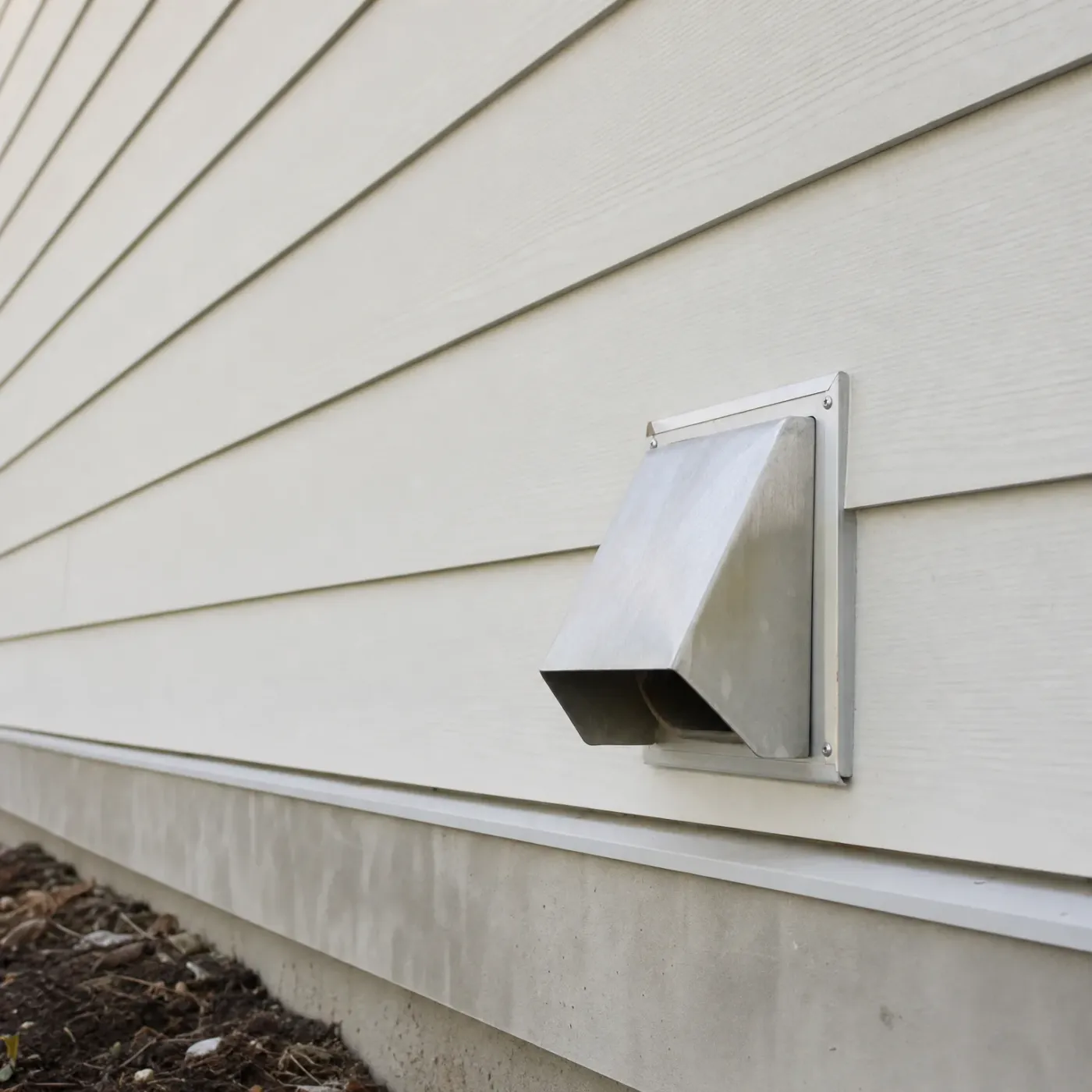
The cap sits flush against the wall, louvers closed or swinging open only when the dryer runs. No dust ring around the opening, no lint caught on the screen behind it. Air pushes the flap open hard enough that you can feel it move from a few feet away.
What a clogged one looks like
Dust and lint cake the hood and ring the opening where the flap sits. The louvers hang open or barely move when the dryer's running, because there isn't enough air behind them to push. Lint built up like that outside usually means more of it is packed into the duct between the wall and the dryer.
Explain it one time
The pro who gets in touch is licensed in Ohio and works in Hamilton County.
Skip calling around for someone who cleans dryer vents.
Go outside while the dryer runs and watch the vent cap for a strong, steady push of air against your hand.
Feel the outside of the vent hose where it's accessible and check whether it's hot to the touch, which points to restricted airflow rather than a bad heating element.
Pull the dryer out and look at the hose for crushed spots or sharp bends, since those slow airflow the same way a clog does.
Time a load of towels and compare it to how long that same load took a few months ago.
Open the trap after a load and see how much lint is sitting loose in the duct behind it rather than caught on the screen.
Have it inspected
A contractor runs a brush the full length of the duct, not just the few feet you can reach from either end.
Inspection covers the whole run, including sections behind the wall or through the attic that you can't see or test from either end.
A contractor who services dryer vents all over Hamilton County has a sense of which setups clog fastest and what to check first.
The inspection tells you whether the problem is lint buildup, a crushed section of hose, or a cap that's stuck shut, not just that airflow is weak.
One contractor handles the job, so you're not fielding calls from several companies or explaining the same thing twice.
A full cleaning resets the clock, so you're not guessing at how much buildup is left after a partial fix.
Vent working clear
The hood sits flat against the siding and the flap hangs loose, ready to swing open. Air pushes it out hard as soon as the dryer starts. No lint caught in the mesh screen, no gray dust ringing the opening or dusting the siding underneath it.
Vent clogged shut
The flap sits open and won't close because lint is packed behind it. You can see it caught in the mesh, built up enough to block the hood itself. Air that should push out hard barely moves it, which means most of that damp air is staying inside the vent run.
What would you actually notice in your laundry room
You'd catch it in small ways before it became a big problem. The dryer button or the top panel feels hot, not just warm, when you touch it partway through a cycle. The laundry room picks up a faint burning smell, especially a few minutes in. Clothes come out hotter than normal, sometimes too hot to fold right away. You might notice more lint than usual around the dryer door or on the floor nearby, because some of what used to vent outside is finding its way back in. None of this is cosmetic. A dryer forcing hot air against a blockage is working harder than it was built to, and lint is one of the most flammable materials in your house. That combination is why a vent that stays clogged doesn't just cost you time, it puts your household at risk.
The flap swings loose and open, pushed by a strong stream of air with each cycle, no lint ringing the opening.
Lint packs the louvers so tight it pokes out past the cover, and the flap can't close behind it.
Why does my dryer vent clog if I clean the lint trap every time?
You clean the lint trap before every load, so a clogged vent feels like it shouldn't be possible. But the trap only catches what's in front of it. A good amount of lint still rides the airstream past the trap and into the vent itself, where it has a much longer path to travel before it reaches outside.
The lint trap only catches what passes in front of it, not what gets past it
A lint trap is built to catch most of the lint, not all of it. The finer fibers slip through the mesh and travel with the airflow into the vent hose. Over time that fine lint sticks to the inside of the duct, especially at bends and joints where the airstream slows down. A straight run out the back wall gives it fewer places to catch. A longer run with turns, or one that climbs through a wall or attic before reaching outside, gives it more. Cleaning the trap every load keeps the big clumps out, but it doesn't touch what's already building up further down the line, which is why the vent itself still needs checking on its own.
What the signs add up to
Longer dry times, a hot laundry room, a hot dryer body, and lint dust around the outside cap all point to the same clogged vent.
Checking the cap outside while the dryer runs tells you more in two minutes than guessing from inside the laundry room ever will.
A household doing laundry most days pushes more lint through the vent than the manual accounts for, so the signs show up sooner than you'd expect.
A vent run with turns or extra length holds onto lint in places you can't see or reach from either end.
A local contractor who clears vents in Hamilton County homes all year knows which setups clog fast and which hold up, so the visit isn't a guessing exercise.
Once you request help, one licensed contractor takes the job, not a handful of companies competing for your callback.
A dryer that runs long, a laundry room that heats up, a cap outside with dust ringing it: these aren't separate problems. They're the same clogged vent showing itself in different spots around the house. Once you've checked the cap and felt the hose and noticed how long a load actually takes, you either have a vent that's moving air the way it should or one that isn't, and by this point you probably already know which.
Doing laundry most days means the vent sees more lint than a vent that runs a couple times a week, so the buildup that takes years elsewhere can show up in a fraction of that time here. If your vent run has a turn in it, or runs longer than a straight shot out the back wall, lint has places to catch that you can't see from the laundry room or reach from outside. That's not something to guess at or clear with a brush from one end.
A contractor who works on vents across Hamilton County all year has already seen the setup in your house, or something close to it, and knows where lint tends to sit in runs like yours. That's a different visit than calling around and explaining the symptoms from scratch to whoever picks up. Request the help and one licensed contractor takes the job, not three or four competing for a callback, which means one visit, one person who already knows what to look for, and an answer instead of another guess.
Skip the calls to every shop
A licensed pro who works in Hamilton County gets your request.