



How often to clean a dryer vent in Cincinnati, OH

Once you send the form, finding a pro is off your list.

Hand it off

Once a year is the rule for most homes in Cincinnati, more often if your dryer sits on an interior wall with a long run of duct to the outside, since every extra foot and every bend gives lint more places to settle. A dryer vent clogged with lint makes the dryer run longer to dry the same load, and that strain on the motor and heating element is how vent fires start. Humid Cincinnati summers make the lint inside the duct damp and slower to clear, which lets it build up faster than it would in a dry climate. If you run several loads a week, or you notice clothes coming out hotter than usual or taking two cycles to dry, check the vent sooner than the one year mark. A vent that empties fast and feels cool to the touch outside is doing its job. One that's warm, slow, or barely moving air needs attention now, not at the next annual check.

A metal hooded exterior vent cover with louvered underside mounted on light gray horizontal lap siding, next to a plain pale wall at an outside corner.

Why the duct run matters

Hamilton County homes vary in how far the dryer sits from an outside wall. A short, straight run clears itself out easier. A run with two or three bends, or one that travels up through a chimney chase, catches lint at every turn. If your dryer vent takes a long path to get outside, lint builds up well before the one year mark, even if you clean the lint screen after every load.

A white hooded dryer vent cover screwed to beige horizontal lap siding on an exterior wall corner, with a blank wall surface at left.

What a clogged vent does

Lint narrows the duct, and the dryer has to push air through a smaller opening to get it outside. Clothes take longer to dry, the dryer runs hotter, and the outside vent hood may barely flutter when the dryer is running. Check it next time you run a load. A hood that should swing open wide and doesn't is telling you the duct behind it is blocked.

Short Run or Long Run With Bends

Short, straight run

  • A dryer close to an outside wall with one straight shot of duct clears lint on its own during a normal cycle.
  • Lint has fewer places to catch when there are no turns pulling it off the airflow.
  • Once a year, timed to when you'd check other home maintenance, is usually enough to keep this kind of run clear.
  • You'll still notice if clothes start taking longer to dry, and that's worth checking even on a short run.
  • Fewer bends also means less chance of a clog forming somewhere you can't see or reach easily.

Long run with bends

  • A duct that travels through a chimney chase or turns two or three times gives lint more spots to settle at each bend.
  • Interior laundry rooms often mean a longer path to the outside, and every added foot is more surface for lint to build on.
  • Twice a year is closer to right for this setup, since lint accumulates faster than a once-a-year cleaning accounts for.
  • Clothes that feel hot to the touch after a cycle, or take noticeably longer to dry, point to buildup worth checking now rather than waiting.
  • A vent hood flap that barely moves when the dryer runs is a sign airflow is already struggling against the lint inside.
A white hooded louvered vent mounted on beige horizontal lap siding above a stucco foundation wall bordered by river rock gravel.

Clear and venting outside

This is what a clean vent looks like from outside. Air moves through the hood with enough force to push the flap open, and the screen stays free of buildup. A dryer that vents like this is drying clothes in one cycle, not two.


A white plastic hooded dryer vent with a lint-covered screened opening mounted on beige horizontal vinyl siding above a concrete foundation.

Lint closing off the opening

This hood is choked. The screen is packed with dark lint, and the opening that should swing open under airflow is losing ground to buildup. Clothes start taking longer to dry, and the dryer works harder to push air through a gap that keeps getting smaller.

Why is my dryer taking two cycles to dry a load?

That's usually the first sign something's wrong. A load that used to take 40 minutes now takes two full cycles, and the clothes come out warm instead of hot. Check the outside hood while the dryer runs. If the flap barely moves, or you don't feel much air pushing out, lint is backed up somewhere in the run. You might also notice the laundry room getting warmer than it should, or a faint burnt smell when the dryer's been going a while. Lint buildup traps heat inside the duct, and that heat has to go somewhere. Left alone, it's the leading cause of house fires tied to dryers.

A white hooded dryer vent cover mounted on beige horizontal vinyl siding above a concrete foundation wall with gravel at the base.

Venting freely

The hood sits clean against the siding and the duct behind it stays open. Air pushes out hard enough to lift the flap on its own. A vent like this clears most of its lint on its own, cycle after cycle, all year.

A square plastic dryer vent hood mounted on light-colored horizontal lap siding above a concrete foundation, with gray lint clogging its screened opening.

Clogged and blocked

Lint has built up across the hood and packed into the screen behind it. Air can't push past it the way it should, so the flap barely moves. Left alone, this is what pulls a dryer from one cycle to two.

A closed silver laptop and a light ceramic mug of dark coffee sit on a wooden table, with a window showing a sunset at left and a kitchen counter with a cutting board and potted plant in the background.

How lint actually moves through the duct

The dryer pushes hot, wet air through the duct and out the hood on the outside wall. Lint rides that airflow the whole way. Most of it is light enough to travel the full run, but some sheds along the inside of the duct at every seam, every bend, every place the metal isn't perfectly smooth. Over months that buildup narrows the path. The dryer has to push harder to move the same amount of air, which is why a vent that was fine in spring can be struggling by fall.

A contractor who cleans vents for a living runs a brush through the full length of the duct, from the back of the dryer to the hood, and checks that the hood flap opens freely when the dryer runs. That's a different job than pulling lint off a trap or vacuuming what you can reach from either end. If you've been searching around for someone who does this, checking reviews, calling a few numbers, explaining the same thing twice, sending this page's form forward gets that off your plate. You tell it what's going on once, and the matching happens from there.

Living room interior with a light sofa holding a dark green cushion and a brown knit throw, a tall leafy plant by a black-framed window, a wooden coffee table with a round tray, and wooden shelves holding vases and books.
A smiling man in a green ribbed sweater stands behind a wooden table holding a ceramic mug of coffee in a kitchen with white subway tile, shelves of potted plants, and a bowl of fruit.
A smiling man with dark curly hair and a beard, wearing a dark green knit sweater, stands at a white marble kitchen counter with a dark blue mug, with open shelving, pendant lights and a houseplant behind him.
A smiling bearded man in a green henley shirt stands at a kitchen island with a gray mug, looking off to the side, with a dining area and shelves blurred behind him.
A smiling man in a navy long-sleeve shirt sits at a wooden table in a kitchen and dining area, with a ceramic mug, a potted plant, and a sliding glass door behind him.
A white plastic hooded dryer vent with a screened opening mounted on gray horizontal lap siding above a concrete foundation and gravel bed.
The hood sits flush on the siding and the flap hangs open, with nothing caught in the gravel below.
A white plastic dryer vent hood mounted on horizontal lap siding, clogged with gray lint at its lower opening, above a concrete foundation and walkway.
Lint has built up around the hood opening and streaked down the foundation, a sign the duct behind it is packed tight.
A bearded man in a dark gray T-shirt sits smiling on a light gray couch, with a houseplant and a framed picture on the wall behind him.
A bearded man in a plaid flannel shirt over a gray tee looks out a frosted multi-pane window with snow outside, a steaming dark mug on the sill beside him and shelves of dishware behind.
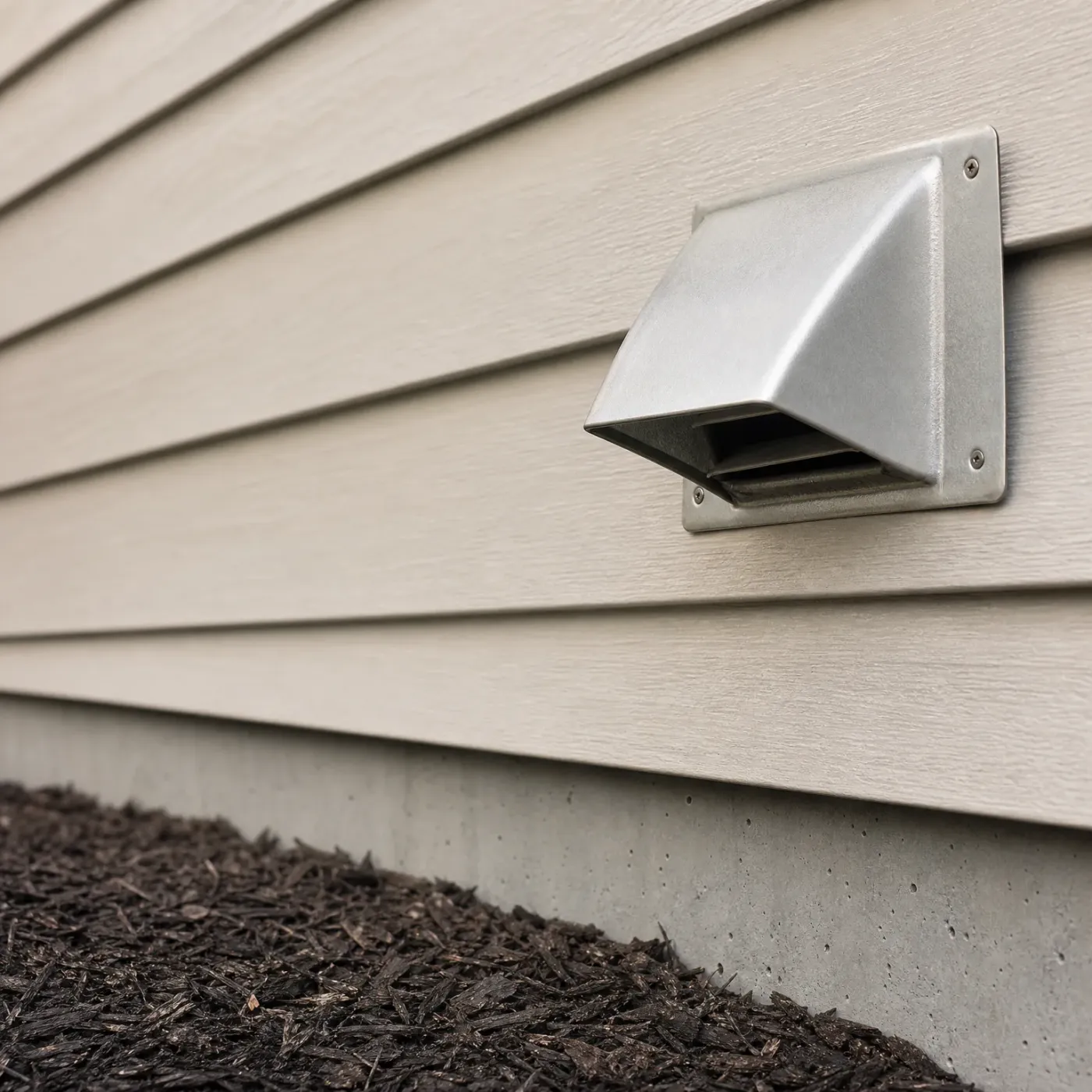
A metal hooded exterior dryer vent with louvered opening mounted on beige lap siding above a concrete foundation bordered by dark mulch.

Stop chasing a dryer vent pro

One form replaces the calls you'd make to find a dryer vent pro.

After you send the request, you're done searching.

Hand off the search

There's no charge for the request.

Does the type of dryer vent duct affect how often it needs cleaning?

You've seen the flexible foil kind and the rigid metal kind, and maybe you're not sure which one is behind your dryer. If you're about to clean it yourself or just want to know what you're dealing with, the material makes a real difference in how often lint catches and how soon it needs attention.

Rigid metal duct clears lint better than flexible duct

Smooth rigid metal duct gives lint the least to grab onto, so air moves through it at full force and most of what passes through keeps going out the hood. Flexible duct, the kind with ridges, slows that air down at every ridge, and lint settles into those ridges instead of riding through. A home in Hamilton County with flexible duct behind the dryer is going to need that line cleaned more than once a year, even with a short run to the outside wall. If you're not sure which one you have, look where the duct meets the dryer. Smooth and solid is rigid. Ridged and bendable is flexible, and it's worth checking on its own schedule.

A hooded dryer vent mounted on beige lap siding, with gray lint buildup packed in and hanging from its louvered opening.
Before you get your dryer vent cleaning
A white hooded exterior vent cover with a screened lower opening, screwed to beige horizontal lap siding above a concrete foundation.
After you get your dryer vent cleaning

2.29 people per household on average

Most houses in Hamilton County hold a couple of people, which usually means three or four loads a week rather than one running most days. A dryer used at that pace still needs the vent checked once a year. Lint builds up the same way load by load, just slower.

ACS 2020-2024

Gas dryer, vent clogged: carbon monoxide has nowhere to go and can back up into the house instead of venting outside with the exhaust.

Electric dryer, vent clogged: no gas to worry about, but trapped heat and lint are still a fire risk, and the motor works harder to push air through.

How often should a household like mine clean its dryer vent?

  • 2.29 people per household on average

    Most homes in Hamilton County run 3 to 4 loads a week rather than one every day, which keeps lint buildup slow enough that once a year still clears it out.

  • Half the homes here were built by 1963

    Half the homes here were built in 1963 or earlier, and older construction often means a longer or less direct vent run that catches more lint per load.

  • Power here costs 16.82 cents per kilowatt-hour

    At 16.82 cents per kilowatt-hour, a dryer working harder to push air through a half-clogged vent costs more to run every single load, not just at tax time.

ACS 2020-2024 · EIA-861 2025

What you need to know

  • Once a year clears the lint for most homes in Hamilton County, gas or electric, long run or short.
  • A dryer that still takes two cycles after a cleaning points to a duct problem, not the cleaning schedule.
  • The hood outside tells you what's happening inside: a flap that lifts easy means air is moving.
  • Interior walls, long runs and extra bends all call for a closer look than a straight shot to the outside.
  • Skipping it costs more than time, from a gas dryer with nowhere for carbon monoxide to go to a motor working harder than it should.
  • Finding a contractor, calling around and explaining the same problem twice is the part you can hand off.

Once a year clears the lint out for most houses in Hamilton County. That holds whether the dryer runs on gas or electric, and whether the duct run is a short shot to an outside wall or a longer path with a couple of bends in it. Homes with the longer, bent runs are the ones that need a closer look sooner, since lint catches at every turn instead of riding straight out the hood. The signs show up before any real damage does, if you know where to check. A dryer that still needs two cycles after a cleaning isn't telling you to clean more often, it's telling you something in the duct itself is wrong, maybe a crushed section or a disconnected joint. The hood outside is the easiest check there is. Watch it while the dryer runs. A flap that lifts easy and stays open means air is moving the way it should. One that barely moves, or lint caught around the edge of it, means the duct behind it is packed tight. None of this is worth ignoring. A clogged vent on a gas dryer leaves carbon monoxide with nowhere to go but back into the house. On an electric dryer it's trapped heat and a motor working harder than it needs to, cycle after cycle. The part you don't have to handle yourself is finding someone to look at it. Calling around, explaining the same problem to three different people, sorting through quotes. That's the part this page hands off.

A gray hooded exterior dryer vent with a mesh screen, screwed to a square plate on gray lap siding beside a corner trim board, with blurred dark foliage in the background.

Send one request and you're done looking

Duct and vent cleaningHamilton County, OH
Step 1 of 3

What kind of equipment?