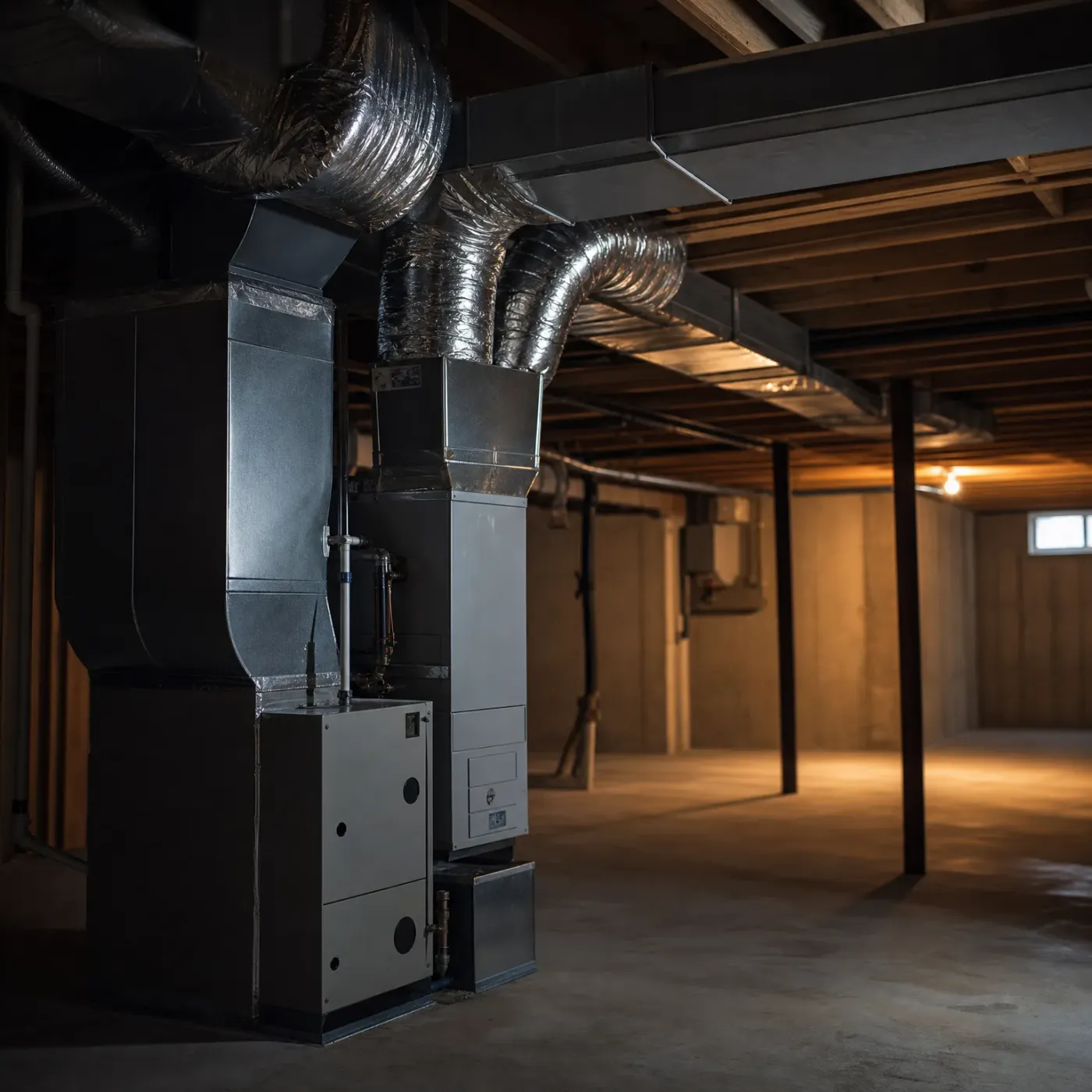
Ductwork doing its job
Metal stays dry, joints stay tight, and air moves through without picking up anything but the cool from the coil. A setup like this doesn't give mold anywhere to hold on, so the air coming out of the vents is just air.
Done looking for a duct system pro
A musty smell when the air kicks on, dust that settles back fast, or a sticky summer that never quite feels dry. All of those can point to mold growing somewhere in your ductwork. This page walks through what to check for and what it means. Once you know, a licensed local contractor can take the rest off your hands.
Hand it offA musty smell when the air kicks on usually means mold somewhere in the ducts, not just a dirty filter. Look for dark spots around the vent covers, dust that comes back a day after you clean it, or anyone in the house getting stuffy or coughing more indoors than out. Mold needs moisture, and Ohio summers give it plenty: the air handler and ducts stay damp from condensation on humid days, and if that moisture sits in the ductwork instead of draining off, it grows. Gas furnaces common here don't dry out the duct system in winter the way a heat pump running constantly might, so mold that started in summer can sit there through the cold months too. None of this clears up by itself. The ducts carry that air through every room, so what's growing in them is what you're breathing, and it keeps coming back until the ducts themselves get cleaned.

Ohio summers run humid for months, and that humid air moves through the same ducts carrying your cooled air. Where the metal or lining stays damp, especially near the evaporator coil or in a duct run that sits in a crawlspace, mold has what it needs. Gas furnaces here don't dry out the ductwork in summer since the furnace sits idle. The ducts carry air, they don't condition it, so once moisture settles in, nothing about normal operation clears it out.

A dark patch around a vent cover or a return grille is mold growing on dust and moisture that built up in that spot. It is not soot, and it will not wipe away and stay gone. If you see it at more than one vent, mold is likely established further back in the duct run, not just at the opening. A single vent with a spot might point to a local leak or condensation problem right there, worth checking before it spreads to the rest of the system.

Metal stays dry, joints stay tight, and air moves through without picking up anything but the cool from the coil. A setup like this doesn't give mold anywhere to hold on, so the air coming out of the vents is just air.

Staining on the foundation wall means moisture has been sitting nearby, and duct runs close to it pick up that dampness. Once the inside of a duct stays wet long enough, mold has what it needs, and the air moving through carries it into the rooms.


A musty duct problem in an Ohio house doesn't sit still over a humid summer. It spreads through the runs and keeps feeding on whatever moisture collects near the coil, and running the AC only pushes more air across it. Finding out for sure means someone getting into the ducts themselves, checking the runs you can't see from a vent cover, not just going by smell. The contractor who takes your request is local and licensed, and works on duct systems like yours all summer, so they know where mold tends to settle in homes with Ohio's humidity and gas furnaces. Your request goes to that one contractor, not a handful of companies competing for the job, so you're not stuck fielding calls while your AC keeps circulating whatever is back there. Send it and let someone who knows this equipment take it from here.
Every time the blower kicks on, that air moves through the ducts before it reaches you. If mold is sitting in there, it rides along into every room on that system, not just the one near the coil. You might notice it as a smell that hangs around a few minutes after the AC shuts off, or as eyes that itch or a throat that stays scratchy while you're home and clears up once you leave. Kids and anyone with asthma or allergies usually notice first. None of this means the air is dangerous in a dramatic way. It means the system is handing you a problem along with your cool air, and that problem doesn't fix itself once the weather turns.
Mold in a duct run doesn't stay put. It spreads along whatever moisture is feeding it, so a patch near the coil this month can turn into a longer stretch of duct by the end of summer. The longer it sits, the more of the system ends up needing attention instead of just one section. Power costs enough here that most people don't want a system working harder than it has to, and a duct lined with buildup makes the blower push against more resistance to move the same air. Catching it early, the way you'd catch a small leak or a loose vent cover, keeps it a smaller job than letting it run through another humid season.
At 16.90 cents per kilowatt-hour, running the blower longer than it needs to costs you. A duct system holding onto mold makes the AC work harder to push air through, and that shows up on the bill before you ever see the problem itself.
EIA-861 2025 statewide residential average


A musty smell that comes back the day after you run the AC is the clearest sign something is growing in the ducts and not just sitting in the filter. Dark spots around a vent cover or a fuzzy film on the grille confirm it, since that only shows up once mold has a hold on the metal or lining behind it. Dust that resettles fast after you wipe it down is usually part of the same problem, spores moving with the air rather than ordinary household dust. If anyone in the house feels stuffy or starts coughing indoors and feels fine once they step outside, that follows the same path, since whatever is in the ducts rides along with the air into every room the system serves. None of this stays put over an Ohio summer. Humid air keeps the ducts damp, especially near the coil or in any run that sits in a crawlspace, and mold spreads as long as that moisture is there. It also costs you before you ever trace the smell to its source, since a duct system holding onto growth makes the blower push harder to move air through, and that shows up on the electric bill. A duct system doing its job looks nothing like this. The metal stays dry, the joints stay tight, and the air reaching your rooms carries only the cool from the coil. If what you're seeing matches the signs above rather than that, the ducts are where to look.




Stop chasing a duct system pro
Only one pro gets your request, so you hear from one company.
