
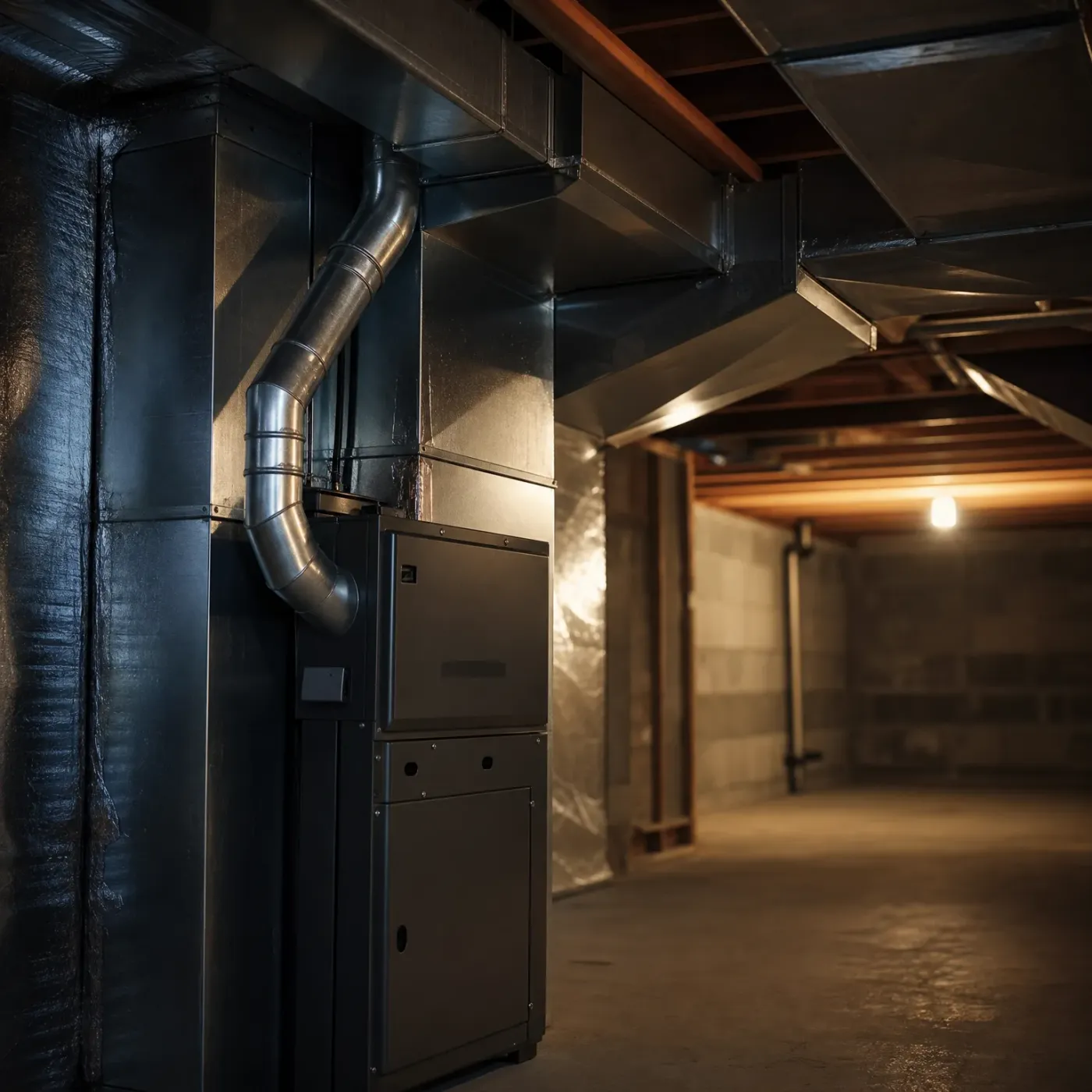
Clean, dry duct run
This is what a duct system looks like when moisture isn't collecting anywhere in it. The metal is dry, the joints are tight, and air moves through without picking up anything along the way. Nothing here feeds mold.
Send one request and you're done looking
That musty smell coming through your vents usually means moisture is sitting somewhere in the system, often in the duct runs or around the coil. With Columbus summers running humid for months, it builds up and lingers until something gets cleaned. Send the form and let a local contractor who deals with this every summer take it from here.
Let a pro reach outA musty smell from your vents usually means mold or mildew growing somewhere in the duct system, most often on the evaporator coil or in duct runs that stay damp. The coil cools air below the point where moisture drops out of it, and that water is supposed to drain away. When it doesn't, or when ducts sit in a crawl space or basement with its own dampness, that moisture sits still instead of moving, and anything organic in there, dust, debris, the lining of the duct itself, starts to grow mildew. The smell comes through every time the blower kicks on because the air is passing straight over it. It doesn't clear up on its own, and running the system more just pushes more of that air through the house. Cleaning the coil and the ducts removes what's actually growing there, which is the only way the smell actually goes away.
This is what a duct system looks like when moisture isn't collecting anywhere in it. The metal is dry, the joints are tight, and air moves through without picking up anything along the way. Nothing here feeds mold.
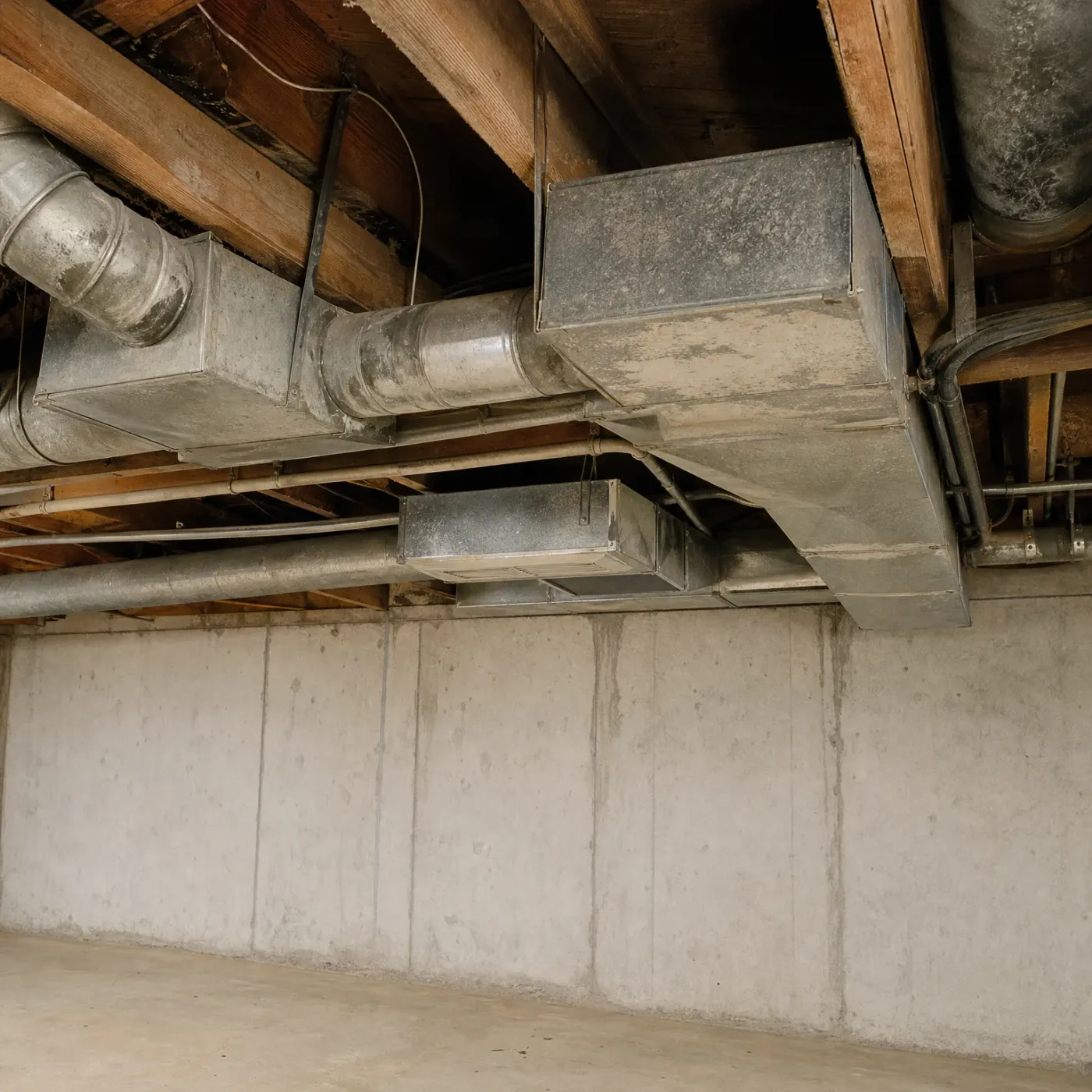
Dust and condensation build up inside the trunk and branch lines and never fully dry out between cycles. That damp buildup is where the smell starts, and it keeps coming back through the vents until the ducts themselves get cleaned out.
Half the homes here were built by 1979
Half the homes in Franklin County were built in 1979 or earlier, so a lot of duct systems here have had decades to collect dust and moisture that feed mold.
Heat runs October through May
Heat runs October through May here, about eight months. That's a long stretch for warm duct runs to stay quiet and damp if moisture is sitting in them.
Cooling runs June through September
Cooling runs June through September. Every one of those months, the coil is dropping moisture into the system, and that's when the smell usually gets worse.
ACS 2020-2024 · NOAA nClimDiv 1991-2020

You open the windows for the first warm day in April and shut the heat off for the year. The ceiling vent in the living room hasn't run in a week, and when the afternoon sun comes through, you notice the dust sitting on the grille, a thin gray line along every slat. It's on the coffee table below too, and on the arm of the couch where it shouldn't be, not two days after you dusted. You wipe the grille down and it looks clean for about a day. Then the smell catches you walking past, faint but there, and you look up at the vent like it's going to tell you something.
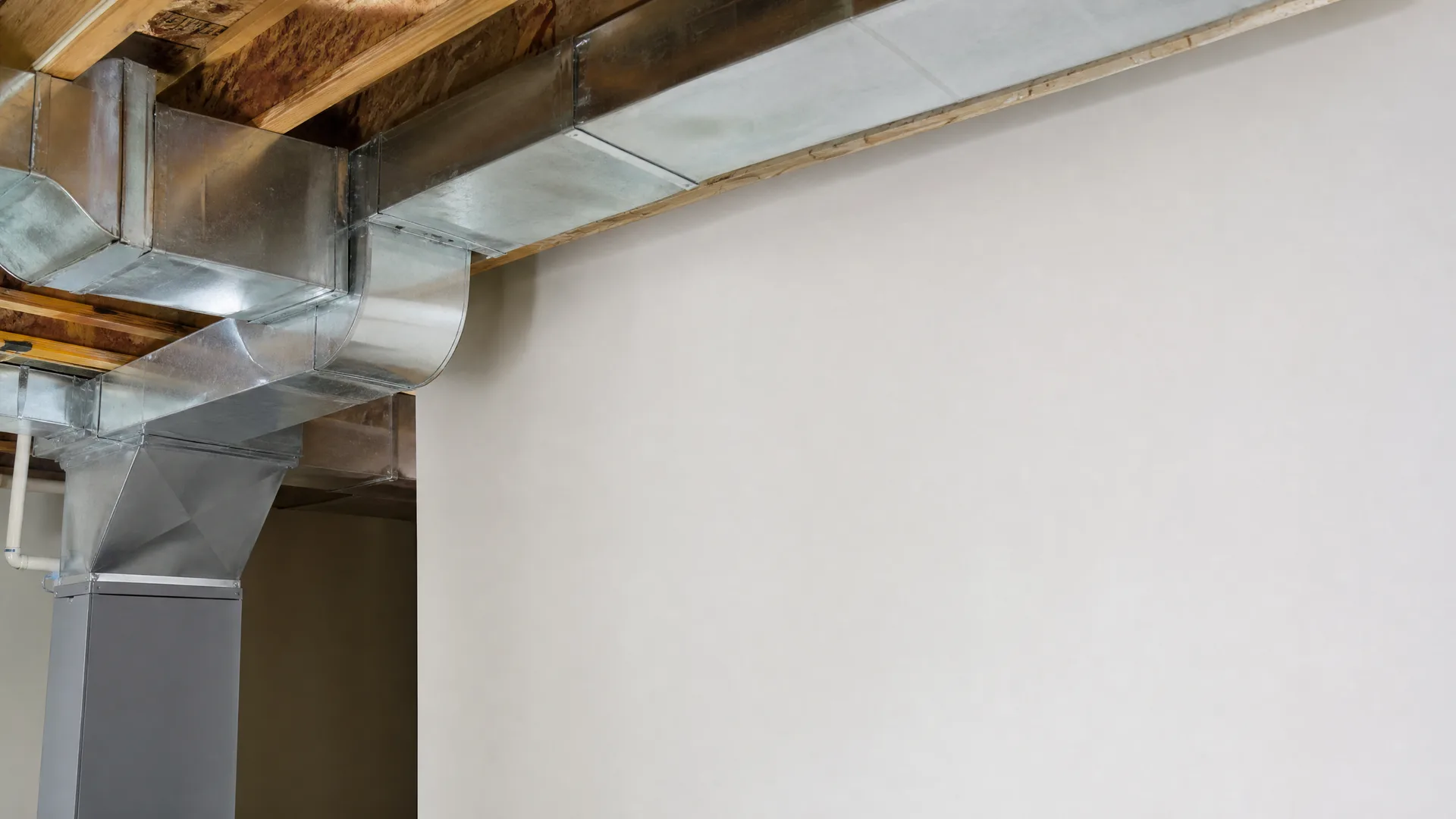
Your air conditioner has a drain pan and a condensate line under the coil that are supposed to carry that water outside. When the line clogs with algae or the pan doesn't drain right, water sits instead of leaving. Standing water next to a coil that's already damp most of the summer gives mold exactly what it needs. A contractor checking for a musty smell usually looks at this line and pan along with the ducts themselves.

Your blower moves air through the return side before it ever reaches the coil, and anything sitting in that return duct gets pulled along with it. A return that runs through a damp basement or crawlspace picks up moisture on its walls the same way supply ducts do. Once mold is established on either side, the blower spreads the smell through every room the system serves, not just the one closest to the problem.
At 17.58 cents per kilowatt-hour, running a blower fan longer than it needs to, or an AC straining to pull moisture out of damp ducts, shows up fast on your bill. Clean, dry ducts let air move the way the system was built for, so it doesn't have to work as hard to keep up.
EIA-861 2025




The pro who gets in touch is licensed in Ohio and works in Franklin County.
It costs nothing to send, and you don't have to hire anyone.
If the musty smell comes and goes with the weather, shows up when the AC first kicks on after sitting idle, or fades once the system has run a while, that points to moisture cycling through the coil and the nearby duct runs rather than dust that's been sitting for years. It tends to be stronger on humid days and weaker once things dry out. A contractor can check the coil and the drain line first, since that's usually where this pattern starts, before deciding whether the ducts themselves need cleaning out.
If the smell is steady no matter the weather or whether the system just ran, that usually means something is already growing inside the duct runs themselves, not just near the coil. Dust and debris sitting in ducts for years gives mold something to hold onto, and once it's established there, it doesn't need a humid day to make itself known. This is the case where cleaning out the duct runs directly, not just the coil and drain line, is what actually gets rid of it.
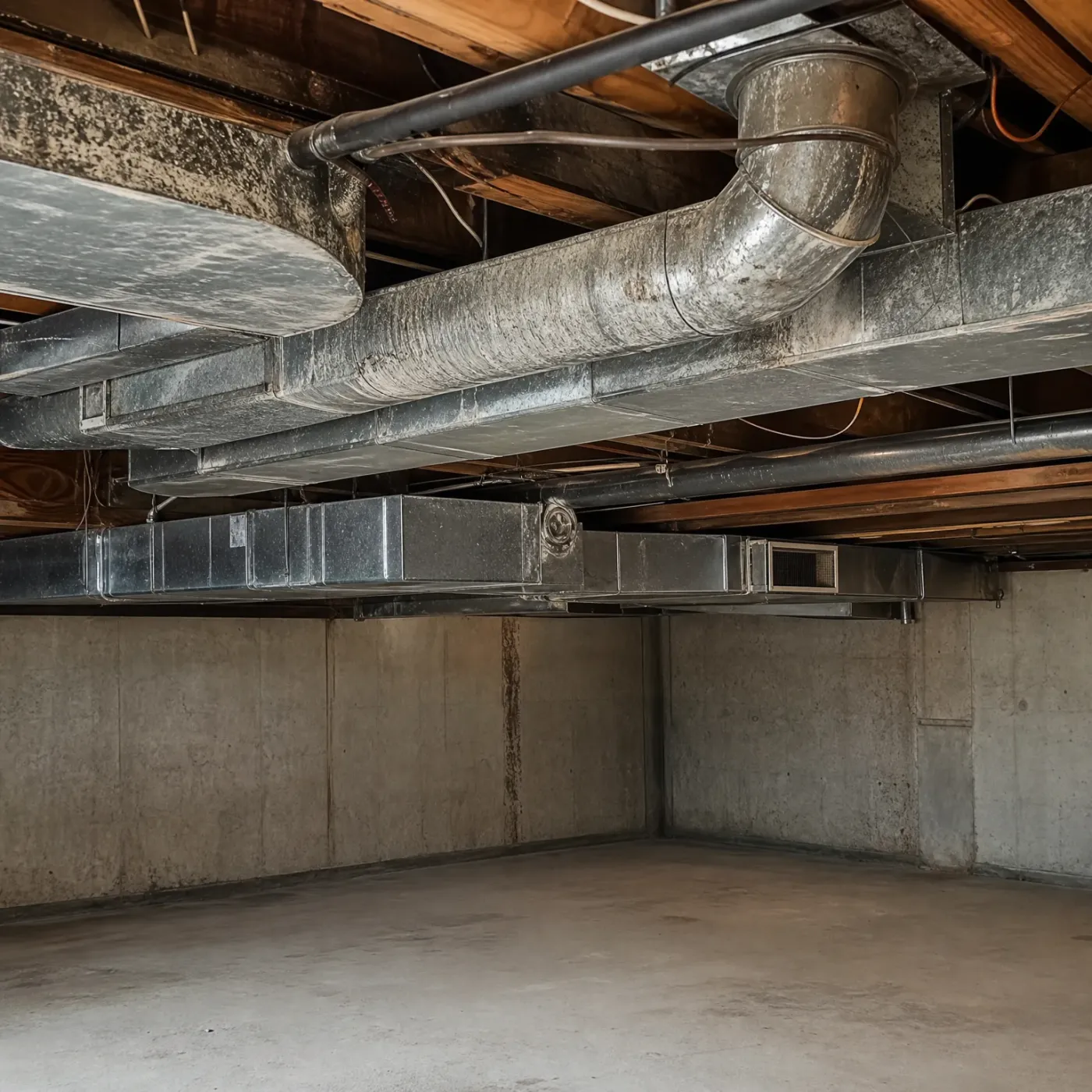
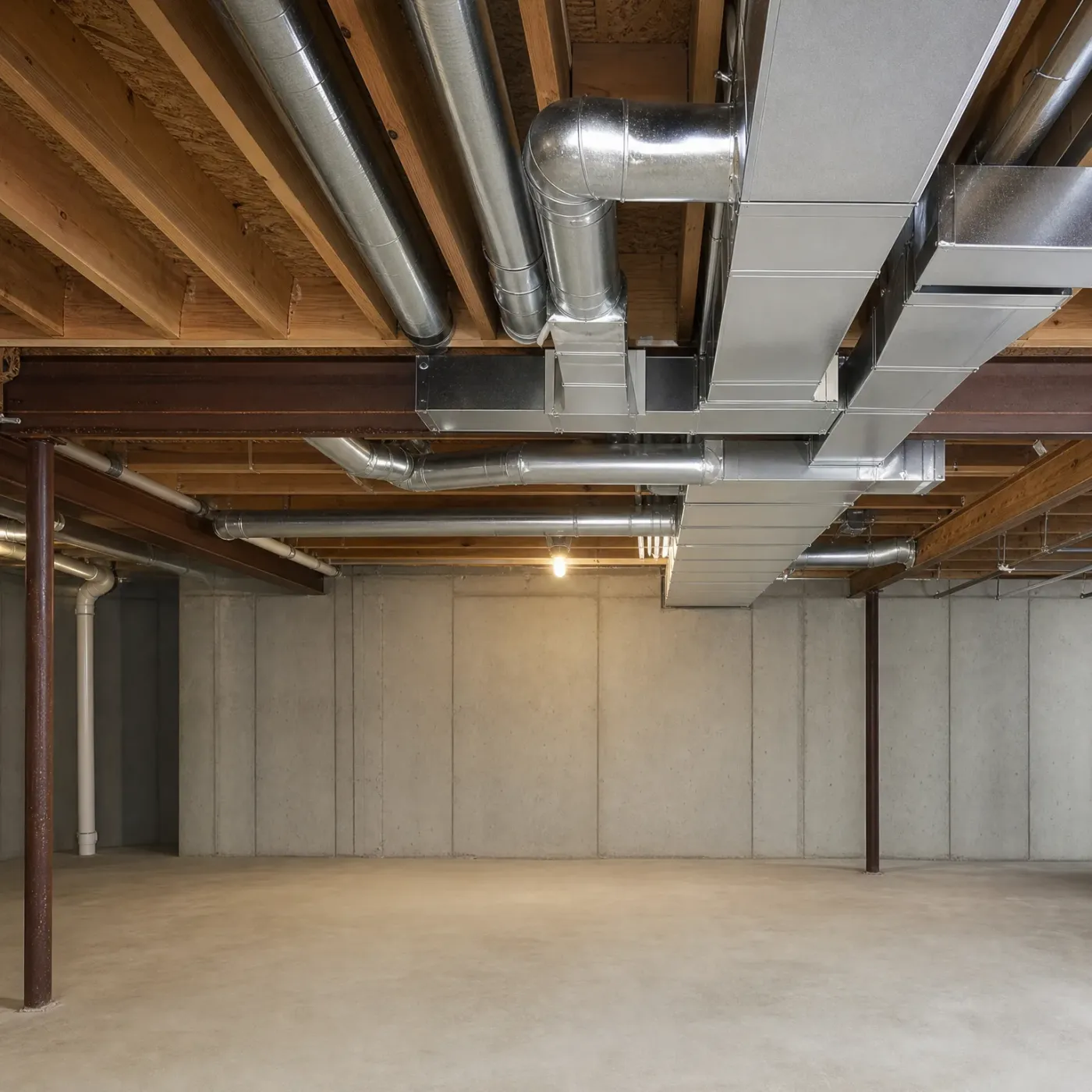
A cleaning crew doesn't just run a vacuum past the registers. They attach a collection unit at the main trunk, then work outward section by section, so loosened debris travels toward one point instead of scattering further into the ductwork. Each run gets agitated with a brush or an air whip, since dust and mold stuck to the metal won't move on its own. The registers and grilles come off too. Behind each one is a boot, a short metal pocket you never see, and that's often where the worst buildup sits. The return side usually needs more attention than the supply side, because it's pulling household air back toward the furnace all day, carrying dust and pet hair with it. None of this touches the evaporator coil, though. If mold has grown there, the smell keeps coming back no matter how clean the ducts are, since air passes over that coil every time the system runs. A camera check before and after shows whether the work actually reached the far ends of the runs, not just the parts closest to the furnace.
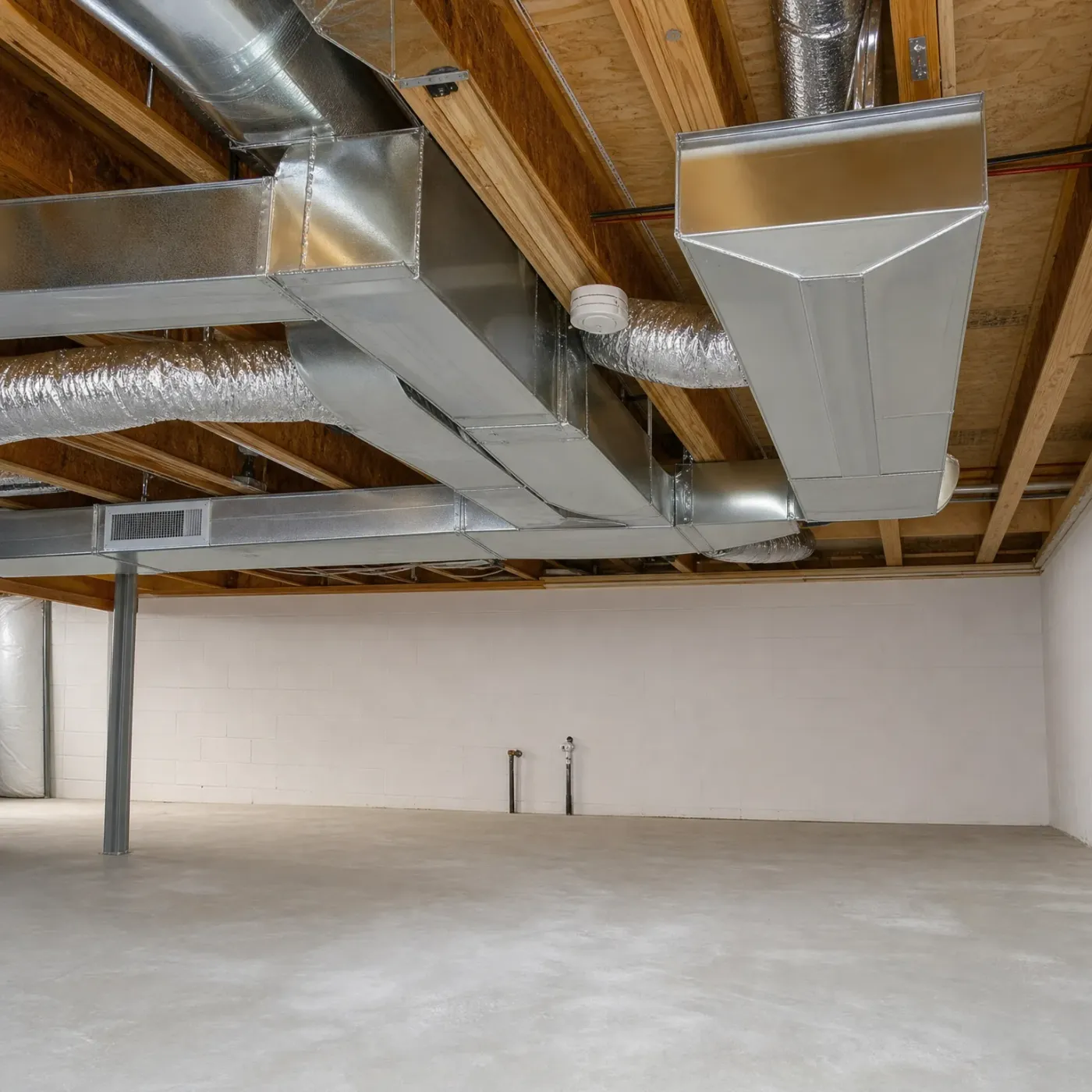
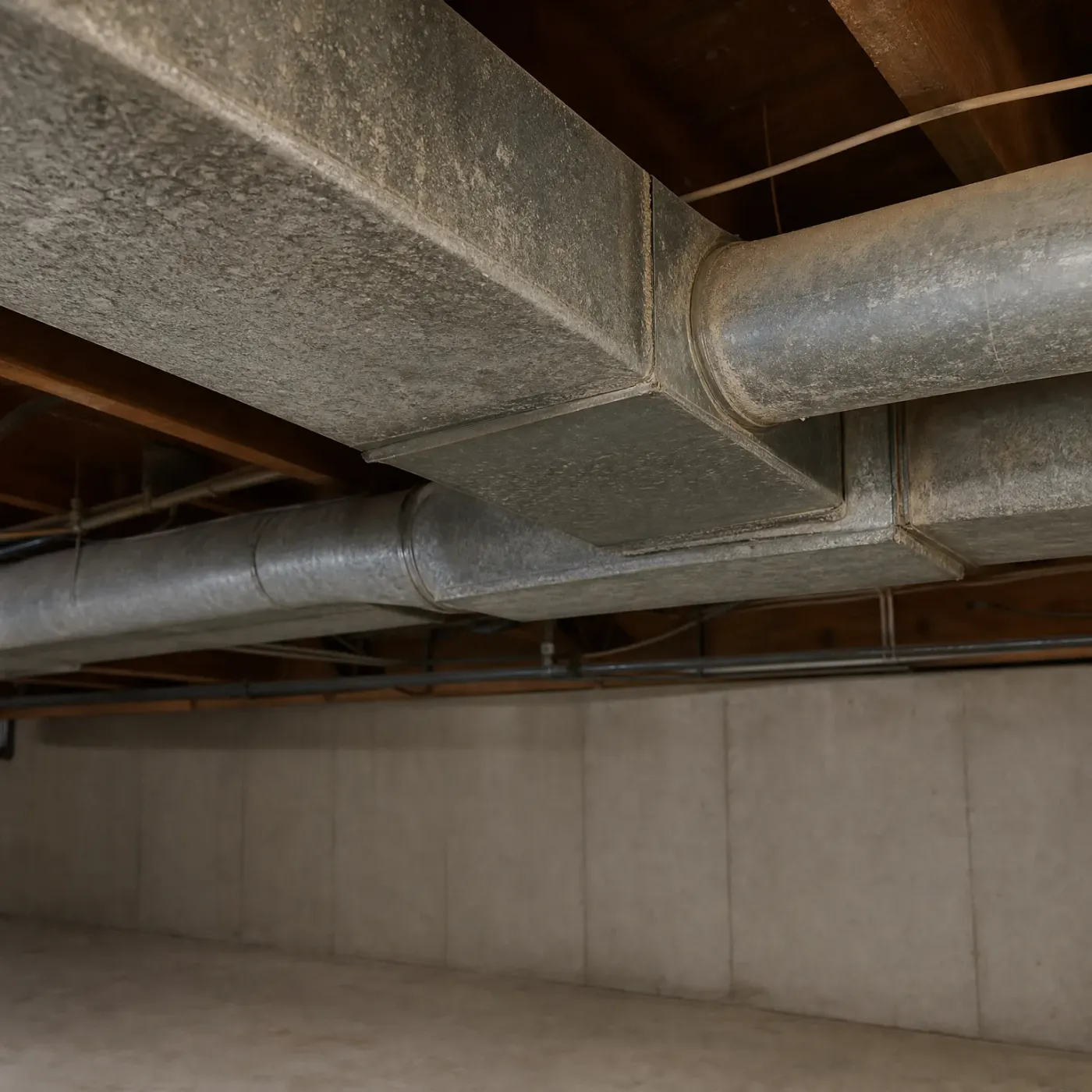
Moisture somewhere in the system is what causes a musty smell from your vents, and in Franklin County's humid summers, that moisture has months to sit before anyone notices. The coil is the usual starting point, since it pulls water out of the air by design, and that water needs a clear path out through the drain line and pan. When that path clogs, the water stays put and mold follows. From there it can spread to the duct runs themselves, where dust on the trunk line and branch ducts gives it a surface to hold onto long after the original clog or leak is gone. Whether the smell sits there all the time or only shows up when the system first kicks on tells a contractor where to start looking, the coil and drain path for a smell that comes and goes, the duct runs themselves for one that doesn't let up. Either way, the fix is the same kind of work: clearing out what's collecting the moisture and giving the system a dry path to move air through again. A duct system with nothing sitting in it doesn't produce this smell, no matter how humid the summer gets outside. That's the difference between a system that's been cleaned and one that hasn't, and it's the difference you're trying to get back to.


Let someone else find the pro
A licensed pro who works in Franklin County gets your request.