Why your house is so dusty in Columbus, OH

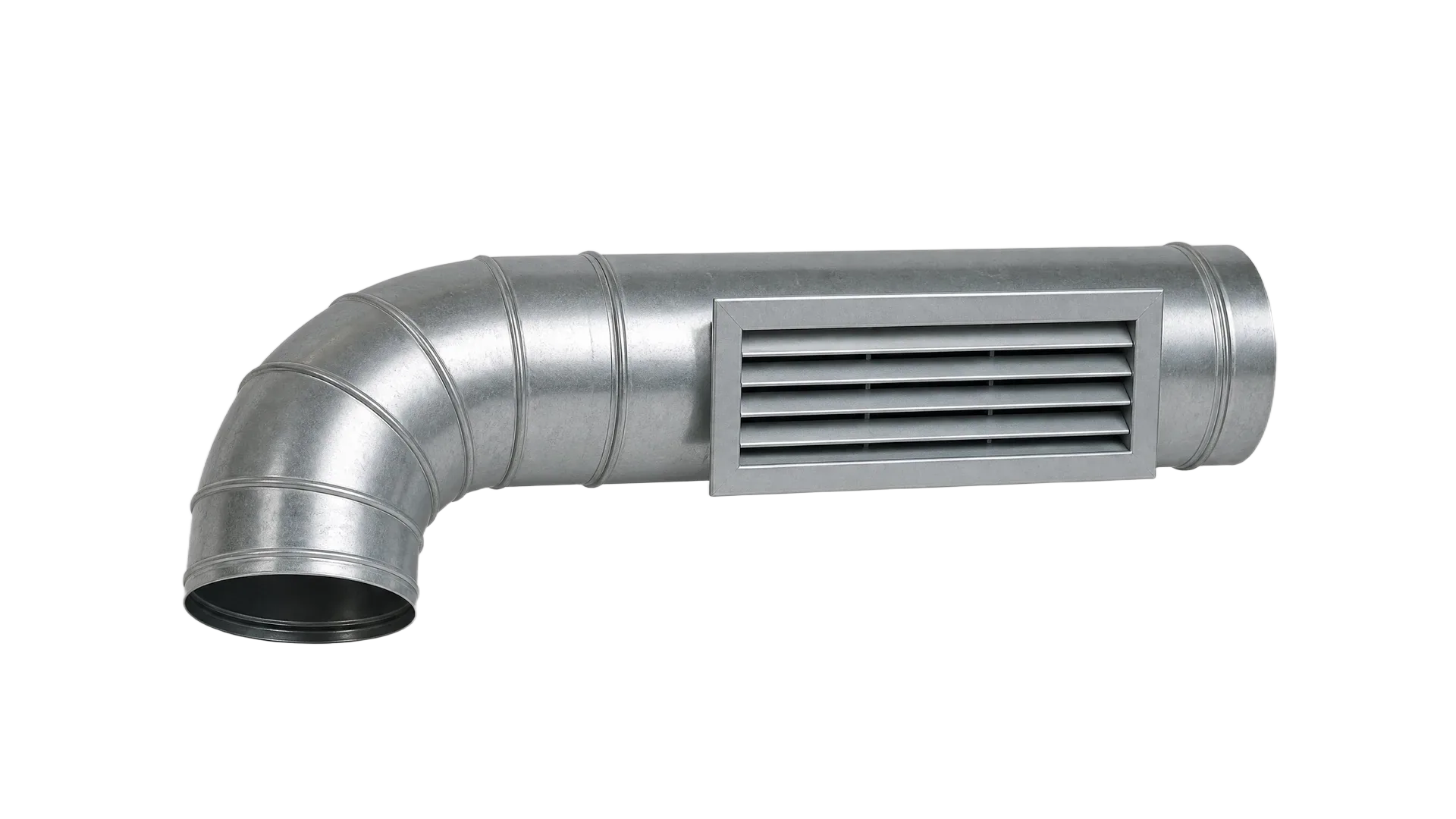
A galvanized steel round duct section with a 90-degree elbow and a rectangular louvered grille on its straight run, shown against a plain gray background.
Get matched

Why is my house so dusty?

You vacuum and dust every week and the house still looks gray a few days later. It settles on the TV stand, the windowsills, the floor near the vents. Before you blame your own housekeeping, it helps to know what's actually putting that dust into the air in the first place, and whether it has anything to do with the furnace or AC running in the ductwork behind your walls.

Your duct system is moving it through the house

Every time your furnace or AC runs, air gets pulled in, passed over the coil or burner, and pushed back out through every room, carrying along whatever is loose in the ducts and in the house itself. Franklin County homes run that cycle hard both ways, the furnace most of the winter and the AC through the sticky stretch of summer, so the air in your ducts turns over constantly. If the filter is old, clogged, or sized wrong for the system, it stops catching what passes through and starts letting it go right back into your rooms. Dust that collects in the ducts between filter changes gets redistributed the same way, settling on surfaces faster than normal cleaning accounts for.

Empty unfinished basement with concrete walls and floor, exposed wood joists, metal HVAC ducts and pipes overhead, and a steel support column near a framed wall.

Ducts sealed and clean

Air moves through the ducts and out the vents without picking up anything along the way. Joints are sealed tight, so the system only moves air from the rooms it's supposed to, not from a dusty basement or crawlspace. What goes in the return is what comes out the supply.

Empty basement with bare concrete walls and floor, a steel support column, and galvanized sheet-metal ductwork and pipes running along the exposed wood joist ceiling.

Ducts leaking or dirty

Gaps at the joints pull in air from the basement itself, concrete dust, insulation fibers, whatever is sitting near that ductwork. Dust built up inside the metal breaks loose and rides the airflow into every room. Every cycle pushes more of it out through the vents.

Is the Dust Coming From Your Ducts

Dust from inside the ducts

  • Years of dust settle inside the duct walls and get stirred loose every time the blower kicks on.
  • A duct cleaning clears that buildup out, so the air moving through the vents isn't picking up what's already sitting in there.
  • This matters most if the ducts have never been cleaned, or the house sat through a renovation with the system running.
  • It won't stop new dust from forming, since dust comes from skin, fabric, and whatever tracks in from outside too.
  • If the ductwork itself has gaps or loose joints, cleaning doesn't fix that part of the problem.

Dust from outside the ducts

  • Some of the dust is coming from a leaky duct pulling in air from the attic, basement, or crawlspace rather than the room it's meant to serve.
  • A dirty filter that's overdue for a change lets more dust pass through and settle on furniture instead of getting caught.
  • Low humidity in the house during Franklin County winters makes dust feel worse because dry air lets it float longer before it settles.
  • Carpets, pets, and foot traffic add to the dust load regardless of what's happening inside the ducts.
  • A duct cleaning won't help if the real issue is a leak, a bad filter, or the dry winter air itself.
  1. A technician opens each duct run through built-in access points.

  2. A vacuum collection system attaches to pull debris out as it's loosened.

  3. Brushes and air whips knock dust and debris off the duct walls.

  4. Registers, grilles and the blower compartment get wiped down last.

What's running dust through your vents all year in Franklin County?

  • Half the homes here were built by 1979

    Half the homes in Franklin County were built in 1979 or earlier, so duct systems that old have had decades to collect dust most owners never see.

  • Heat runs October through May

    Heat runs October through May here, about eight months of the blower pushing air through every duct run and out into your rooms.

  • Cooling runs June through September

    Cooling runs June through September, so the other four months the same ducts are still moving whatever has settled inside them.

ACS 2020-2024 · NOAA nClimDiv 1991-2020

A dusty house isn't just more wiping down. Dust that fine gets into places a cloth never reaches, your furnace blower, the evaporator coil, the bearings in the motor. The system works harder to push air through a coil coated in it, and that shows up on the power bill before it shows up as a breakdown. If anyone in the house has allergies or asthma, you've probably already noticed the house feels worse than the forecast explains, especially once the furnace starts running in October. Dust settling on electronics shortens their life too, not just the look of the TV stand. None of this is about how well you keep house. It's what's moving through the ducts every time the system cycles, and until that gets cleared out, the vacuuming just resets the clock for a few days.

Unfinished basement with concrete floor and walls, exposed wood joists, steel support posts, and large galvanized sheet-metal ductwork running to a furnace or air handler against the far wall.
Supply and return ducts run tight along the joists, each joint sealed where it meets the next, so the furnace only pulls air from the rooms it's built to serve.
Galvanized sheet-metal ductwork and round pipes run along a wooden floor joist ceiling above a bare concrete wall and floor.
Loose joints along the duct run pull air from the basement itself, carrying whatever settles down there straight into the vents upstairs.
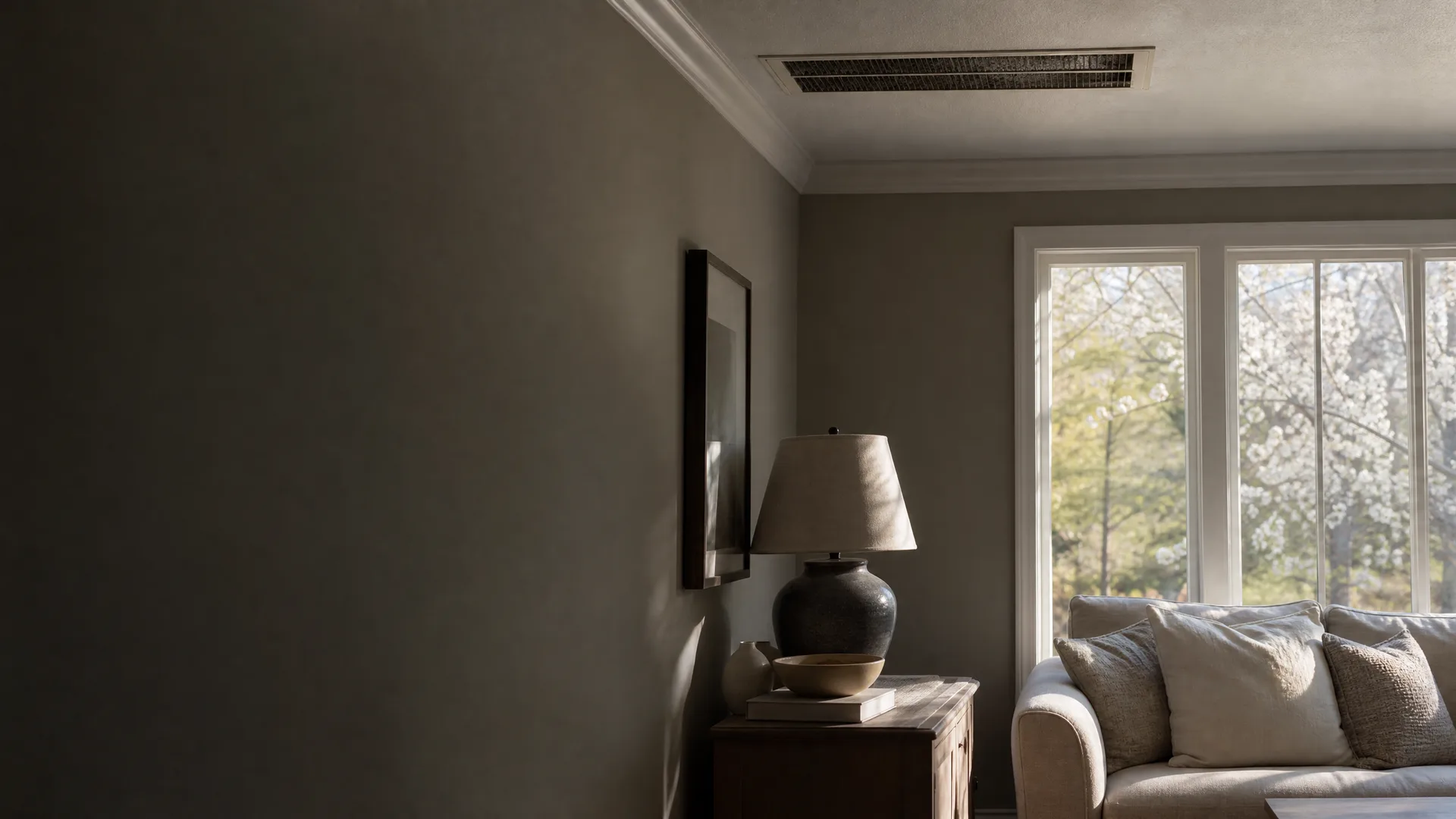
A dimly lit living room corner with a gray wall, framed picture, a table lamp on a wooden side table, a beige sofa with pillows, a ceiling vent, and windows showing flowering trees outside.

It's a Saturday afternoon in April and the sun is coming in low through the living room window. You notice it on the ceiling vent first, a gray film along the edge of the grille, then on the coffee table underneath it where a clean swipe from last week has already dulled over. The windowsill behind the couch has the same coat. You run a finger along the grille and it comes back dark. The furnace hasn't run in days with the weather this mild, but the dust came out anyway, sitting there since the last time the blower pushed air through that vent. You think about calling someone about it, then think you'll just deal with it this weekend, the way you have most weekends this spring.

Find a duct system cleaning pro in Franklin County

You've read why the dust keeps coming back and what it's doing to the furnace and the coil underneath it. The duct system under your floors and behind your walls isn't something you can see or reach, so there's no way to check it yourself beyond what keeps showing up on the windowsills. A technician who cleans ducts for a living can look at what's actually built into your house, the runs, the joints, the return, and tell you what's really going on in there. That's different from guessing based on how often you dust. Franklin County homes vary a lot in how their duct systems were put together, so what's true for a neighbor's house might not be true for yours. Getting someone out to look is the only way to know for sure, and once you send the request, that part stops being something you have to figure out on your own.

The filter only catches so much

A standard furnace filter is built to protect the blower and the coil, not to scrub every particle out of the air. Fine dust slips past it and keeps circulating through the ducts. A tighter filter catches more, but it also makes the blower work harder to pull air through it, and that fan isn't built to handle just any filter. Swapping filters more often helps some, but it doesn't touch what's already built up along the duct walls. That layer keeps shedding into the airstream no matter how new the filter is.

Return ducts pull from everywhere

Every time the furnace or AC kicks on, the return duct pulls air from the rooms it's connected to and sends it back out through the supply side. If a joint along that return run has come loose, it's pulling air from wherever it sits, a basement, a crawlspace, the space behind a wall. That air carries whatever's settled in those spots into the system and out through every vent in the house. A sealed return only moves air from living spaces. A leaky one moves air from everywhere it can reach.

An older man with gray hair and a beard, wearing a dark snow-dusted jacket and scarf, stands smiling in a warmly lit interior hallway with a lit table lamp, a vase of dried branches, and a framed picture in the background.
An older man in a dark snow-flecked overcoat and scarf stands smiling in a warmly lit home entryway, with a glass-paned door showing darkness outside and a lamp-lit room visible through a doorway behind him.
An older man with grey hair and a beard, wearing a dark coat dusted with snow, stands in a dimly lit entryway with a ceiling lamp, a side table with two shaded lamps, and a lit fireplace visible in a room beyond.
An older man with gray hair and a beard, wearing a dark coat dusted with snow, stands smiling in a doorway of a warmly lit home with a sofa, lamp and window visible behind him.

You can run the furnace fan on its own setting and watch what comes out of the vents the next time the sun cuts low across the room. If dust shows up fast, the ducts are feeding it to you.

A duct cleaning doesn't stop dust from forming in the first place. It empties out what's already built up, so the fan isn't launching the same gray film back into the room every time it kicks on.

A woman wrapped in a thick textured blanket sits on a sofa with an open book on her lap, beside a lit lamp and bookshelf, with a frost-patterned window behind her.
A smiling older woman with gray hair in a loose bun wearing a ribbed beige sweater stands in a dimly lit kitchen beside a window showing darkness outside, with a loaf of crusty bread on a wooden board in the foreground.

Power here costs 17.58 cents per kilowatt-hour

At 17.58 cents a kilowatt-hour, pushing air through ducts coated in dust costs more than it should. A blower working against caked-on buildup pulls more power to move the same air through your vents, and you pay for that every month it runs.

EIA-861 2025

Where the dust is coming from

  • The dust on your windowsills and vents traces back to ducts that have been collecting it for years.
  • A furnace filter and regular vacuuming only catch what's already in the room, not what the ducts keep feeding into it.
  • Loose joints or years of buildup inside the duct run are things you can't check or fix yourself.
  • A duct cleaning clears out what's been sitting in the ducts so the air moving through your vents isn't carrying it into your rooms.
  • Once you send the form, finding someone to look at your ducts is no longer something you have to figure out on your own.
  • The house won't stay as gray between cleanings once the source inside the ducts is gone.

The gray film on your windowsills and the dust that settles back on the coffee table a few days after you've wiped it down isn't really about how often you clean. It's about what your furnace is pushing out through the vents every time it runs. Years of dust sitting inside the duct walls gets stirred loose with every blower cycle, and a filter can only catch so much of what's already airborne by the time it reaches the return. Vacuuming and dusting deal with what's landed on your furniture. They don't touch what's still inside the ducts, waiting for the next cycle to carry it into the room again. That part of the system runs behind your walls and under your floors, so there's no way to look at a duct joint or check for buildup without opening up the run itself, and that's not something a homeowner can do with a flashlight and a Saturday afternoon. A duct cleaning reaches the part of the problem you can't get to on your own, clearing out what's been building up so the air moving through your vents stops carrying it into your living room. Once the ducts are clear, the dust that keeps showing up between cleanings should ease off too, since you've dealt with where it was coming from instead of just where it was landing. Sending the form is the last step that's on you. From there, finding a contractor to look at your ducts is handled, not something you have to chase down yourself.

A single-story white stucco house with dark roof, stone-clad entry tower and three dark garage doors, lit from within at dusk, with a curved concrete driveway and dark mulch beds with boulders and bare young trees in the foreground under an orange and blue sunset sky.

Ductwork Cleaning

The right pro for this job

Duct and vent cleaningDucts or ventsFranklin County, OH
Step 1 of 2

What ZIP code is the job in?

  • A ceramic vase holding dried flowers and a shallow stoneware bowl sit on a wooden table beside a bright window, with a paneled wall and framed picture behind.
    • Get matched with a Franklin County pro who cleans ducts.
    • Describe your ductwork job, and a local pro who handles it gets in touch.
  • A stoneware jug holding dried pink and green hydrangea blooms sits on a polished wooden sill beside a dark lidded box and a metal candlestick, in front of a multi-pane wood window with blurred greenery outside.
    • After you send the request, you're done searching.
    • Send the form and the duct cleaning stops sitting on your list.
  • A white window sill holding a ceramic vase with olive branches and a shallow wooden bowl, with blurred green foliage and a neighboring roof visible through the window and a woven basket below.
    • Skip searching for someone who cleans ducts in Franklin County.
    • Fill out one short form instead of calling around.
  • A green fern in a light gray ceramic pot with a matching saucer sits on a wooden table beside a glass-based lamp, next to a curtained window.
    • The pro who gets in touch is licensed in Ohio and works in Franklin County.
    • A licensed pro who works in Franklin County gets your request.