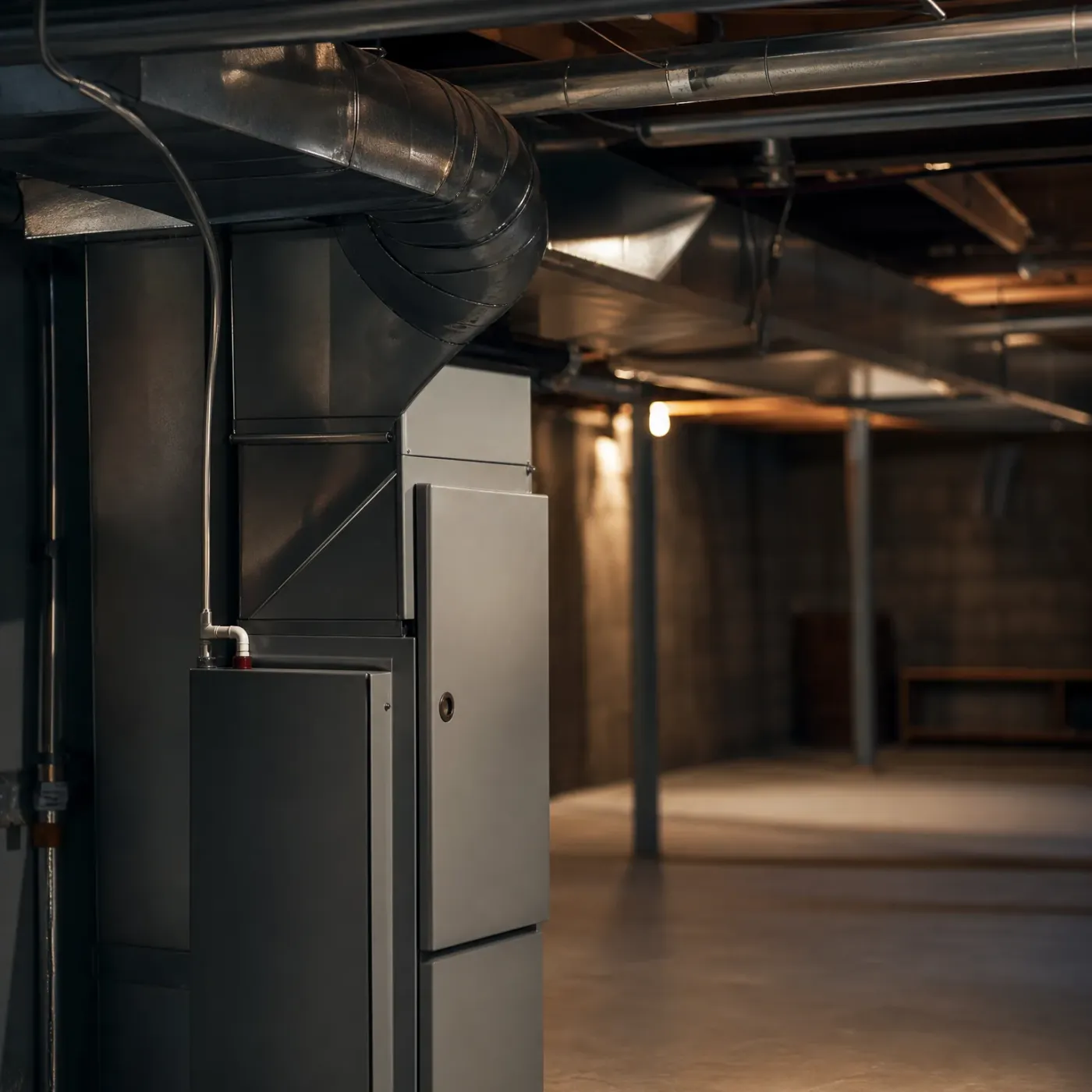



A basement interior with a gray furnace or air handler unit connected to large sheet-metal ductwork running along the exposed joist ceiling, with support posts and a concrete block wall in the dim background.

Stop chasing a duct system pro

Why your house is so dusty in Ohio

Dust that builds back up a day or two after you clean points at what's moving through your ducts, not your housekeeping. Between humid summers and a gas furnace pushing air all winter, Ohio homes pull a lot through that system. This page gets into what's actually collecting in there and what cleaning it involves. Once you send the request, finding someone to look at it is off your plate.

Hand off the search

Dust that keeps coming back usually isn't about how often you clean. It's about what your duct system is circulating. Every time your furnace or AC kicks on, air pulls through return vents, across the coil, through the ductwork, and back into your rooms. Any dust, dander, or debris sitting in that path gets carried along with it and redistributed through the house. In Ohio, summers run humid enough that your AC cycles on and off for months, and most homes heat with gas furnaces that move air hard all winter. That's a lot of air passing through the same ducts, year after year, carrying along whatever has settled inside them. If the ducts themselves are holding dust, no amount of surface cleaning touches the source. It keeps resupplying itself from inside the walls. That's a duct cleaning problem, not a housekeeping one.

Unfinished basement with exposed wood joists, galvanized sheet-metal ductwork, insulated flex ducts, piping, a small window, and a furnace or air handler against a gray wall.
Clean, sealed ductwork like this moves air through the system without picking up extra dust along the way.
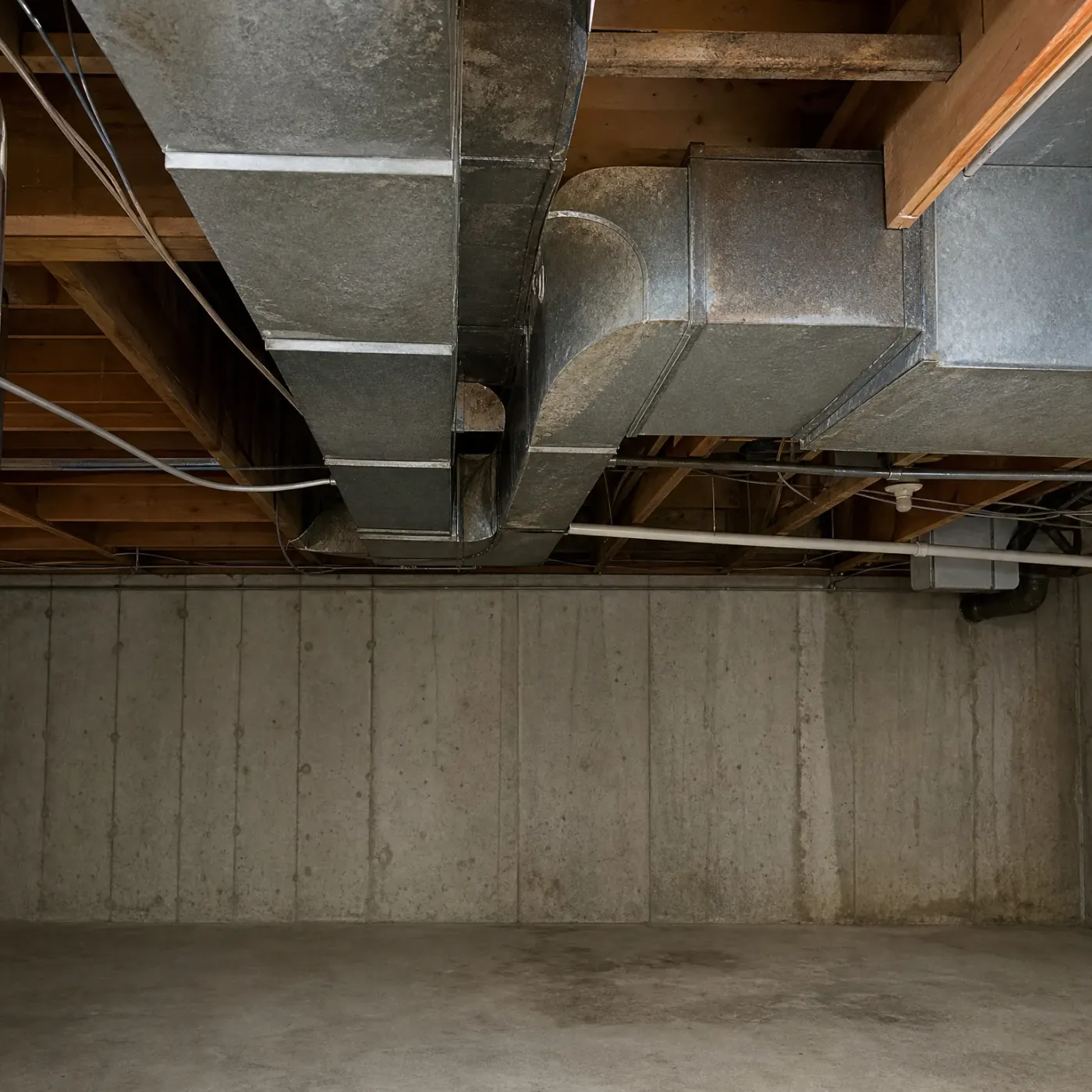
Empty basement room with bare concrete walls and floor, and an exposed ceiling of wooden joists with large galvanized sheet-metal ductwork and pipes.
Gaps and bare joists like these let ducts pull dust straight from the basement every time the system runs.

A duct system is a loop. Air goes out through the supply vents, and it has to come back in somewhere, and that somewhere is the return. If that return sits in a basement or a utility room, it pulls in whatever is floating around down there, every single time the blower kicks on. And that blower isn't running once a day. It cycles on and off dozens of times between morning and night, all summer and all winter, so a gap at a duct joint that looks small adds up to a lot of air moving through it over a week. Some of what comes through settles inside the ductwork and on the coil. The next time the system starts, that layer gets stirred up and carried right back into your rooms. A filter that's overdue for a change makes this worse, since it stops less of the fine dust and lets more of it reach the coil and the ducts in the first place. Clean out what's sitting in the trunk lines and branches, and the system simply has less to recirculate.

How dust gets back in your air

  • Your return vents pull air from whatever space they sit in, and a return in a basement or utility room draws in dust from that space every time the blower runs.
  • The blower cycles on and off dozens of times a day in both summer and winter, so even a small leak in the duct joints adds up to a lot of air over a week.
  • Dust that settles on the evaporator coil or inside the ductwork gets knocked loose and carried back into your rooms the next time the system starts.
  • A dirty filter does less to stop fine dust and lets more of it pass through to the coil and ducts instead of catching it.
  • Static pressure from clogged ducts or a dirty coil can force a furnace or AC to pull harder at any gaps in the return side, drawing in more dust than a sealed system would.
  • Duct cleaning removes the dust sitting inside the trunk lines and branches so the system has less to recirculate once it's running again.
Unfinished basement with bare concrete walls and floor, and galvanized sheet-metal HVAC ducts, pipes and wiring running along the wood-joist ceiling.
Before you get your ductwork cleaning
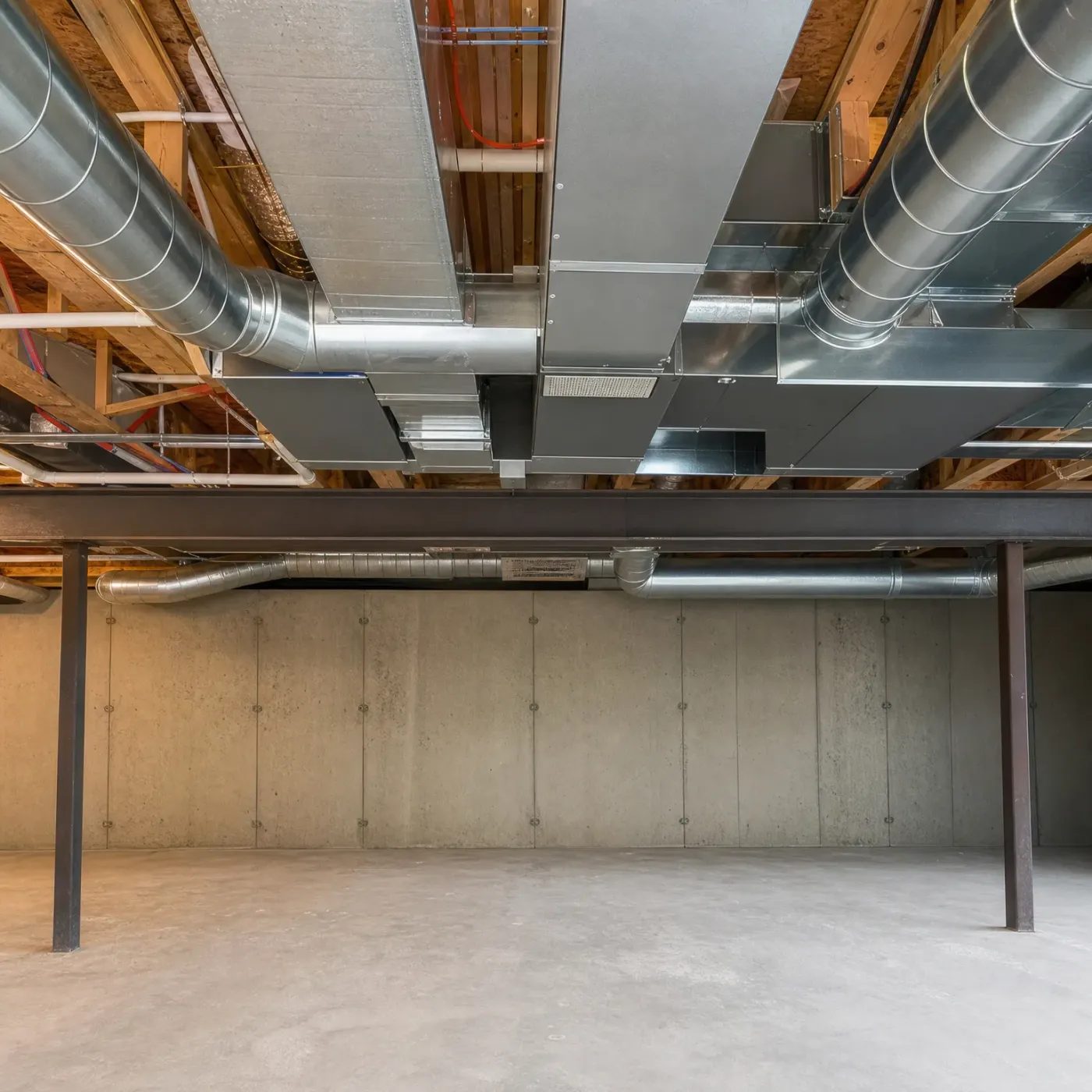
Unfinished basement with concrete walls and floor, a steel beam on posts, and exposed wooden joists with sheet-metal ductwork and piping overhead.
After you get your ductwork cleaning
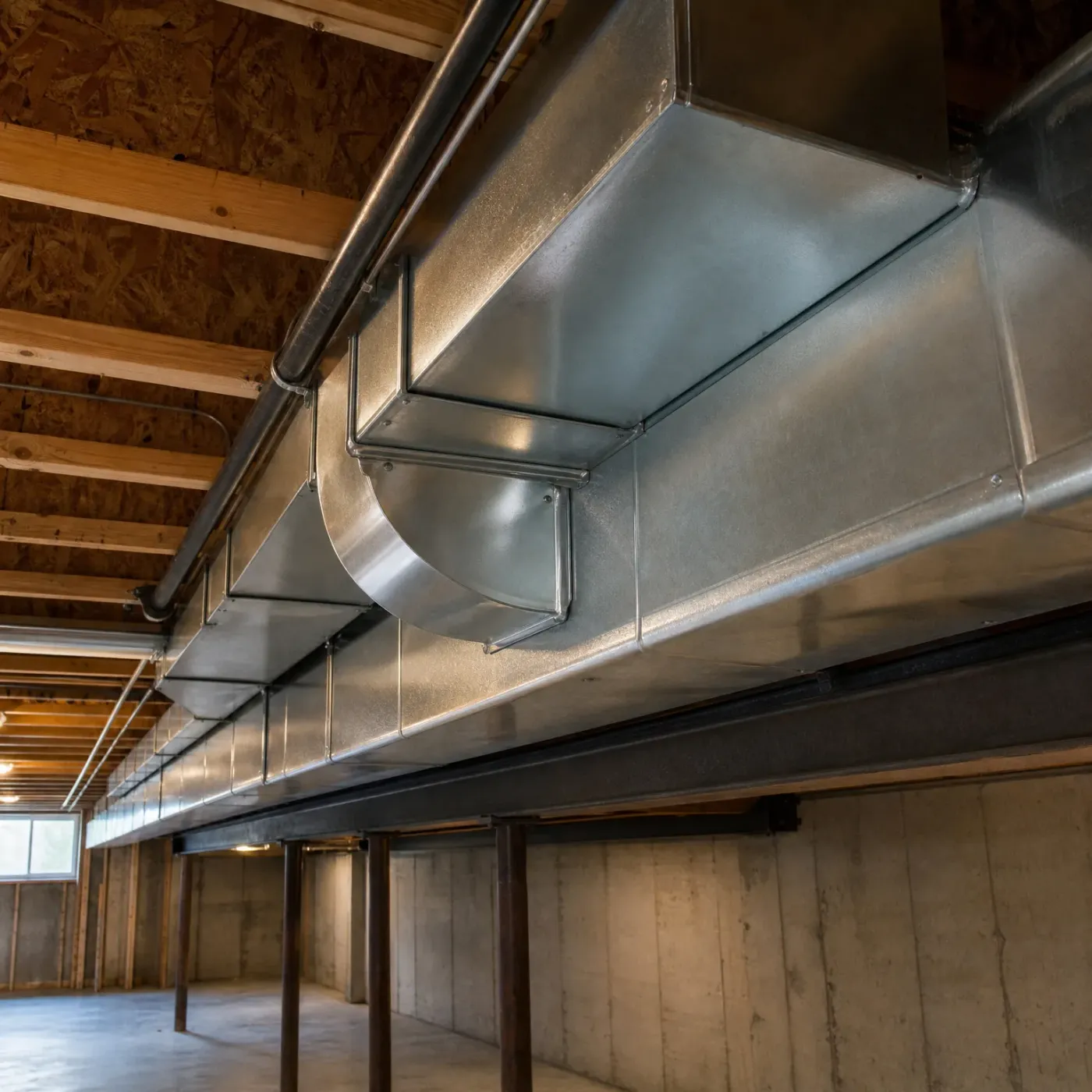
Galvanized sheet metal HVAC trunk ducts and branch takeoffs running below a wood-joist ceiling in an unfinished basement with concrete walls, steel support columns and a concrete floor.

Send one request and you're done looking

Only one pro gets your request, so you hear from one company.

After you send the request, you're done searching.

Find a licensed ductwork pro

It costs nothing to send, and you don't have to hire anyone.

Why is your house dusty again a day after cleaning

You dust the shelves, run the vacuum, and by the next evening there's a film on the TV stand again. You might notice it settles fastest near the vents, or that the air feels heavier right after the furnace kicks on. Some rooms collect more than others, usually the ones closest to a return. You might also notice more sneezing or a stuffy feel in the house that wasn't there before, especially if anyone has allergies or asthma. None of that means you're behind on housework. It means your ducts are feeding the problem faster than you can clean it up, and left alone, that same air keeps circulating through every vent in the house.

Unfinished basement with bare concrete walls and floor, exposed wood joists, and large sheet-metal HVAC ducts and pipes running along the ceiling.

Ductwork sealed and tight

This is what you want under the house. The runs are intact, the joints hold, and the furnace draws air through a closed system instead of the room around it. Dust in the house then comes mostly from normal living, not from what's moving through the vents.


Basement interior with galvanized rectangular and round sheet-metal ductwork and copper piping running below a wood-joist ceiling, above a concrete wall and bare concrete floor.

Ductwork open to the basement

Gaps at the joints and bare joists next to the trunk line give the system a second place to pull air from. Every cycle, the blower draws some of that basement air in along with it. A cleaning clears what's built up, but a contractor who works on Ohio duct systems can also check whether it's sealed to keep from refilling.

A bearded man in a dark blue T-shirt sits on a gray couch, smiling and looking down to his left, with a bookshelf and a bright window behind him.
A bearded man in a plaid flannel shirt looks out a window at snow-covered conifer trees, with a steaming ceramic mug on the sill and wooden shelves holding dishes and a plant behind him.
  1. The blower pulls air in through every return vent in the house.

  2. Air drags across whatever dust sits in the duct run.

  3. It passes the coil, where damp dust can stick and build up.

  4. The supply vents push that same air back into your rooms.

A smiling man in a green long-sleeve shirt stands at a dark kitchen counter with a ceramic mug, with wood cabinets, white tile backsplash, and a window and dining table behind him.
A smiling man with wavy dark hair and a beard, wearing a navy sweater, sits at a kitchen counter with a gray mug, with a dining table, potted plant and windows behind him.
A bearded man in a dark green sweater smiles and looks to his right while seated at a white kitchen counter with a gray mug, with windows and greenery behind him.
A smiling man in a dark navy sweater stands in a home interior beside a counter with a white mug, with a kitchen, hallway and potted plant in the background.

Power costs 16.90 cents per kilowatt-hour statewide

At 16.90 cents per kilowatt-hour, running the blower longer than it needs to costs you something every month. A duct system clogged with dust makes the furnace and AC work harder to push air through, so the blower runs more to hit the same temperature. Clean ducts let it do less work for the same result.

EIA-861 2025 statewide residential average

What the dust was telling you

  • Dust that returns within a day or two traces back to your ducts, not your cleaning habits.
  • A sealed, intact duct system pulls air from your rooms instead of dragging it from a basement or crawlspace.
  • A furnace or AC that doesn't have to fight a clogged system runs fewer cycles, which means less wear and a lower bill.
  • A local contractor who services Ohio duct systems all year has seen which joints and runs tend to fail first.
  • Sending one request puts it in front of one licensed local contractor instead of a handful of companies calling you back.
  • Once that request is sent, finding someone to handle it is off your plate.

The dust was never about how often you ran the vacuum. It was about air pulling through a duct system that wasn't sealed, picking up what sits in a basement or crawlspace and carrying it right back into your rooms. That's why it came back so fast, and why it'll keep coming back until the ducts themselves get handled. A system that's sealed and intact works differently. It draws from the rooms you're actually living in, so what settles on your shelves is closer to normal household dust, not what's been sitting under the house. The furnace and AC also stop fighting the system to move air, which means fewer cycles and less strain on equipment you're already paying to run on Ohio power rates. Finding the right person for this isn't a search you have to run yourself. A contractor who works on duct systems across Ohio all year has seen which joints separate, which runs were never sealed right, and where dust tends to get pulled in first. That's the kind of knowledge that comes from doing this work locally, season after season, not from a one-time visit. Send one request and it goes to one licensed local contractor, not a pile of companies competing for your callback. From there, the job of tracking someone down is no longer yours to carry.

A dark-clad house with large windows beside a gravel driveway lined with in-ground path lights, ornamental grasses and hydrangeas, with distant hills and an orange sunset sky.

Ductwork Cleaning

Finding a pro stops being your job

Duct and vent cleaningDucts or ventsOhio
Step 1 of 2

What ZIP code is the job in?

  • A gray upholstered sofa arm with a cream knit fringed throw sits beside a wooden side table holding a stack of books, a shallow wooden bowl, and a ceramic vase of leafy branches, on a wood floor near a window.
    • Your duct cleaning request goes to a local pro who does this work.
    • A local pro who knows ducts gets your details and gets in touch.
  • A living room corner with a cream upholstered sofa and cushion beside a wooden side table holding a ceramic vase of olive branches and a small dark bowl, with a framed landscape painting on the gray wall and a linen curtain at the window.
    • Send the request and finding a pro stops being your problem.
    • After this form, you can stop searching for a duct system pro.
  • A wood-framed armchair with a beige cushion and knitted throw sits beside a round wooden side table holding a ceramic mug, with a potted green plant near a window in the corner and a framed picture on the wall.
    • Skip calling around for someone who cleans ducts.
    • Answer a few questions about the duct cleaning and skip the search.
  • Interior corner with beadboard wainscoting, a gray cabinet with wood countertop holding a vase of greenery below a window, and a potted leafy plant in a woven basket on a wood floor with a fringed jute rug.
    • Your duct cleaning request goes to one local pro.
    • Your request goes to one pro, not a list of companies.