
AC Maintenance in Lancaster, OH
Air conditioners here run from June through August, so May is the time for a tune-up. Tell us about your system, and a licensed contractor who covers Fairfield County will get in touch.
Tell us about the job
It takes about a minute.

Three months to carry the whole load
Your air conditioner in Lancaster only runs June through August. In that short stretch it has to keep up with afternoons that average 83 degrees, day after day, with little rest between cycles.
A tune-up before summer checks the parts that carry that load. The refrigerant charge gets checked. The condenser coil gets cleaned. The electrical connections that keep the compressor running get tested. A coil caked with debris or a charge that's off makes the unit work harder for the same result, and with only three months to do its job, there is no slow stretch for that strain to hide in.
- 3 months
- June through August, your air conditioner is on duty
- 83°F
- the average summer afternoon it cools against
- 31 hail events
- in ten years, and hail bends the fins on outdoor coils
- 81 wind events
- in ten years, and wind drives debris into outdoor units
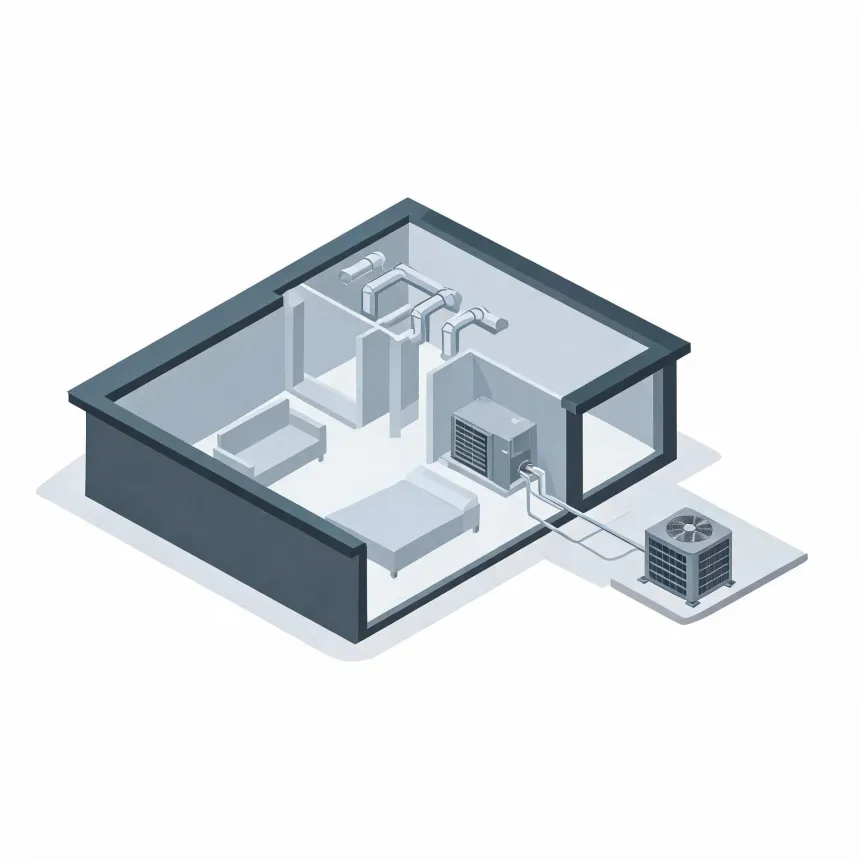
NOAA nClimDiv, 1991–2020 normals

Book your AC tune-up in May, before homes here start needing cooling in June.
- Jan
- Feb
- Mar
- Apr
- May
- Jun
- Jul
- Aug
- Sep
- Oct
- Nov
- Dec
A tune-up checks the refrigerant charge, cleans the coils, tests the capacitor and tightens the electrical connections.
In Ohio, HVAC licensing for homes is left to the counties.
Whether this job needs a license depends on Fairfield County specifically, since Ohio leaves that decision to each county rather than setting one rule statewide. Ohio does define what a home contractor is, and that definition requires carrying at least $250,000 in liability insurance. That is a floor for the business, not a license, and nobody is tested to meet it.
For an air conditioner tune-up, the credential that applies everywhere is federal. Checking refrigerant means opening the sealed side of the system, and any technician who does that must hold EPA Section 608 certification, in Ohio or any other state. That is not something Fairfield County issues or tracks. It is the one requirement on this job that holds regardless of the address.
Source: Ohio Legislative Service Commission
- What does AC maintenance include?
- A technician checks refrigerant pressure, cleans the outdoor coil, and tests the capacitor and contactor that start the compressor. They also check the fan motor, inspect the drain line for clogs, and change or check the filter. On the electrical side, they tighten connections and check that the unit is pulling the right current. Any one of these left unchecked can shorten the life of the compressor, which is the most expensive part to replace.
- How often does an air conditioner need maintenance?
- Once a year is enough for most homes. The best time is spring, before you need the system for the summer ahead. Here that means getting it checked before June, since the unit will run through June through August with afternoons averaging 83°F.
- Is AC maintenance worth it?
- Yes, because a dirty coil or a weak capacitor makes the compressor work harder, and the compressor is what fails expensive when it fails. Regular maintenance catches a failing part while it is a small repair instead of a breakdown in the middle of summer. It also means the system is running at the efficiency it was built for, not losing capacity to a clogged coil or low refrigerant.