
HVAC Installation in Lancaster, OH
A new system here will heat from October through May and cool from June through August every year. Tell us about the house, and a licensed contractor who covers Fairfield County will get in touch.
Tell us about the job
It takes about a minute.

Lancaster asks for eight months of heat and three of cooling
Winter nights here average 24°F, and homes need the furnace running from October through May. That's eight months a year the heating side has to work, and on the coldest nights it's cycling on and off most of the day. Summer only asks three months, June through August, with afternoons averaging 83°F. Add it up and it's 11 months where a Lancaster home needs one system or the other to be working.
Most homes here heat with gas, so the furnace carries most of that load. New equipment installed today has to meet the federal minimum efficiency rating. Fairfield County has seen its share of winter storms and damaging wind over the years, and most furnaces and air conditioners will come back on by themselves once power returns.
- 8 months
- October through May, your system heats
- 3 months
- June through August, it cools
- 24°F
- the average winter night it heats against
- 83°F
- the average summer afternoon it cools against
NOAA nClimDiv, 1991–2020 normals
In Ohio, HVAC licensing for homes is left to the counties.
Fairfield County sets its own rule for who can do this work, since Ohio leaves HVAC licensing to the counties rather than testing and licensing contractors at the state level. Ohio does define what a home contractor is, and that definition includes carrying at least $250,000 in liability insurance. That is a definition, not a credential, and it does not mean the state tested or recorded anyone.
Since no state license backs this job, the protection on an installation like this comes from the local building office. In most cities and counties, replacing a heating and cooling system needs a permit, and the finished work gets inspected once it is done. That inspection is what checks the gas and electrical connections, since a bad connection is the dangerous part of putting in a new system. Whatever county rule applies in Fairfield County runs alongside that permit and inspection, not in place of it.
Source: Ohio Legislative Service Commission
- When should I replace my HVAC system?
- Replace it when repairs start coming often, when it's old enough that parts are wearing out one after another, or when it can't keep up on the coldest nights or hottest afternoons anymore. A furnace that struggles when it's 24 degrees outside is telling you something, not just having a bad night. If a contractor is quoting a major repair on an aging system, ask for a replacement quote alongside it before you commit.
- Should I replace my furnace and air conditioner at the same time?
- If both are old, yes, it usually makes sense to do them together. A furnace and AC installed at the same time are matched to work with each other, and a contractor can handle your ductwork and wiring in one visit instead of coming back later for the second unit. If one is much newer than the other, replacing just the older unit is reasonable, a contractor can tell you whether your existing equipment will pair well with something new.
- What happens during an HVAC installation?
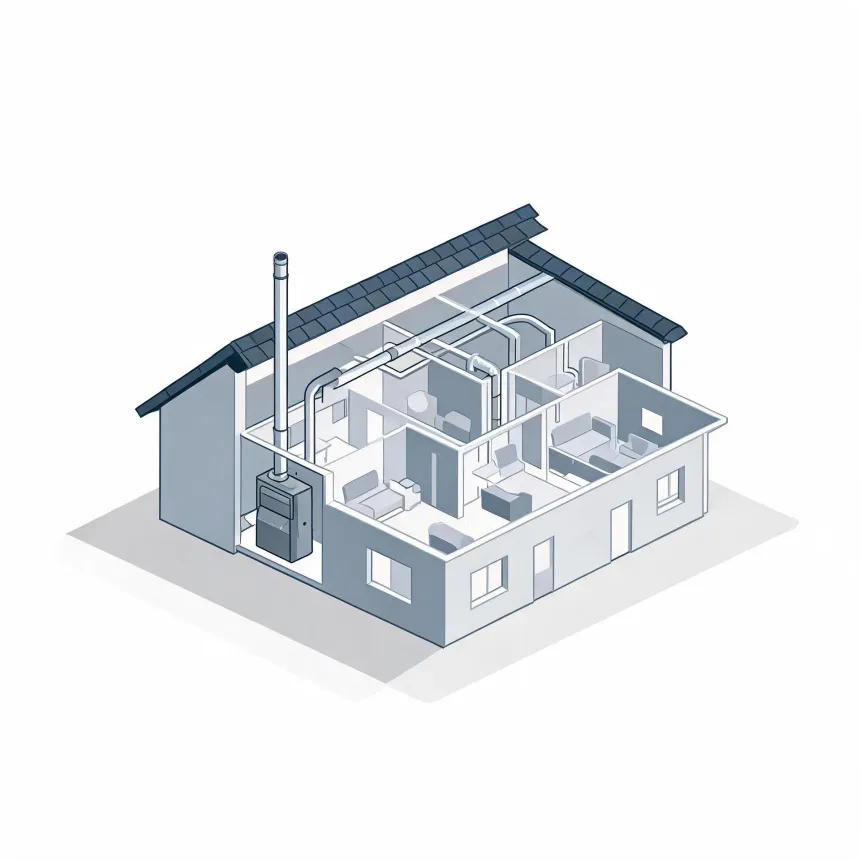
- A contractor removes the old equipment, sets the new furnace or air conditioner in place, and connects it to your ductwork, gas line or electrical, and condensate drain. They check the ducts themselves for leaks or sizing problems, since new equipment moved through old, poorly sized ducts will not perform the way it should. Once it's running, they test it, check refrigerant charge and airflow, and walk you through what's new before they leave.